
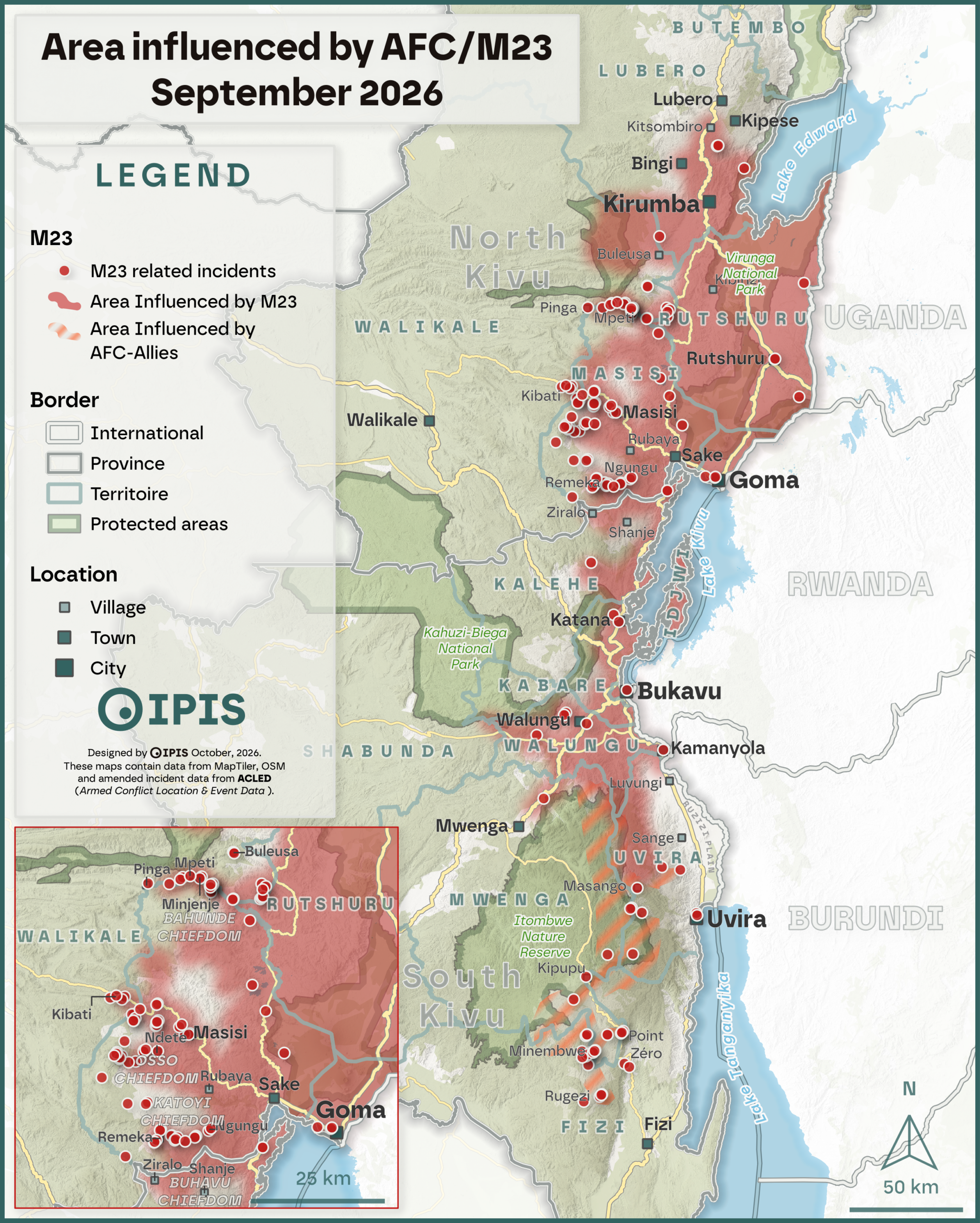
Fighting persisted in North and South Kivu between June and September 2026, pitting the Rwanda-backed AFC/M23 coalition against pro-government forces, including Wazalendo groups and the Congolese military (FARDC). While mediation efforts continue and two ceasefire verification missions were conducted over the period, renewed fighting along the frontlines casts doubts on the prospects for a durable cessation of hostilities.
The security situation in eastern DRC risks deteriorating even further, as former Congolese president Joseph Kabila officially announced the creation of the Front pour la Refondation de la Nation (FRN) and his alliance with AFC/M23. While the new movement takes over existing structures and commitments made in the Doha framework, Kabila openly challenges President Tshisekedi’s rule in Kinshasa. It risks escalating the security crisis in the east into a broader national political crisis, and raises suspicions of an expansion to the south via Kalemie.
The Washington & Doha processes
While the Washington process addresses security commitments between the DRC and Rwanda, the Doha process focuses on negotiations between the Congolese government and AFC/M23. Despite the volatile security and humanitarian situation on the ground, negotiations within both processes continued.
The Washington process’ Joint Oversight Committee (JOC) — convening the DRC, Rwanda, the US, Qatar and African Union-mediator Togo in London on June 24 —expressed serious concerns over escalating fighting, the impact of drone strikes on civilians and the peace process, and the deteriorating humanitarian situation. In addition, the DRC outlined efforts to neutralize the Forces Démocratiques de Libération du Rwanda (FDLR), and Rwanda briefed the JOC on the “disengagement of its forces”. Also at the Joint Security Coordination Mechanism (JSCM) meetings in July and August in Geneva — the body responsible for monitoring implementation of the CONOPS (Concept of Operations of the Harmonized Plan for the Neutralization of the FDLR and Disengagement of Forces/Lifting of Defensive Measures by Rwanda) — the DRC presented its disarmament, demobilization and reintegration (DDR) plan for the FDLR, and participants agreed to organize a trilateral (US-DRC-Rwanda) planning conference in October 2026 to draft a revised Operations Order for CONOPS implementation.
Equally, under the Doha framework, some progress has been observed with the deployment of the first joint ceasefire verification mechanism (EJVM+), and monitoring missions sent to Minembwe (24-25 August) and Masisi (10-12 September). Additionally, representatives of the Congolese government and the AFC/M23 met again in Montreux between 17 and 21 August, where they agreed on a roadmap for further negotiations.
Another interesting development was the Congolese government’s handover of 15 detainees to the AFC/M23 in Rutshuru on 7 August. It is the first tangible implementation of the detainee-release process, agreed on in Doha in 2025. However, only nine of the 15 people released appeared on the list of 800 detainees requested by AFC/M23, and this is still only a fraction of the more than 300 and 150 detainees which the AFC/M23 and the government, respectively, were supposed to release by 28 April, 2026. This release therefore served primarily as a confidence-building measure.
Despite the ongoing negotiations and the different parties restating their commitments under the Washington and Doha frameworks, implementation remained slow, and fighting between the coalitions in North and South Kivu continued to escalate.
On 14 July, the UN Security Council imposed sanctions on leaders of AFC/M23 and allied commanders, as well as the FDLR. In response, the AFC/M23 issued a formal letter of complaint and organized demonstrations in Goma and Bukavu, allegedly forcing the population to participate.
“The freedom to demonstrate cannot be imposed at gunpoint. Nothing can legitimize the manipulation of people held hostage.”
– CSO movement LUCHA, cited by congorassure.com, translated from French.
North Kivu: Renewed offensives along previous frontlines
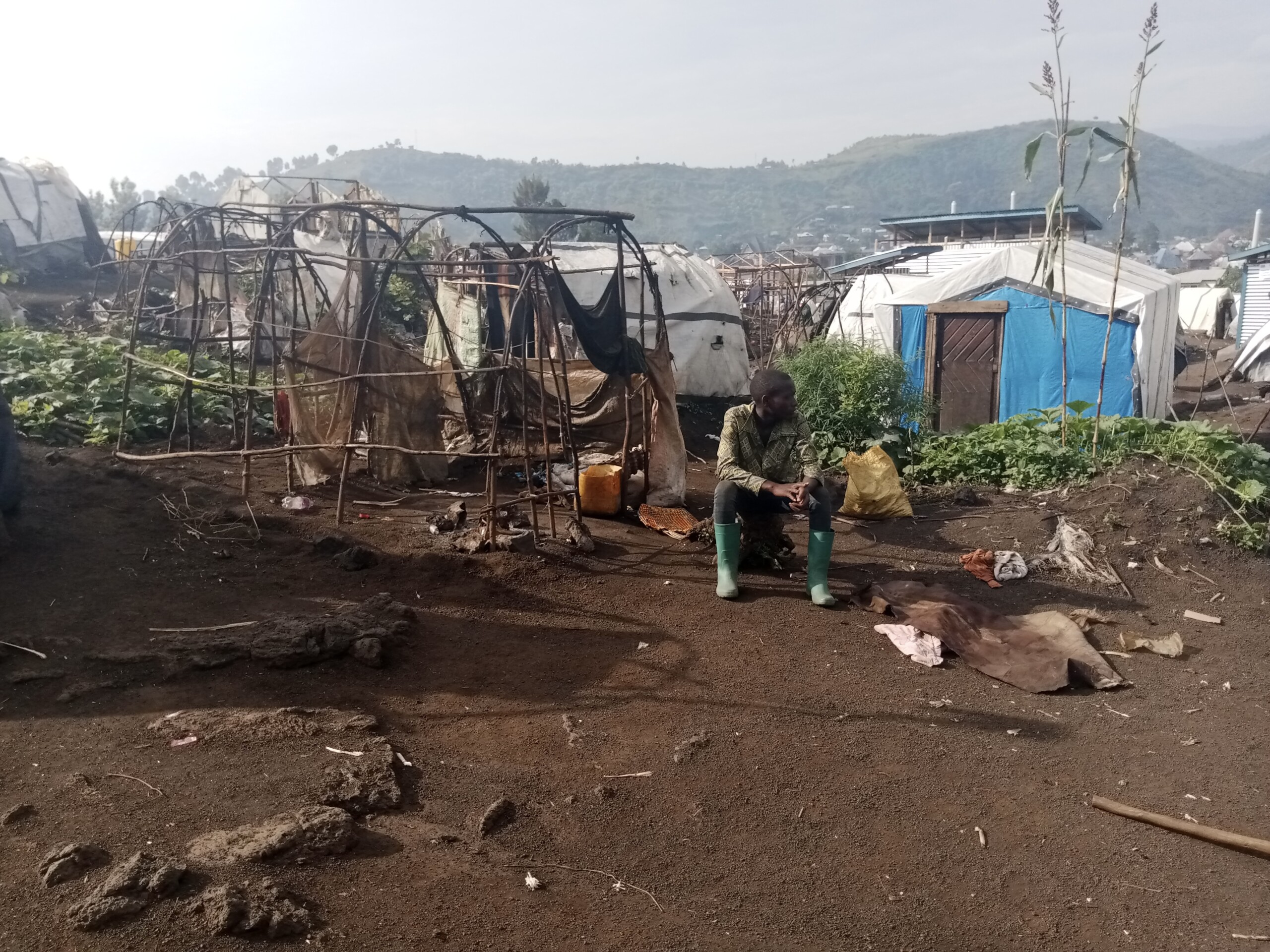
In North Kivu, AFC/M23 reoccupied several positions it had abandoned earlier this year — particularly in southern Lubero territory and around the northern border of the Masisi and Walikale territories — while fighting intensified along the entrenched fronts in southern Masisi territory.
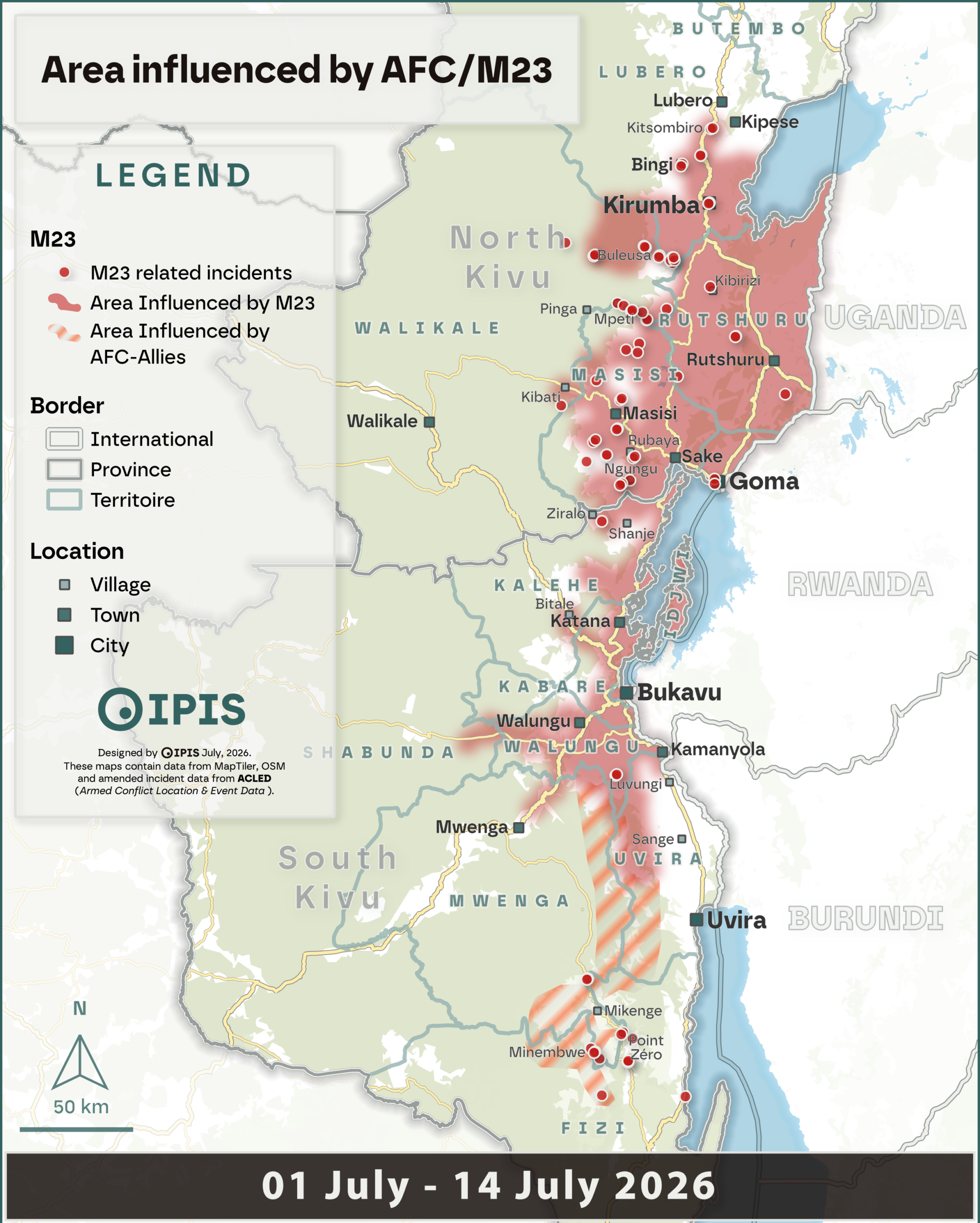
After their partial withdrawal from Lubero territory in March 2026, AFC/M23 returned to occupy positions along the RN2 Kirumba-Lubero axis, up to Kitsombiro, in late June and early July. The redeployment of troops triggered population displacement in several localities of southern Lubero territory. Moreover, in Kirumba, the AFC/M23 reportedly closed the office of a member of the national parliament, Muhindo Simisi Obed — who repeatedly denounced Rwanda’s involvement in the DRC conflict — and arrested five of his local collaborators.
In Walikale’s northeastern Ikobo groupement, M23 reportedly withdrew from several localities, including Buleusa, in July. Civil society actors warned that the withdrawal could be merely a tactical repositioning and called for FARDC/Wazalendo to avoid a security vacuum or an M23 return. In the end, fighting indeed broke out between Wazalendo and AFC/M23 in the area, which resulted in Wazalendo fighters pillaging in Buleusa.
“They went from house to house. They took medicines from the pharmacies, essential goods from the shops, mobile phones from mobile phone top-up shops, and laptops from some computer shops. The residents were terrified, and no one dared to stand up to them.”
– A resident of Buleusa who wished to remain anonymous, cited by Actualité.cd, translated from French.
Along the Kalembe-Mpeti-Pinga axis, on the border between Walikale and Masisi territories, AFC/M23 also attempted to retake territory they had vacated in March. By 3 September, AFC/M23 had regained control of Malemo and advanced further towards the militarily strategic town of Pinga. Heavy clashes continued throughout September, including AFC/M23 airstrikes on the Pinga airfield, which led to the destruction of a nearby school. By 15 September, FARDC/Wazalendo dislodged AFC/M23 from Minjenje (a few kilometers east of Mpeti) and surrounding villages, while both parties continue to hold positions along the axis.
Territorial control also remained highly contested in the Osso sector (eastern Masisi territory) and Luberike groupement (western Walikale territory). Renewed clashes have resulted in several villages changing hands between Wazalendo and the AFC/M23, including Kibati village.
Both AFC/M23 and FARDC/Wazalendo launched numerous attacks along the frontline in southern Masisi (North Kivu) and Kalehe territory (South Kivu). After FARDC/Wazalendo reported regaining control of several mining areas in the Ziralo groupement (Buhavu chiefdom, Kalehe territory), including Lumbishi, Shanje and Numbi, AFC/M23 launched a counteroffensive in the Ziralo groupement in mid-August.
Fighting also spread to Ufamandu 1 groupement in southern Masisi, where FARDC/Wazalendo dislodged AFC/M23 from several positions in mid-September, including Miko and Remeka. However, AFC/M23 renewed its attacks and, after receiving reinforcements from Ngungu, regained control of Remeka and attacked FARDC/Wazalendo positions further west, around Kaleta and Miko.
South Kivu: Pressure on Minembwe and the southern frontlines
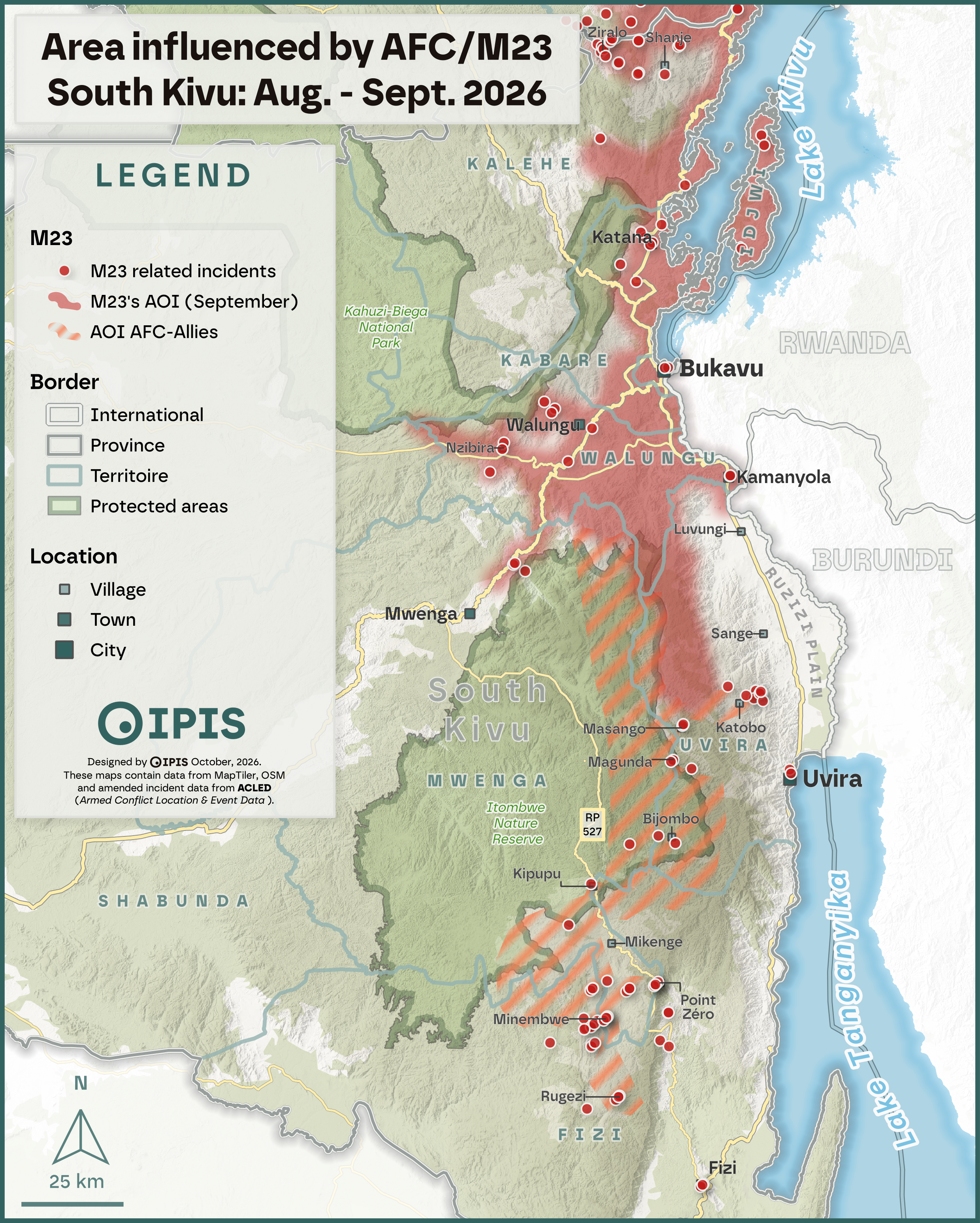
In South Kivu, the FARDC/Wazalendo, with support of Force de Défense Nationale du Burundi (FDNB), continued its efforts to disrupt AFC/M23 supply routes between the Walungu territory and Minembwe (in the High Plateau), targeting positions in Itombwe sector (southeastern Mwenga territory) along the RP527 road. Following AFC/M23’s withdrawal from the Ruzizi Plain in May 2026, reinforcements are relying on these alternative mountainous routes through the Kaziba chiefdom (southeastern Walungu territory) and the Uvira highlands. Air transport also remained an important supply line for the largely encircled Minembwe area. In late August, an aircraft that conducted airlift operations between Minembwe and the Kavumu airport (Kabare territory), near Bukavu, was shot down.
In August, AFC/M23’s allies, Twirwaneho and Red-Tabara, launched several attacks in the Uvira and Mwenga highlands at the edge of the Ruzizi Plain. Pro-government forces reported recapturing several of these villages in early September. In Masango, one of the recaptured villages, the army reported the discovery of a mass grave, allegedly following the occupation by AFC/M23/Twirwaneho/Red Tabara.
Heavy clashes also erupted around Point Zéro, a strategic locality and former FARDC/FDNB stronghold that Twirwaneho fighters captured on 4 July. Situated at over 2500m, Point Zéro overlooks an important crossroads connecting Fizi, Mwenga and Uvira territories, making it a strategic military position and a key gateway to the south.
Clashes were also reported in Fizi territory, in Rugezi, Mukoko and Mulima. FARDC reportedly killed four alleged RDF (Rwanda Defence Force) soldiers. According to the latest UN group of experts’ report, Rwanda had deployed 8,000-10,000 RDF troops in South Kivu, as of December 2025
Tightening administrative control and restricting civilian freedoms
Serious human rights abuses continued to be reported in AFC/M23-controlled areas, including arbitrary arrests, forced recruitment, torture, beatings, sexual violence, and extrajudicial executions. In a detailed report, Amnesty International documented summary killings; torture and ill-treatment; arbitrary detention; forced labor; forced recruitment; and pillage by AFC/M23 at two artisanal mining sites: a coltan mine near the town of Rubaya, in Masisi territory, North Kivu, and Lomera, a gold mine in Kabare territory, South Kivu.
Meanwhile, the AFC/M23-appointed authorities continued to tighten their administrative control over the local population and civilian institutions. Reports describe forced participation in demonstrations and detention of individuals accused of collaborating with political opponents. AFC/M23 officials have also restricted media freedom in occupied areas in South Kivu. On 19 August, the AFC/M23 appointed governor of South Kivu banned political reporting, political debates, coverage of government activities, and criticism of the AFC/M23 for an indefinite period. Additionally, the movement also tightened its control over the educational sector, for example, by establishing direct control over the administrative and financial management of schools in southern Lubero territory.
FURTHER READING

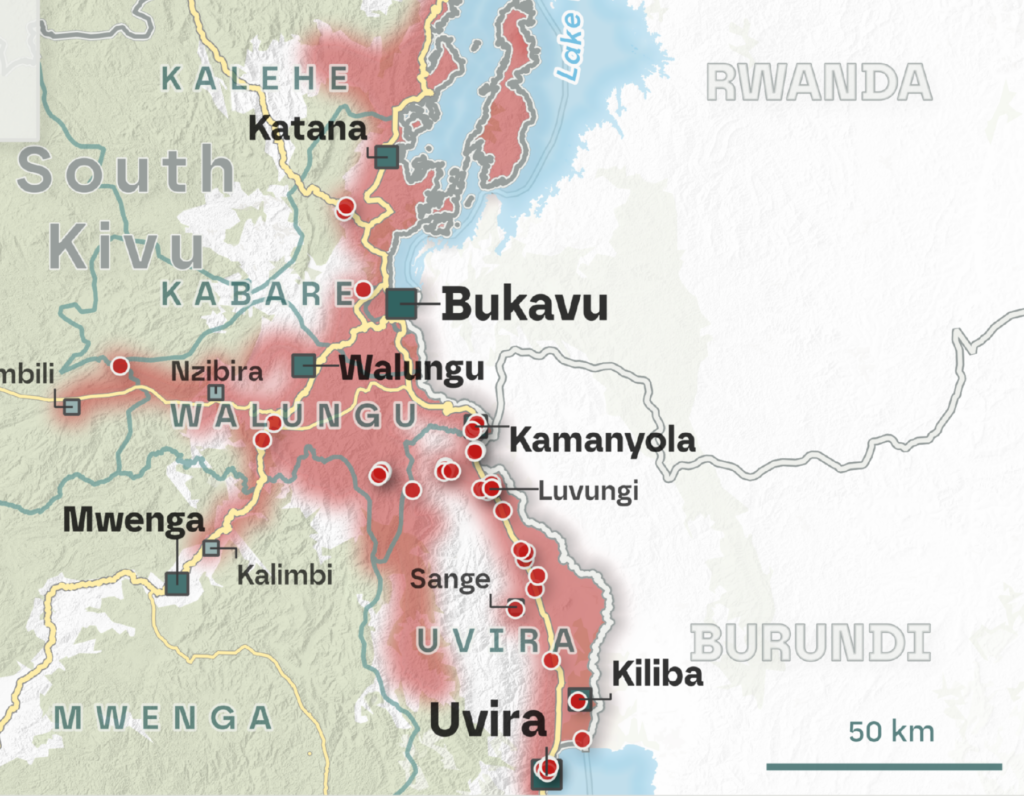
All M23-related maps designed by IPIS


This publication has been produced with the financial assistance of the Foreign, Commonwealth and Development Office (FCDO) and the Belgian Directorate-General for Development Cooperation and Humanitarian Aid (DGD). The contents of this document can under no circumstances be regarded as reflecting the position of FCDO or DGD.