
Briefings
Beyond conflict-free: How African diamond-producing countries can respond to a market under pressure
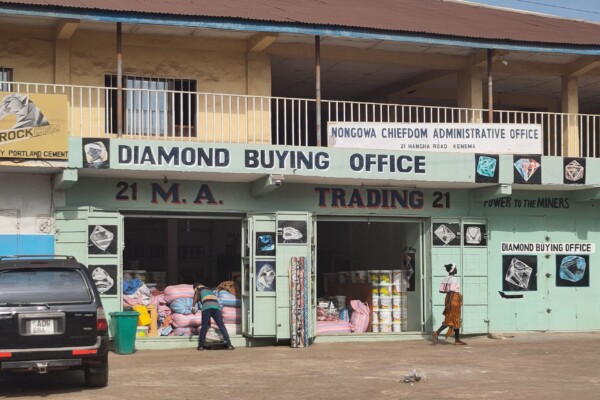
African diamond-producing countries are facing an unprecedented crisis. Natural diamond prices and demand are under sustained pressure, lab-grown diamonds have rapidly gained market share, mines are cutting production or closing, workers are losing jobs, and diamond-dependent economies are coming under growing fiscal and social strain. The crisis exposes the limits of a model in which many African
Another drop in the ocean of deregulation? The review of the EU Water Framework Directive and water due diligence in mineral-producing countries
The European Commission’s upcoming review of the EU Water Framework Directive (WFD) acts as a turning point for European environmental governance. As the EU accelerates efforts to secure critical raw materials for the energy and digital transition, as announced in its RESourceEU Action Plan and reflected in the MoU it recently signed with the United States, mining actors are intensifying pressure

Réduire les conflits et l’insécurité en limitant la mobilité des éleveurs ? Éclairages de la politique de sédentarisation du Bénin
La transhumance, ou la migration saisonnière du bétail par les éleveurs, est une stratégie de subsistance majeure dans l’ensemble du Sahel et de l’Afrique de l’Ouest, où elle assure les revenus, la sécurité alimentaire et le tissu socio-économique de millions de personnes, en particulier dans les zones rurales. Cependant, des dynamiques régionales telles que le changement climatique, la marginalis

A misleading narrative: How the Islamic State framing distorts responses to the Allied Democratic Forces
The Allied Democratic Forces (ADF) was considered the deadliest armed group operating in eastern DRC in 2024, responsible for 38% of all conflict-related deaths in Ituri and North Kivu provinces. Created in 1995 from a merger between Uganda’s Tabligh movement and remnants of the National Army for the Liberation of Uganda (NALU) with the objective of overthrowing the Ugandan government, it has over

Thorny issues risk jeopardising the US-brokered peace deal between the DRC and Rwanda, but can regional economic integration offer solace?
On the 4th of December 2025, Presidents Félix-Antoine Tshisekedi and Paul Kagame symbolically signed the Washington Accords for Peace and Prosperity, thus ratifying the Peace Agreement between the Democratic Republic of the Congo (DRC) and Rwanda agreed to on the 27th of June 2025. The 4th of December was a busy day in Washington in terms of signing agreements, as the governments of DRC and Rwanda

Infrastructure, extraction, and accountability around the Lobito Corridor in southern DRC
Geopolitical framing of the Lobito Corridor The Lobito Corridor aims to connect the port of Lobito (Angola) to mineral-rich provinces of Haut-Katanga and Lualaba in the Democratic Republic of Congo (DRC), as well as the Zambian Copperbelt through a combination of rehabilitated and newly constructed rail infrastructure. Although not a new initiative, the project became a flagship of the

Militarisation, genre et extraction des ressources dans les Kivus post- janvier 2025
La région du Kivu, en République démocratique du Congo (RDC), a connu un changement important dans la dynamique de son conflit au cours des dernières années, en particulier après janvier 2025, marqué par une expansion territoriale importante de la rébellion du M23 et, en réponse à celle-ci, par une augmentation de la présence des groupes armés locaux réunis sous la bannière des « Wazalendo ». Cett

Navigating insecurity: Community-combatant relations and the role of traditional leaders in Eastern DRC
The briefing is based on research in which IPIS itself was not involved. The data discussed were collected as part of a PhD research project at the Center for Security Studies (CSS) at ETH Zürich. For over two decades, eastern Democratic Republic of the Congo (DRC) has experienced persistent violence shaped by a complex web of armed groups, shifting alliances, and limited state presence. The

Land acquisition and access to remedies in Tanzania’s extractive sector: Gaps in regulatory frameworks and pathways to reform
DARUBINI – TANZANIA BRIEFING – SEPTEMBER 2025 While Tanzania legal framework offers some protection for land rights, the actual practice in Tanzania’s extractive sector companies remains challenging, falling short of human rights standards based on the UN Guiding Principles on Business and Human Rights (UNGPs). State ownership of subsoil resources (minerals, petroleum) often prioritizes mineral ex

Access to justice in Tanzania’s mining sector: preparing for the critical mineral rush
DARUBINI – TANZANIA BRIEFING – AUGUST 2025 The global energy system is undergoing a profound transformation toward clean energy and a low-carbon future. This global energy transition demands the widespread deployment of clean energy technologies such as solar panels, wind turbines, and electric vehicles, which are highly dependent on critical minerals like lithium, graphite, nickel, copper, cobalt

The EU Critical Raw Materials Act and the defence industry
In recent years, the EU has reshaped its raw materials strategy in response to the energy transition, global supply chain competition, and a geopolitical environment marked by increasing defence concerns. The intersection between climate policy, industrial strategy and security policy has become increasingly apparent, particularly through the adoption of the Green Deal, the Critical Raw Materials

After the tailings dam collapse: Community perspectives on compensation and restoration at the Williamson diamond mine, Tanzania
In November 2022, a major accident occurred at the Williamson diamond mine in Tanzania’s Shinyanga region, when approximately 150 meters of the eastern wall of the mine’s tailings storage facility (TSF) collapsed. This released a large volume of tailings slurry that spread northeast, covering an estimated 5.4 km² in a single day and severely impacting land and water resources in and around the min

Mineral extraction, environmental harm, and conflict: The role of EU due diligence in promoting sustainable practices in conflict hotspots
In many conflict-prone regions, mining activities often contribute to both environmental degradation and the intensification of local conflicts. These issues are exacerbated by weak governance structures, poor enforcement of regulations, corruption and limited accountability for extractive industries. Environmental harm, such as temporary tree cover loss and long-term deforestation, water pollutio

Chinese investment in Tanzania’s small-scale mining: The challenge of technical support and regulatory oversight
DARUBINI – TANZANIA BRIEFING – MARCH 2025 Chinese investments in Africa’s mineral sector have expanded rapidly in recent years, driven by China’s increased resource demand, the continent’s abundant mineral reserves and the risk-taking entrepreneurial culture among Chinese investors. To address concerns about ethical practices, the China Chamber of Commerce of Metals, Minerals, and Chemicals Import

The rising spotlight on coltan: Understanding its strategic importance and role in the Eastern Congo conflict
In the past two decades, there has probably been no time when coltan has been discussed as much as it is today. Initially brought to global attention in the early 2000s, coltan was wrongly portrayed as the main cause of the conflict in Eastern Congo and was subsequently labelled as a « conflict mineral. » However, following the capture of Goma by the M23 rebel group in January 2025, supported by the
Promoting DDR programmes while arming non-state armed groups: Congo’s paradoxical conflict resolution policies in the context of the M23 insurgency
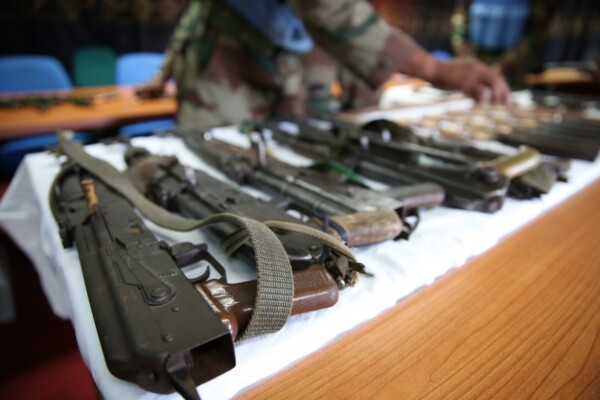
When President Félix Tshisekedi came to power in 2019, he firmly promised the Congolese citizens to end the conflicts and restore peace in Eastern Democratic Republic of Congo (DRC). To reach these goals, his government wanted to combine regional diplomacy to establish political and security cooperation between DRC and neighbouring countries, with enhanced military operations against armed groups

Balancing prosperity and rights: Advancing Tanzania’s Business and Human Rights agenda in extractives
DARUBINI – TANZANIA BRIEFING – JANUARY 2025 In today’s global business environment, corporate responsibility towards host community welfare, particularly safeguarding and respecting human rights, has become a pivotal concern. The issue reached a watershed moment in 2011 with the development of the United Nations Guiding Principles on Business and Human Rights (UNGPs). These principles rest on a th

The gendered dimensions of the EU Conflict Minerals Regulation: A step forward in addressing gender-specific risks in conflict-affected mining areas?
The Regulation (EU) 2017/821, hereafter referred to as the Conflict Minerals Regulation (CMR), came into force in January 2021 to address the human rights abuses linked to the extraction and trade of so-called ‘conflict minerals’. These minerals, and explicitly tin, tantalum, tungsten, and gold (3TG), have been linked to the financing of armed conflict, forced labor, corruption, and money launderi

L’insécurité au Niger après l’arrivée au pouvoir de la junte : un défi persistant et croissant
This briefing is also available in English. Le 26 juillet 2023, le général Abdourahamane Tiani a renversé le président démocratiquement élu du Niger, Mohamed Bazoum, arguant d’une mauvaise gestion économique du gouvernement et de son manque de progrès dans la lutte contre les différentes insurrections dans le pays.1 Ce vendredi 6 décembre 2024 marquera le 500ème jour au pouvoir de la junte. L’util

Tanzania’s path to ethical sourcing: Enhancing participation in global forums
DARUBINI – TANZANIA BRIEFING – OCTOBER 2024 The global focus on responsible business conduct, particularly in extractive industries, has intensified discussions around human rights and ethical practices in mineral supply chains. The Organization for Economic Co-operation and Development (OECD) has taken a leading role in shaping the discourse, developing due diligence guidelines for responsible bu
RECHERCHER BRIEFINGS