
Geopolitical framing of the Lobito Corridor
The Lobito Corridor aims to connect the port of Lobito (Angola) to mineral-rich provinces of Haut-Katanga and Lualaba in the Democratic Republic of Congo (DRC), as well as the Zambian Copperbelt through a combination of rehabilitated and newly constructed rail infrastructure. Although not a new initiative, the project became a flagship of the EU’s Global Gateway and the US Partnership for Global Infrastructure and Investment (PGII) following the announcement of European Commission President von der Leyen in September 2023. The Corridor is part of the Memoranda of Understanding (MoUs) on critical minerals value chains that the EU has signed with Zambia and the DRC. These MoUs complement the seven-party MoU signed in October 2023 between the US, the EU, Angola, DRC, Zambia, the African Development Bank Group (AfDB) and the African Finance Corporation (AFC) to develop the Lobito Corridor. These complementary agreements provide a comprehensive understanding of how the EU sees the Lobito Corridor as a way to increase its access to minerals.
Framed as “Africa’s first open-access transcontinental railway” and a “clean corridor” for critical raw materials, the Lobito Corridor is presented by the EU and the US as a driver of regional integration, improved infrastructure in host countries, and faster transport of critical raw minerals to global markets. However, these ambitions sit alongside wider concerns, raised both within EU institutions and among civil society, about who will ultimately benefit from the project, and whether its promised development gains will extend to communities living along the Corridor. These questions take on particular significance in the context of the EU’s Critical Raw Materials Act (CRMA), which reflects Europe’s strategic interest in securing access to critical minerals. In the DRC, this intersects with longstanding governance challenges linked to industrial mining, revenue management, land use, and community rights, as well as the interactions between artisanal and small-scale mining (ASM) and large-scale mining (LSM). Thus, this briefing aims first to clarify what is meant by the “Lobito Corridor”, and second to assess how such infrastructure investments could benefit local communities in southern DRC’s mineral-rich regions.
Infrastructure and investment landscape
The Corridor consists of:
- A brownfield railway line (Phase 1) -i.e. the rehabilitation railway- connecting Lobito (Angola) to Kolwezi (DRC).
- A greenfield (newly developed) railway line (Phase 2) connecting Lobito (Angola) to Chingola (Zambia).
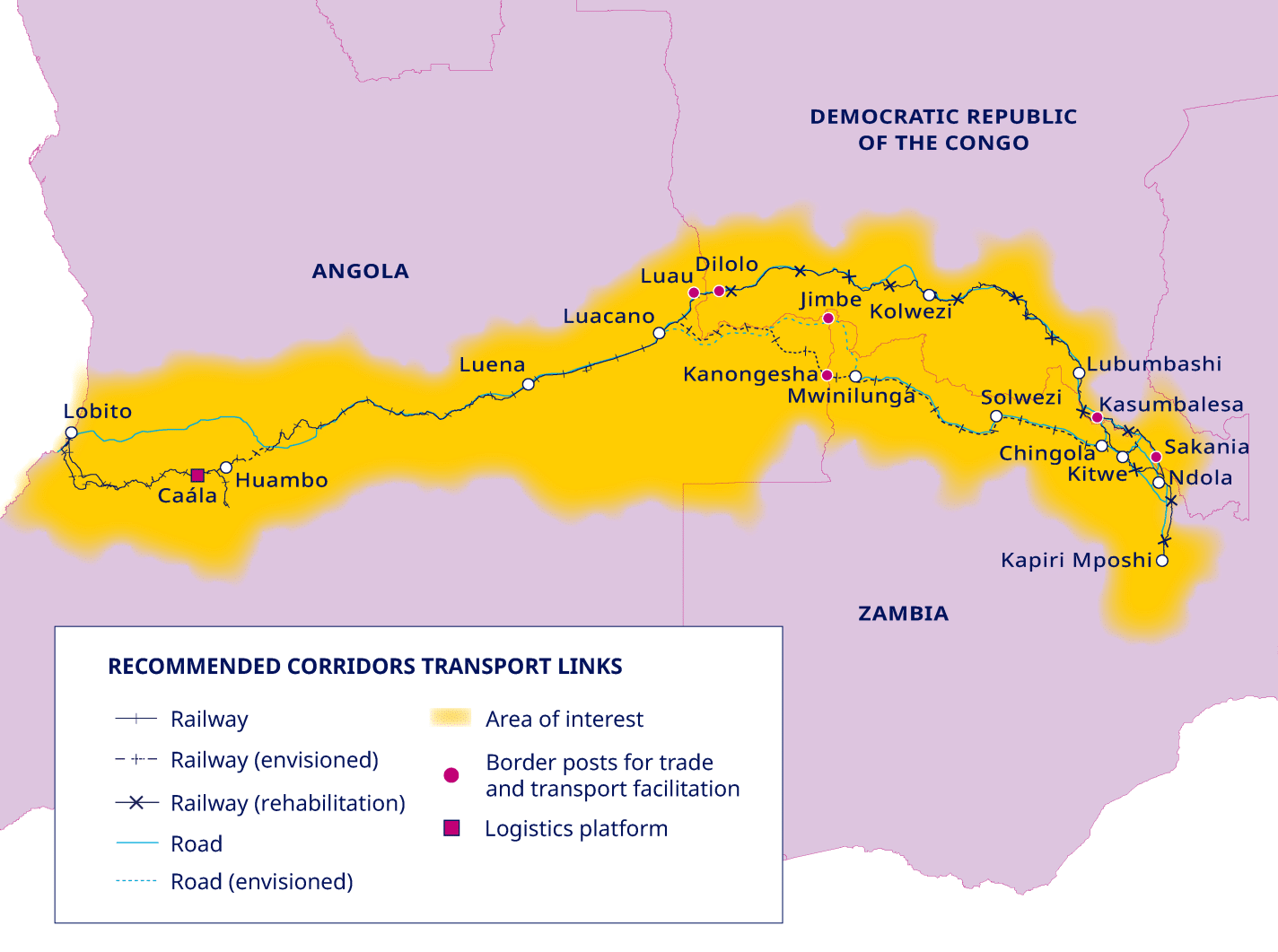
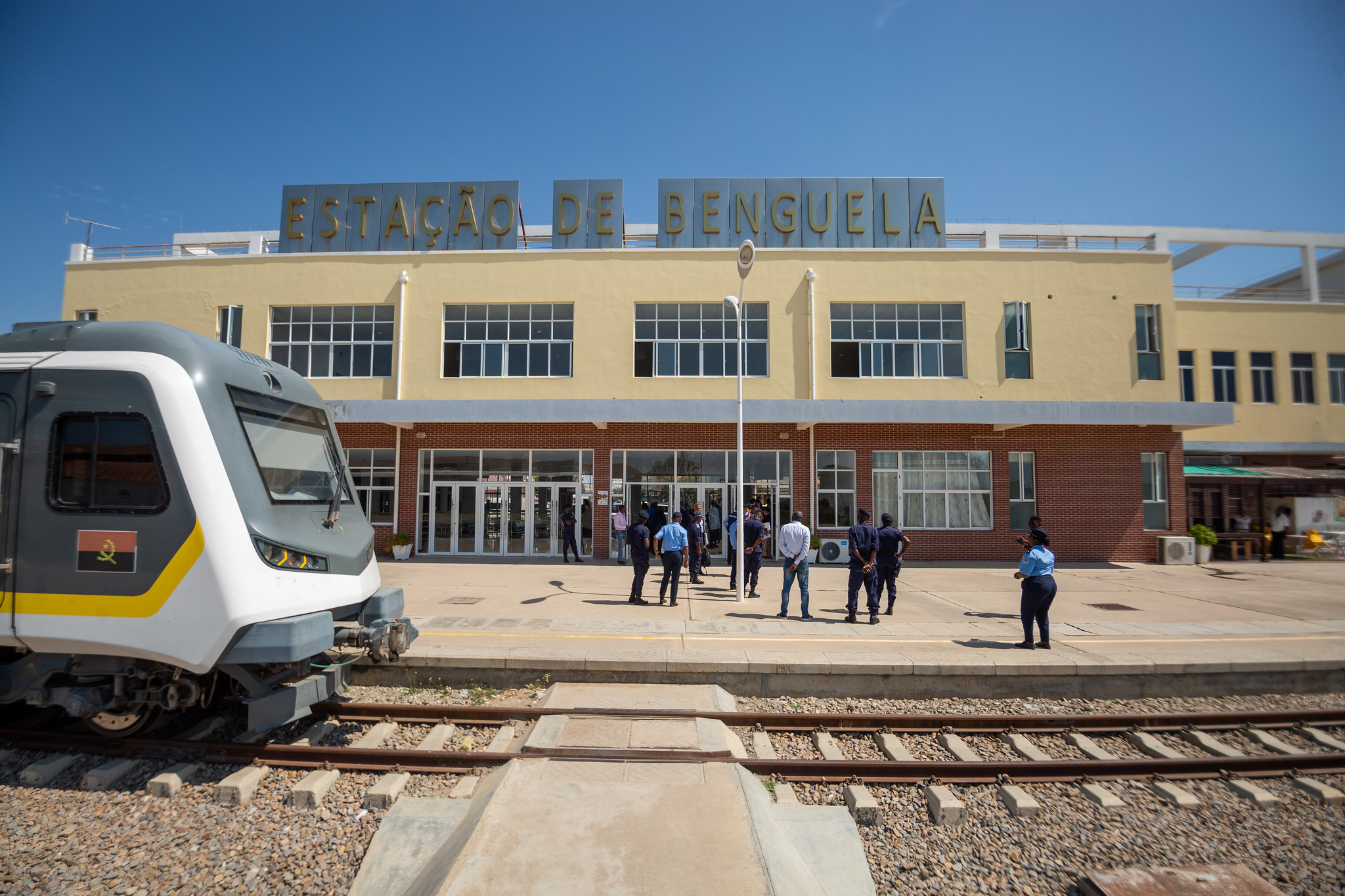
The Angolan section, known as the Benguela Railway, connects the port of Lobito to the Angola-DRC border at Luau-Dilolo. This line, rehabilitated between 2006 and 2014 through a Chinese loan, is currently operated by the Lobito Atlantic Railway (LAR) consortium (Trafigura, Mota-Engil, Vecturis). The consortium has pledged to invest $455 million in Angola, $100 million in DRC, and $1 billion in Zambia.
In the DRC, the Dilolo–Kolwezi section is operated by the national railway company Société Nationale des Chemins de fer du Congo (SNCC). Yet, the railway is only partially functional, severely degraded, operating at speeds of 10–15 km/h, and currently using less than 5 % of its capacity. An EU/US pre-feasibility study was presented in September 2025, and in October 2025, the DRC Minister of Finance submitted a request to the World Bank for a $500 million loan for rehabilitation. Moreover, plans to expand the railway from Kolwezi to the Kamoa-Kakula mine, owned by Ivanhoe, are advancing, supported by a $150 million loan from the AFC. Despite challenges posed by defective infrastructure in the DRC, the Corridor already enables copper exports from the country’s Copperbelt to the Lobito port. In 2023, Ivanhoe made its first shipments from Kamoa-Kakula via the Lobito Corridor railway. Following this, in February 2024, the company announced that up to 240,000 tons of copper would be transported annually through the Corridor starting in 2025.
The Lobito’s dual narrative, from connectivity to extractivism?
As these processes unfold, questions persist regarding who will ultimately control and benefit from the railway and what social, environmental, and governance safeguards will be in place to protect mining-affected communities along the corridor. The EU frames the Lobito Corridor as part of its broader Global Gateway strategy, which aims to combine development objectives with the strategic securing of critical supply chains, particularly for minerals essential to Europe’s energy and digital transitions. While EU investors emphasize that the Lobito Corridor will facilitate not only mineral exports but also agricultural goods and general freight, this contrasts with Lobito Atlantic Railway’s current commercial focus, which is primarily oriented toward mineral transport. This contrast also raises a broader question: why is this corridor being prioritized in the Copperbelt, and who is ultimately intended to benefit from its development?
Concerns around transparency also persist, particularly regarding the use and oversight of EU funds within the Global Gateway framework. In EU communications, the corridor’s expected development impacts are often framed in terms of improved logistics for agricultural exports and, more generally, enhanced regional trade. However, how these projected benefits would materialize for communities along the corridor, and how they relate to the governance challenges embedded in the Copperbelt’s extractive economy, remains unclear.
When a European Parliament delegation visited DRC in November 2025, it sought to “assess the EU’s approach to sustainable development in fragile settings, and what lessons can be learned on the practical implementation of the development–humanitarian–peace nexus.” The visit included exchanges with stakeholders in Lubumbashi to examine how the EU Global Gateway initiative, and specifically the Lobito Corridor, function in practice. These inquiries signal growing scrutiny, not only of governance and community-level outcomes, but also of whether project objectives and financial flows are being communicated clearly and transparently to affected populations.
Governance hotspots along the Corridor: the DRC’s Copperbelt
The DRC hosts the world’s largest cobalt reserves and remains the leading global producer. The southern provinces of Lualaba and Haut-Katanga produced approximately 213,000 tons of cobalt and 595,000 tons of copper annually, accounting for around 73% of global cobalt production and 14% of copper production. Copper and cobalt extraction in the Copperbelt is dominated by LSM, including projects such as Kamoa-Kakula, Tenke Fungurume, Kamoto Copper Company, and ERG’s Frontier Mine. Industrial mining comes with related governance challenges. Persistent risks, such as corruption, revenue mismanagement, concession opacity, and money-laundering vulnerabilities, continue to undermine oversight and accountability. These challenges coexist with significant social and environmental impacts linked to industrial operations, including displacement and pollution.
Alongside LSM, ASM remains a critical livelihood source in the Copperbelt. “Formal” ASM, conducted under recognized permits, with some degree of regulatory oversight, represents a minor share of total output. By contrast, informal ASM involves tens of thousands of miners working in residential areas, industrial concessions, waste dumps, and zones awaiting industrial expansion. In these spaces, miners increasingly face land acquisition pressures, industrial encroachment, and exclusion from “responsible” or “clean” supply chains. Despite these challenges, ASM provides direct or indirect income to an estimated 60% of households in southeastern DRC and employs around 150,000 people, highlighting its socio-economic importance. The ways ASM is organized, and whether it operates legally or informally, shape how minerals move into formal or informal supply chains. These differences also condition interactions with LSM actors, leading to outcomes that range from informal coexistence and negotiated access to disputes over land use and security interventions. These dynamics complicate risk management, regulatory enforcement, and responsible sourcing efforts.
While conflict-financing risks are generally lower in cobalt and copper supply chains than in those of 3TG (tin, tungsten, tantalum, and gold), other governance risks persist, including abuses by public or private security forces, extortion, and the falsification of mineral origin. Local authorities and civil society highlight the importance of establishing viable Zones d’Exploitation Artisanale (ZEAs) to enable artisanal miners to maintain livelihoods under safer and more regulated conditions. Despite this, ZEAs remain scarce, poorly located, or non-operational, limiting their ability to reduce tensions or prevent evictions from LSM concessions11.
Increased international investment, such as the EU’s engagement through the Lobito Corridor, may intensify competition around mine sites, trading hubs, and transport routes. This amplifies the need for due diligence and measures that address both LSM and ASM governance risks, as well as border-related challenges. In particular, persistent inefficiencies and regulatory barriers disproportionately affect women engaged in informal cross-border trade, restricting economic participation and heightening vulnerabilities linked to informal trading practices and mineral flows.
Governance and policy implications: beyond the tracks
The Lobito Corridor sits at the intersection of global demand for critical minerals, regional infrastructure ambitions, and longstanding governance challenges in the Copperbelt region, and in particular in southern DRC. The project provides a test of whether EU development rhetoric can meaningfully engage with the governance and social realities that shape extraction in southern DRC. As the initiative moves from political commitment to concrete investments, its developmental impact will depend less on the construction of railway infrastructure and more on how these investments interact with existing mining laws, land-use regulations, and enforcement practices, as well as with ASM–LSM dynamics and the rights of mining-affected communities.
Key questions remain regarding how ASM actors and local communities will be integrated, or excluded, from Corridor-related investments. Given ASM’s role as a major livelihood provider in the Copperbelt, new infrastructure could either create opportunities through improved market access, or on the contrary, intensify pressures on miners already facing displacement from industrial concessions. Similarly, enhanced transport links may reshape the geography of informal extraction and trade, potentially shifting trading routes, attracting new intermediaries, and altering local security practices around mine sites and along transport corridors. Uncertainty also persists regarding who stands to benefit economically. While EU framing emphasizes regional trade and agricultural exports, the dominant commercial logic on the ground remains tied to mineral transport. Without deliberate redistribution mechanisms, there is a risk that the Corridor will primarily serve industrial operators and export interests rather than communities in mining-affected areas. More broadly, the initiative raises the question of whether the Global Gateway narrative can move beyond a logistics-driven approach toward one based on governance, transparency, and community rights. This would require clearer safeguards, meaningful participation of local actors, and explicit commitments to address governance risks, rather than assuming that infrastructure alone will produce development outcomes.
- In November 2025, however, the Chief of Staff to the Minister of Mines announced plans for the creation of more than 50 additional ZEAs, which the government presented as a step toward improving artisanal mining regulation and supporting the Enterprise Générale du Cobalt. ↩︎
FURTHER READING


This briefing was produced with the financial assistance of the European Union. The contents of the editorial is the sole responsibility of IPIS and can under no circumstances be regarded as reflecting the position of the European Union.