
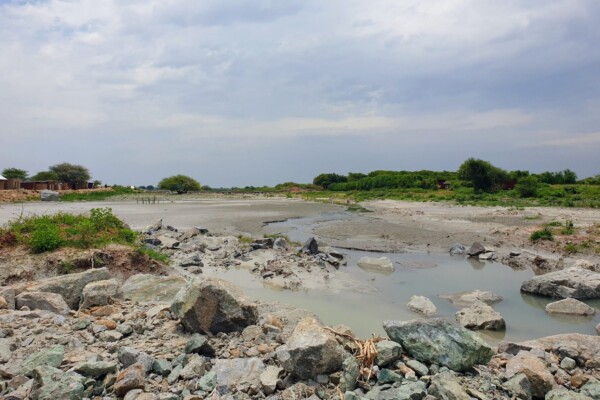
Another drop in the ocean of deregulation? The review of the EU Water Framework Directive and water due diligence in mineral-producing countries
July 7, 2026The European Commission’s upcoming review of the EU Water Framework Directive (WFD) acts as a turning point for European environmental governance. As the EU accelerates efforts to secure critical raw materials for the energy and digital transition, as announced in its RESourceEU Action Plan and reflected in the MoU it recently signed with the United States, mining actors are intensifying pressure

Infrastructure, extraction, and accountability around the Lobito Corridor in southern DRC
December 3, 2025Geopolitical framing of the Lobito Corridor The Lobito Corridor aims to connect the port of Lobito (Angola) to mineral-rich provinces of Haut-Katanga and Lualaba in the Democratic Republic of Congo (DRC), as well as the Zambian Copperbelt through a combination of rehabilitated and newly constructed rail infrastructure. Although not a new initiative, the project became a flagship of the

Militarization, gender, and resource extraction in the Kivus post-January 2025
October 30, 2025The Kivu region of the Democratic Republic of the Congo (DRC) has experienced a significant shift in its conflict landscape over the last few years, and particularly after January 2025, involving a major territorial expansion by the M23 rebellion, and in response, the increased presence of local armed groups under the banner of the “Wazalendo”. This intensification of conflict has led to increased

Addressing conflict hotspots in environmental degradation and resource governance: The role of EU due diligence frameworks
October 23, 2025The European Union has developed a set of due diligence frameworks aimed at improving corporate accountability in mineral supply chains, particularly those linked to conflict-affected and high-risk areas. These regulations, such as the Conflict Minerals Regulation, the Battery Regulation, and the Corporate Sustainability Due Diligence Directive (CSDDD), seek to address both social and environmenta

The EU Critical Raw Materials Act and the defence industry
July 8, 2025In recent years, the EU has reshaped its raw materials strategy in response to the energy transition, global supply chain competition, and a geopolitical environment marked by increasing defence concerns. The intersection between climate policy, industrial strategy and security policy has become increasingly apparent, particularly through the adoption of the Green Deal, the Critical Raw Materials

Mineral extraction, environmental harm, and conflict: The role of EU due diligence in promoting sustainable practices in conflict hotspots
April 16, 2025In many conflict-prone regions, mining activities often contribute to both environmental degradation and the intensification of local conflicts. These issues are exacerbated by weak governance structures, poor enforcement of regulations, corruption and limited accountability for extractive industries. Environmental harm, such as temporary tree cover loss and long-term deforestation, water pollutio

Due diligence in the arms sector: Possible implications of the EU Corporate Sustainability Due Diligence Directive
February 5, 2025The EU Corporate Sustainability Due Diligence Directive (CSDDD), adopted in June 2024, represents a significant effort to enforce corporate accountability for human rights and environmental impacts. However, the Directive’s application to the arms sector is limited due to exclusions in downstream activities such as the sale and use of arms. These exclusions potentially create gaps in accountabilit

The gendered dimensions of the EU Conflict Minerals Regulation: A step forward in addressing gender-specific risks in conflict-affected mining areas?
December 11, 2024The Regulation (EU) 2017/821, hereafter referred to as the Conflict Minerals Regulation (CMR), came into force in January 2021 to address the human rights abuses linked to the extraction and trade of so-called ‘conflict minerals’. These minerals, and explicitly tin, tantalum, tungsten, and gold (3TG), have been linked to the financing of armed conflict, forced labor, corruption, and money launderi
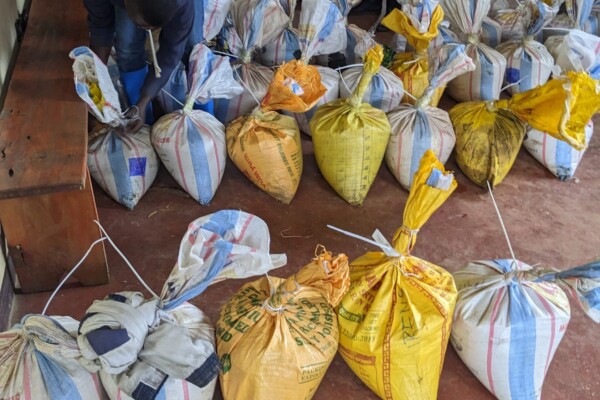
EU acknowledges shortcomings of Conflict Minerals Regulation: What next?
December 4, 2024The European Union’s ‘Conflict Minerals’ Regulation (CMR), which came into effect in January 2021, aims to prevent the trade in minerals that finance armed conflict and human rights abuses. However, both a formal evaluation by the European Commission and one conducted by civil society (IPIS/PAX, 2023), highlight significant shortcomings in the implementation and impact of the Conflict Minerals Reg