
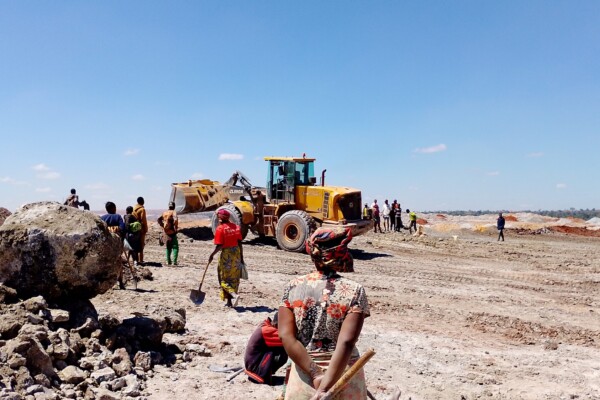
SAVE THE DATE – October 12th – Building responsible and traceable EU critical mineral supply chains that unlock the socio-economic potential of artisanal and small-scale mining
14 septembre 2026Join us on October 12th in Brussels for a panel discussion on the conditions to build responsible and traceable EU critical mineral supply chains that unlock the socio-economic potential of artisanal and small-scale mining.
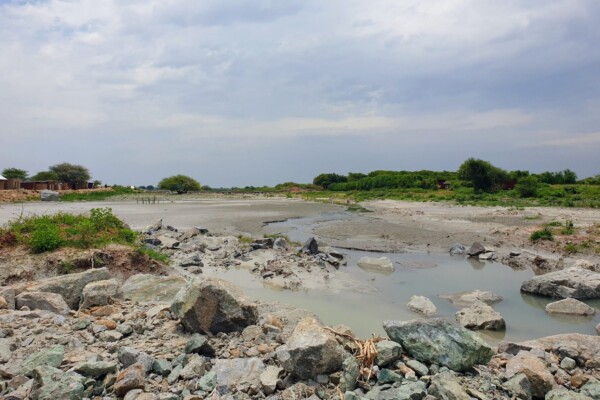
Another drop in the ocean of deregulation? The review of the EU Water Framework Directive and water due diligence in mineral-producing countries
7 juillet 2026The European Commission’s upcoming review of the EU Water Framework Directive (WFD) acts as a turning point for European environmental governance. As the EU accelerates efforts to secure critical raw materials for the energy and digital transition, as announced in its RESourceEU Action Plan and reflected in the MoU it recently signed with the United States, mining actors are intensifying pressure
Annual Report 2025
24 juin 2026Looking back at 2025, we witnessed a year that was defined by escalating conflicts. The AFC/M23’s capture of the provincial capitals of Goma and Bukavu in eastern Democratic Republic of Congo (DRC) in early 2025 directly impacted our team, partners, and activities focused on peace and natural resource governance. The rebel group’s territorial advance and the resulting violence – both with the Cong
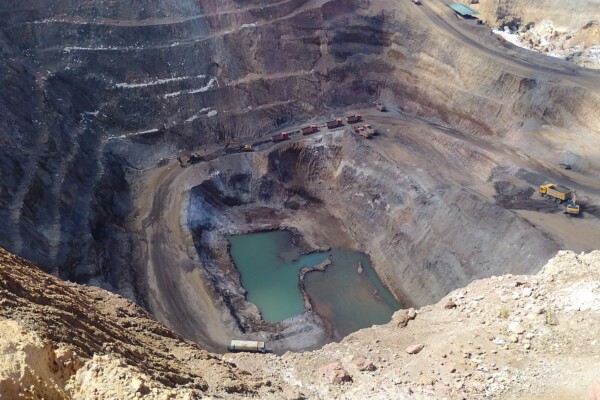
Assessing digital traceability systems for critical mineral value chains: Aligning upstream and downstream agendas
26 mai 2026As demand for critical raw materials accelerates, digital traceability has become central to efforts aimed at strengthening responsible sourcing, environmental, social and governance (ESG) oversight, and supply chain resilience. Yet while traceability is increasingly promoted as a key governance tool, important questions remain about its feasibility, scalability and implications for producer count
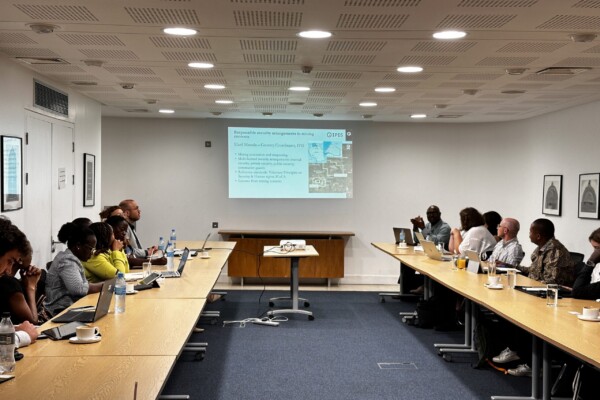
Advancing responsible mining and community rights in Tanzania – Roundtable takeaways
3 avril 2026On 12 March 2026, IPIS, in cooperation with the Belgian Embassy to Tanzania and ENABEL, organized a roundtable discussion at the EU Delegation in Dar es Salaam. The roundtable aimed to explore how Tanzania’s growing (critical) minerals sector can contribute to inclusive development and community rights.
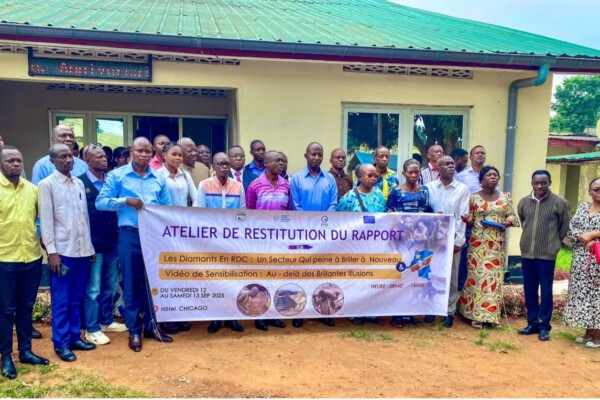
Du déclin au développement : relancer le secteur diamantaire dans le Kasaï Oriental
17 décembre 2025La République démocratique du Congo (RDC) détient environ 9% des réserves mondiales connues de diamants, dont la majeure partie est concentrée dans le Kasaï Oriental. Cette immense ressource géologique pourrait être un moteur important de la croissance économique et de la stabilité sociale dans une région marquée par le sous-développement socio-économique. Cependant, le secteur diamantaire du pays

Infrastructure, extraction, and accountability around the Lobito Corridor in southern DRC
3 décembre 2025Geopolitical framing of the Lobito Corridor The Lobito Corridor aims to connect the port of Lobito (Angola) to mineral-rich provinces of Haut-Katanga and Lualaba in the Democratic Republic of Congo (DRC), as well as the Zambian Copperbelt through a combination of rehabilitated and newly constructed rail infrastructure. Although not a new initiative, the project became a flagship of the
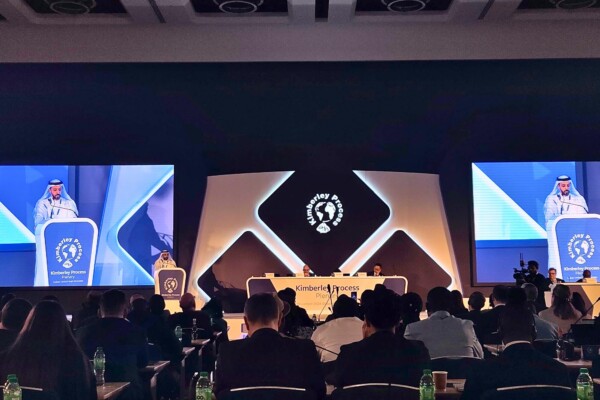
Pourquoi le Processus de Kimberley n’est pas la solution aux défis actuels en matière de gouvernance minière
18 novembre 2025Alors qu’on s’inquiète toujours de comment l’exploitation minière est liée aux conflits, aux violations des droits humains, à la contrebande et à la corruption, le Processus de Kimberley (PK) revient sans cesse comme un modèle à suivre. Son approche principale – un système de certification visant à bannir les diamants de conflit, qui représenteraient aujourd’hui moins de 1 % du commerce mondial –

Addressing conflict hotspots in environmental degradation and resource governance: The role of EU due diligence frameworks
23 octobre 2025The European Union has developed a set of due diligence frameworks aimed at improving corporate accountability in mineral supply chains, particularly those linked to conflict-affected and high-risk areas. These regulations, such as the Conflict Minerals Regulation, the Battery Regulation, and the Corporate Sustainability Due Diligence Directive (CSDDD), seek to address both social and environmenta
Annual Report 2024
12 septembre 2025The past year has left many of us witnessing a collapsing world order. In this rapidly evolving global landscape, marked by increasing geopolitical fragmentation, growing competition over critical minerals, and shifting alliances, IPIS has remained focused on its mission: provide governments and private sector actors with fact-based perspectives, support civil society across Sub Saharan Africa and

CSOs gather in Dar es Salaam to strategize on engagement with extractive sector companies
1 juillet 2025In June 2025, IPIS convened a workshop in Dar es Salaam, bringing together 11 civil society organizations (CSOs) to strengthen strategies and coordination for engaging with companies in the extractive sector. The event brought together both grassroots organizations working directly with communities living near extractive sites or infrastructure, and more policy-oriented CSOs engaged in advocacy an

Diamants, conflits et criminalité en République centrafricaine : la levée du dernier embargo du Processus de Kimberley
18 juin 2025For over a decade, the Central African Republic (CAR) has been at the center of international efforts to curb the trade in conflict diamonds. In 2013, the Kimberley Process (KP) imposed a rough diamond export embargo following a violent coup and widespread reports of rebel financing through diamond mining and trade. While the embargo was partially eased between 2015 and 2019, further progress stal

Les diamants en RDC : Un secteur qui peine à briller à nouveau
28 avril 2025La République démocratique du Congo (RDC) est un acteur important de l’industrie mondiale du diamant, avec un considérable potentiel encore inexploité. Ce rapport examine la situation actuelle du secteur de l’extraction diamantifère en RDC, notamment les tendances de la production, les principaux défis à relever, ainsi que les efforts déployés et les opportunités qui s’offrent pour relancer le sec

Mineral extraction, environmental harm, and conflict: The role of EU due diligence in promoting sustainable practices in conflict hotspots
16 avril 2025In many conflict-prone regions, mining activities often contribute to both environmental degradation and the intensification of local conflicts. These issues are exacerbated by weak governance structures, poor enforcement of regulations, corruption and limited accountability for extractive industries. Environmental harm, such as temporary tree cover loss and long-term deforestation, water pollutio

Chinese investment in Tanzania’s small-scale mining: The challenge of technical support and regulatory oversight
7 avril 2025DARUBINI – TANZANIA BRIEFING – MARCH 2025 Chinese investments in Africa’s mineral sector have expanded rapidly in recent years, driven by China’s increased resource demand, the continent’s abundant mineral reserves and the risk-taking entrepreneurial culture among Chinese investors. To address concerns about ethical practices, the China Chamber of Commerce of Metals, Minerals, and Chemicals Import

The rising spotlight on coltan: Understanding its strategic importance and role in the Eastern Congo conflict
25 mars 2025In the past two decades, there has probably been no time when coltan has been discussed as much as it is today. Initially brought to global attention in the early 2000s, coltan was wrongly portrayed as the main cause of the conflict in Eastern Congo and was subsequently labelled as a « conflict mineral. » However, following the capture of Goma by the M23 rebel group in January 2025, supported by the

Due diligence in the arms sector: Possible implications of the EU Corporate Sustainability Due Diligence Directive
5 février 2025The EU Corporate Sustainability Due Diligence Directive (CSDDD), adopted in June 2024, represents a significant effort to enforce corporate accountability for human rights and environmental impacts. However, the Directive’s application to the arms sector is limited due to exclusions in downstream activities such as the sale and use of arms. These exclusions potentially create gaps in accountabilit

Human rights due diligence in the global defence industry: lessons from other sectors
31 janvier 2025The defence sector, characterized by complex and sensitive supply chains, faces growing international scrutiny to mitigate risks related to human rights violations, conflict financing, and environmental harm. While the sector faces a unique combination of challenges, the report assesses these challenges individually and demonstrates that valuable lessons can be drawn from other industries. It draw

Balancing prosperity and rights: Advancing Tanzania’s Business and Human Rights agenda in extractives
30 janvier 2025DARUBINI – TANZANIA BRIEFING – JANUARY 2025 In today’s global business environment, corporate responsibility towards host community welfare, particularly safeguarding and respecting human rights, has become a pivotal concern. The issue reached a watershed moment in 2011 with the development of the United Nations Guiding Principles on Business and Human Rights (UNGPs). These principles rest on a th

The gendered dimensions of the EU Conflict Minerals Regulation: A step forward in addressing gender-specific risks in conflict-affected mining areas?
11 décembre 2024The Regulation (EU) 2017/821, hereafter referred to as the Conflict Minerals Regulation (CMR), came into force in January 2021 to address the human rights abuses linked to the extraction and trade of so-called ‘conflict minerals’. These minerals, and explicitly tin, tantalum, tungsten, and gold (3TG), have been linked to the financing of armed conflict, forced labor, corruption, and money launderi