
Publications
Het conflict in de Centraal-Afrikaanse Republiek
- Fiona Southward, Peer Schouten (DIIS/IPIS) | 27 janvier 2017
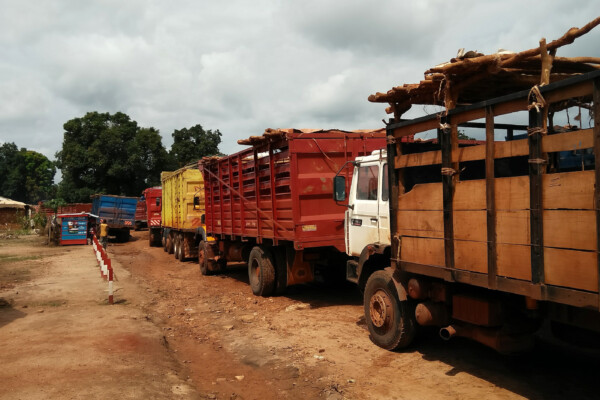
In 2014 deed IPIS een uitgebreid ‘conflict mapping’ onderzoek om inzicht te krijgen in de veiligheidssituatie in de Centraal-Afrikaanse Republiek (CAR). Dit leidde tot de publicatie van een publiek toegankelijke webkaart over belangrijke conflictdynamieken. IPIS bracht de gewapende groepen, mensenrechtenschendingen, natuurlijke rijkdommen, vluchtelingenstromen en migratieroutes van veehouders in k
Analysis of the interactive map of artisanal mining areas in eastern DR Congo – 2015 update
- Ken Matthysen, Lotte Hoex, Yannick Weyns | 25 octobre 2016
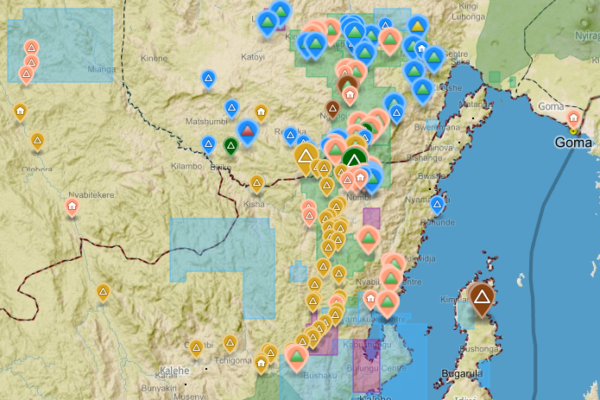
The Belgian research group IPIS has collected data on 2026 artisanal mining sites in eastern DRC over the last couple of years. IPIS observed an armed presence in more than half of the mines. In an interactive map, updated in 2015, IPIS provides information about the on-site presence of armed groups and the Congolese army (FARDC) as well as indicators of the relative importance of the site. It als
Annual Report 2015
- IPIS | 31 août 2016
Download pdf or open with issuu reader http://issuu.com/ipisresearch/docs/2016_10_10_ipis_jaarverslag_2015_20
Accessible and Interactive: New Methods of Data Visualization as Tools for Data Analysis and Information Sharing in Transitional Justice Research
- Alexandre Jaillon, Tim Rosenkranz | 24 mars 2016
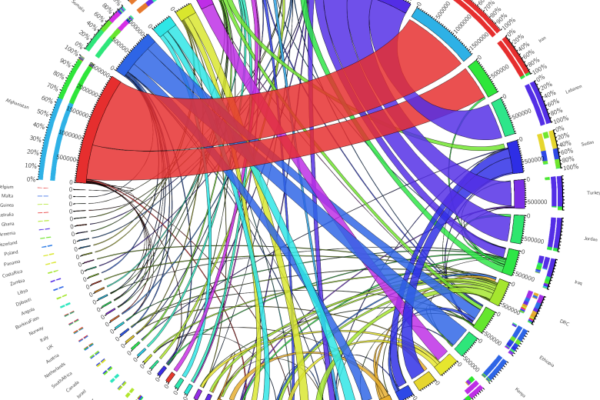
Abstract The production and use of datasets is a growing area in transitional justice research. One constant limitation, however, is the way this data is visualized. Relying only on static graphics and tables, many of these datasets are insufficiently explored and analyzed, and remain inaccessible for other researchers. Interactive data visualization tools are an ideal method for overcoming this g
Mineral supply chains and conflict links in eastern democratic republic of congo
- Fiona Southward | 25 novembre 2015
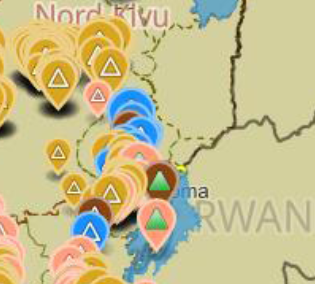
Between 2009 and 2010 IPIS collected data on over 550 mining sites as part a conflict mapping exercise focusing on Eastern Democratic Republic of Congo (DRC). With the collaboration of Congolese researchers, IPIS collected the coordinates of the most important mining sites and information on on-site security in North and South Kivu provinces, Maniema, Northern Katanga and southeast Province Orient

Cartographie des motivations derrière les conflicts: la République centrafricaine
- Filip Hilgert, Lotte Hoex, Steven Spittaels, Yannick Weyns | 25 novembre 2014
En 2009, l’International Peace Information Service (IPIS) a publié un rapport et une série de cartes analysant la situation de la République centrafricaine en termes de sécurité, notamment la composition, les actions, les motivations et les intérêts des groupes armés et autres parties au conflit.1 Cinq ans plus tard, après la prise de pouvoir temporaire par la Séléka, le conflit de faible intensit
Analysis of the interactive map of artisanal mining areas in Eastern DRC – May 2014 Update
- Anna Bulzomi, Filip Hilgert, Ken Matthysen, Steven Spittaels, Yannick Weyns | 30 avril 2014
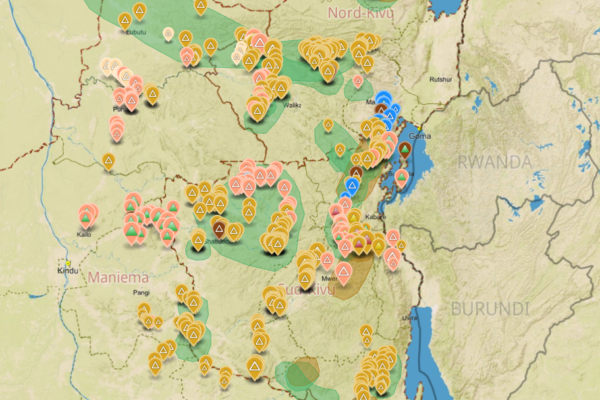
In collaboration with the Congolese mining cadastre (CAMI), mining service SAESSCAM and representatives from local civil society organisations, IPIS organised a series of field visits to monitor artisanal mining activities and the involvement of armed groups and criminal networks in mineral exploitation and trade. This resulted in the publication of an interactive web map providing information on

Wereldbeeld: Nieuwste VN-vredesmissie start in de Centraal- Afrikaanse Republiek: Geweld, een zwakke veiligheidssector en de rol van de internationale gemeenschap. Lotte Hoex. pp 6-13
- Lotte Hoex | 3 mars 2014
Om burgers te beschermen tegen het aanhoudende geweld in de Centraal-Afrikaanse Republiek (CAR), ging op 15 september 2014 de nieuwste vredesmissie van de Verenigde Naties (VN) van start. De CAR ligt in centraal Afrika, telt vijf miljoen inwoners en is één van de armste landen ter wereld. Sinds de onafhankelijkheid van Frankrijk in 1960 kampt de CAR met een onstabiele politieke situatie en regelma
Mapping Conflict Motives: the Sudan – South Sudan border
- Steven Spittaels, Yannick Weyns | 23 janvier 2014
In “Mapping Conflict Motives: the Sudan-South Sudan border”, IPIS analyses the conflict dynamics in the wider border area spanning Sudan and South Sudan. The analysis specifically looks into the motivations and interests of the parties involved in the interstate, intrastate and local conflicts in this area. The report covers the following key questions: Where are conflict parties focussing their e
Analysis of the interactive map of artisanal mining areas in Eastern DR Congo (2013)
- Filip Hilgert, Steven Spittaels | 13 novembre 2013
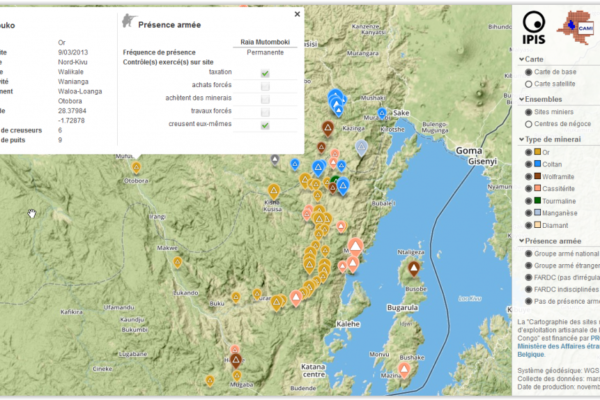
In August 2009 the ‘International Peace Information Service’ (IPIS) published a first map of militarised mining areas in Eastern DR Congo. By 2012, the international interest in the issue had grown but the map was out-dated. To find a structural solution, IPIS sat down with the Congolese mining cadastre (CAMI) and agreed to set up a permanent system to monitor artisanal mining activities and the i
Mapping Conflict Minerals (2012)
- Elisabeth Schoepfer, Filip Hilgert, Kristin Sproehnle | 28 décembre 2012
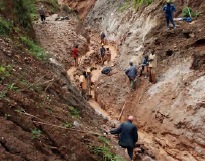
How GMES supports the International Peace Information Service (IPIS), in: Window on GMES, Special Issue: Discover the “S” in GMES, pp. 82-88 Exploitation of natural resources has, in most cases, a strong impact on the environment, often even spoiling natural habitats and affecting people’s way of life. The exploitation and trade of minerals can also fuel armed conflicts, as it is the case in the E
Cartographie des motivations derrière les conflits: le M23
- IPIS | 25 novembre 2012
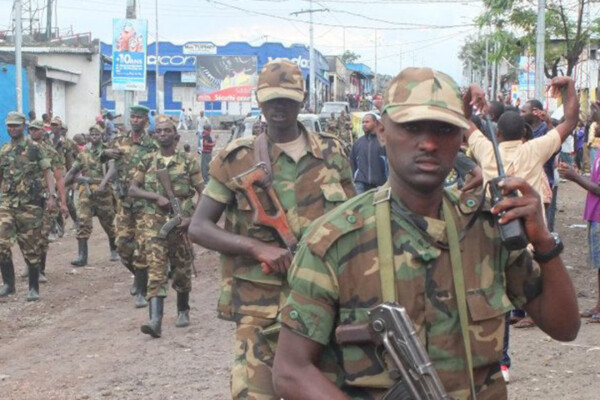
Depuis 2004, IPIS a publié divers rapports sur le conflit qui affecte la République démocratique du Congo (RDC). De 2007 à 2010, IPIS a porté avant tout son attention sur les motivations des principaux groupes armés qui subsistent en RDC suite aux guerres que le Congo a connues en 1996 et en 1998. Depuis 2010, nombre de ces groupes ont été démobilisés, plusieurs ont été intégrés à l’armée congolai
A Taxonomy of Non-State Armed Actors in the Central African Republic (2012)
- Jasper Bauters | 2 janvier 2012
This report hopes to provide an overview of how the Central African Republic got to where it is now, as well as to present the means to further our understanding of the current situation. First a genealogy of the current situation is provided, which is presented in the form of a narrative literature overview encompassing the postcolonial period. This is followed by a brief account on the main conf
Bisie. A one-year snapshot of the DRC’s principal cassiterite mine (2011)
- Filip Hilgert | 28 novembre 2011
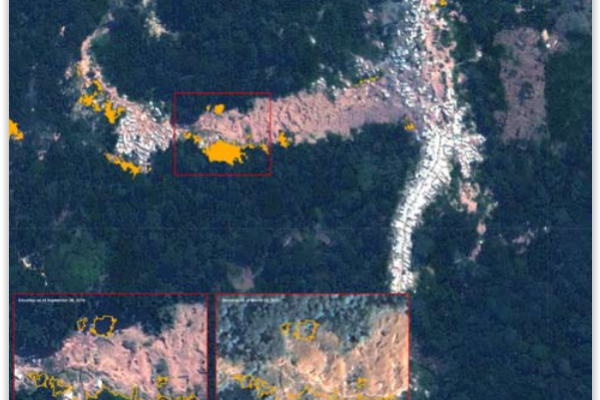
Much has happened in the mining sector of Eastern DRC over the last year. President Kabila imposed a ban on all mining activities last fall, during which production fell considerably. As soon as the suspension was lifted in the spring of this year, the major global electronic companies stopped buying minerals from the region, provoking a de facto embargo on Congo’s minerals with detrimental effect
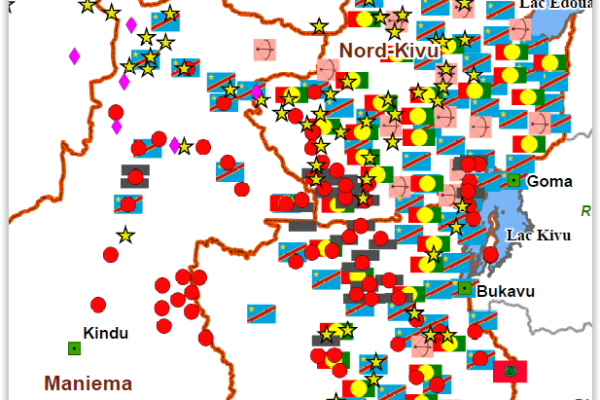
Cartes simplifiées illustrant le lien entre ressources naturelles et conflits armés en RD Congo
- Filip Hilgert | 17 janvier 2011
A la demande de plusieurs utilisateurs des cartes web d’IPIS, et avec l’appui de la Coopération au Développement belge (DGD), IPIS a produit une série de six cartes simplifiées et imprimables en format PDF illustrant le lien entre ressources minérales et conflits armés en République démocratique du Congo. Ces cartes simplifiées sont basées sur les cartes web interactives qu’IPIS a publiées sur ce

La complexité de la gestion des ressources dans un contexte de fragilité de l’État : une analyse du secteur minier dans l’arrière-pays du Kivu
- Filip Hilgert, Ken Matthysen, Steven Spittaels | 30 novembre 2010
Le rapport intitulé « Exploitation minière et commerce des minerais dans l’arrière-pays du Kivu » est une commande de la Direction générale du développement (DG Développement) de la Commission européenne. Il vise à combler un manque informationnel en identifiant les principaux sites miniers et en analysant les réseaux d’échanges commerciaux de l’arrière-pays de l’est de la République démocratique
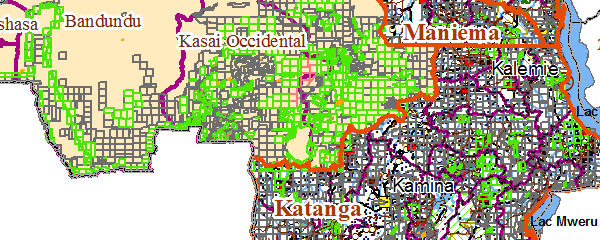
Concessions minières en RD Congo
- Filip Hilgert | 17 août 2010
IPIS a établi une carte web interactive de toutes les concessions minières en République démocratique du Congo. Cette carte fait suite à une carte de concessions que nous avons publiée en août 2009 (en complément de notre ‘Carte interactive des zones minières militarisées aux Kivu’ – MiMiKi), montrant les périmètres miniers dans les provinces du Kivu. L’idée d’une version élargie et actualisée de
Cartographie des motivations derrières les conflict: ‘Province Orientale’ (RDC)
- Filip Hilgert, Steven Spittaels | 25 mars 2010
Les districts de l’Ituri, du Haut-Uele et du Bas-Uele ainsi que le territoire de Bafwasende continuent de souffrir de la présence de groupes armés. De manière générale, la puissance des groupes armés dans la province Orientale est limitée, et leurs effectifs ne sont pas nombreux. De plus, il y a une présence considérable de l’armée congolaise. Les deux districts de l’Uele se situent au nord de la
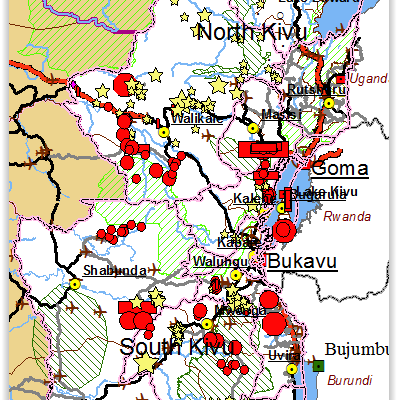
Note accompagnatrice de la carte interactive des zones minières militarisées au Kivu
- Filip Hilgert, Steven Spittaels | 12 août 2009
La carte MiMiKi constitue une première tentative systématique de jeter un éclairage sur la question des profits tirés par des groupes armés du secteur de l’industrie extractive à l’est de la RD Congo1. On a beaucoup dit et écrit à ce sujet tant dans la presse que dans des rapports compréhensifs2. Cependant, on dispose de peu de connaissances systématiques de la situation sur le terrain. Face aux a
Cartographie des motivations derrière les conflits : la République centrafricaine
- Filip Hilgert, Steven Spittaels | 18 février 2009
Peu de zones en République centrafricaine sont réellement sécurisées. Même si le pays est faiblement peuplé, il est déchiré par une multitude d’acteurs armés. Ces combattants recourent aux armes pour des raisons diverses mais ils ont une chose en commun : face à un quelconque Etat bien organisé, ces opposants ne feraient pas le poids. Mais un Etat organisé, c’est justement cela qui manque à la Rép