
Publicaties
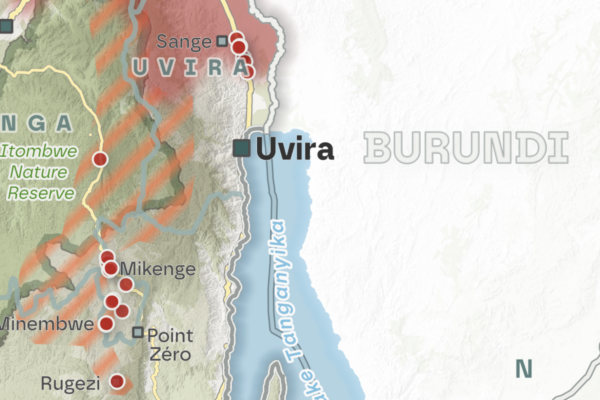
Shifting frontlines in 2026: New year – old challenges. Hostilities in eastern DRC continue amid increased diplomatic efforts
- IPIS | 25 juni 2026
As the conflict in eastern DRC entered its third year of major hostilities between the Rwanda-backed AFC/M23 alliance and the FARDC/Wazalendo coalition, diplomatic efforts continued in early 2026 to advance the peace process. Despite renewed diplomatic momentum and both parties’ stated commitment to the peace processes, the situation on the ground remained marked by continuous violent clashes, shi
Annual Report 2025
- IPIS | 24 juni 2026
Looking back at 2025, we witnessed a year that was defined by escalating conflicts. The AFC/M23’s capture of the provincial capitals of Goma and Bukavu in eastern Democratic Republic of Congo (DRC) in early 2025 directly impacted our team, partners, and activities focused on peace and natural resource governance. The rebel group’s territorial advance and the resulting violence – both with the Cong
Een zware stilte: Hoe de opstand van de Mobondo het Westen van de DRC ontwricht
- CDJP Kinshasa, Caritas International Belgique, DIIS, IPIS | 11 maart 2026
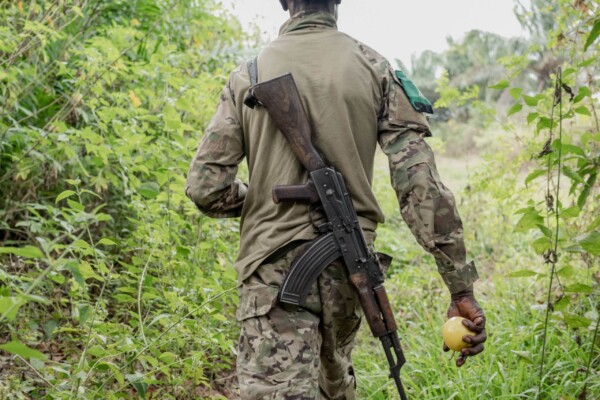
Sinds 2022 wordt het westen van de Democratische Republiek Congo (DRC) geteisterd door een ernstige veiligheids- en humanitaire crisis, met meer dan 5.000 doden en 280.000 ontheemden. Terwijl de internationale aandacht vooral uitgaat naar de gewelddadige conflicten in het oosten van de DRC, raakt een conflict tussen verschillende gemeenschappen in de buurt van Kinshasa steeds verder verstrikt in e

The emergence of the Wazalendo in the fight against the AFC/M23 in North Kivu: Current situation, challenges and prospects
- Anonymized, IPIS | 5 februari 2026
On January 27, 2025, the Congo River Alliance/March 23 Movement (AFC/M23) – supported by Rwanda – took control of Goma, the capital of North Kivu province in the Democratic Republic of Congo (DRC), and then moved on to Bukavu, the capital of South Kivu, which fell in February 2025. The re-emergence of M23 in 2021 and its rapid advance prompted the Congolese government to resort to non-state armed

Shifting frontlines in October, November and December – Limits of diplomacy: AFC/M23 advances after Washington Accords
- IPIS | 19 december 2025
On 4 December 2025, Rwanda and the Democratic Republic of the Congo (DRC) signed the US-brokered Washington Accords for Peace and Prosperity, committing to cease hostilities, establish a permanent ceasefire, and implement the 25 April Declaration of Principles and the 27 June Peace Agreement. However, critical questions have been raised about the prospects for lasting peace in eastern DRC, as Kig

M23’s territorial advances in July, August, and September 2025 – Escalating violence and fragile peace in eastern DRC’s Kivu regions
- IPIS | 17 oktober 2025
New peace agreements from Washington and Doha have brought hope for initiating a pathway to resolve the ongoing M23-conflict in DRC’s eastern territories in recent months. However, after the signing of the Declaration of Principles in Doha on 19 July, direct negotiations between the DRC and AFC/M23 were intended to result in a comprehensive peace agreement and were planned to begin no later than 8

M23’s territorial advances in June – A long path to peace: Renewed efforts to resolve the M23 conflict in Eastern Congo
- IPIS | 18 juli 2025
New mediation efforts have been made throughout June to end the ongoing conflict between the Rwandan-backed M23 rebels and pro-government forces in the North and South Kivu regions of eastern Congo. On June 27th, the Democratic Republic of Congo and Rwanda signed a peace agreement in Washington, D.C., aimed at de-escalating tensions and fostering regional stability after years of conflict in easte

M23’s territorial advances in May – From Doha to Goma: The disconnect between diplomacy and reality in Eastern Congo
- IPIS | 12 juni 2025
Despite the ongoing peace negotiations between the Rwandan-backed M23 rebels and the Congolese government in Doha (Qatar), and the signature of a declaration of principles between Rwanda and the DRC, under the patronage of the United States in Washington, D.C. in April, the evolution of the conflict in eastern DRC has shown no sign of abating.

The (new) M23 offensive on Goma: Why this long-lasting conflict is not only about minerals and what are its implications? – Q&A
- IPIS | 6 februari 2025
By the morning of January 29th, the rebels largely controlled the strategic city of Goma. To provide a quick and understandable explanation of the causes of this humanitarian crisis, the role of natural resources, and in particular minerals, is often overemphasized. While mining and mineral trade inevitably play an important role — being a vital part of the local economy — it is important to asses
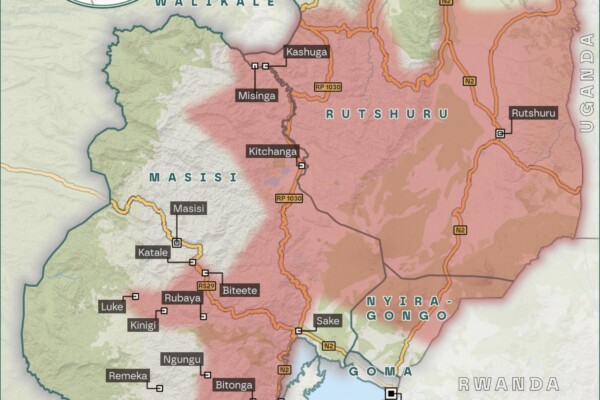
Shifting frontlines: Visualizing the evolution of the M23’s territorial influence in early 2024
- Ken Matthysen | 20 juni 2024
In early 2024, IPIS, ASSODIP, and DIIS published a report on the stakes and motivations of the “March 23 Movement” (M23), a rebellion causing serious insecurity and humanitarian suffering in the eastern Democratic Republic of Congo (DRC). The movement took up arms again in 2021, and it rapidly seized vast territories in the south-east of North Kivu province in 2022, with military support from the
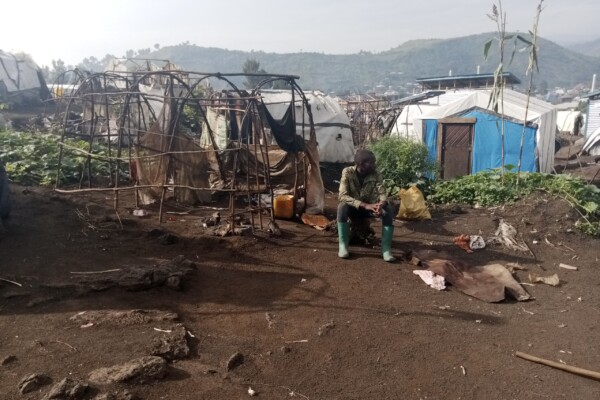
The M23 “version 2” – Local stakes, motivations, perceptions, and impacts
Since 2021, the eastern part of the Democratic Republic of Congo (DRC) has once again fallen victim to the “March 23 Movement” (M23). Supposedly defeated in 2013, the M23 took up arms again in 2021, and by 2022 had rapidly seized vast territories in the south-east of North Kivu province.
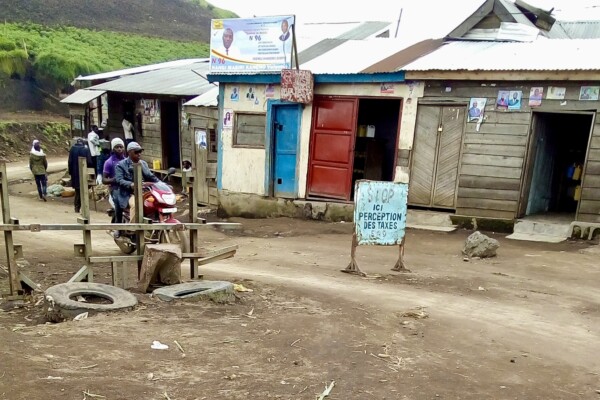
Roadblocks in Masisi and Walikale: Predation on movement in turbulent times
While minerals have centered in research on conflict financing in the Democratic Republic of the Congo, armed actors often rely on alternative sources of revenue to finance their struggles. Among these are the operation of roadblocks. In this report, produced together with ASSODIP and the Danish Institute for International Studies, IPIS studies the linkage between roadblocks and the local artisana
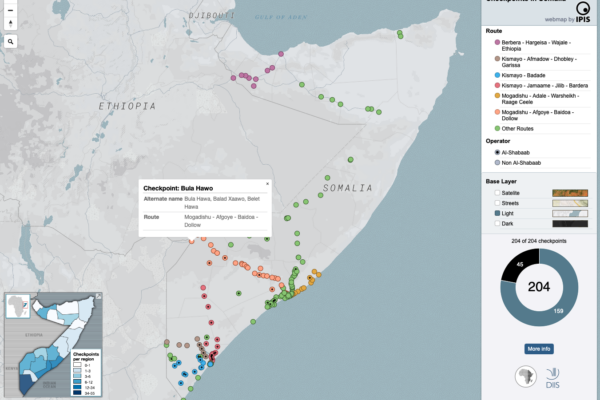
Mapping the political economy of checkpoints in Somalia
- IPIS | 20 december 2023
The maps inform users on the locations of roadblocks across Somalia, the distribution of violence at checkpoints as well as the density of checkpoints per administrative region. Different maps also identify varying characteristics of the roadblocks, including their operator, location on a primary/secondary road and the amount paid at the checkpoint as toll.
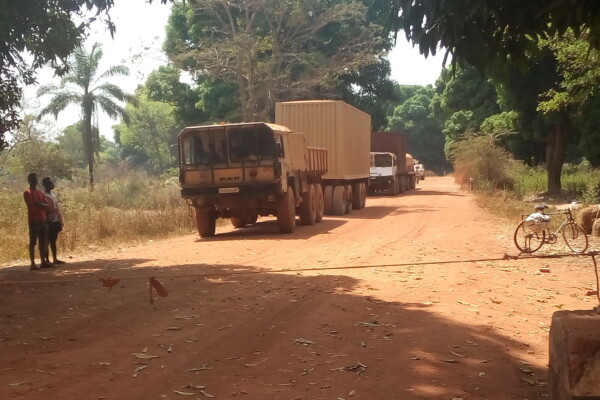
Checkpoint economy: the political economy of checkpoints in South Sudan, ten years after independence
- Ken Matthysen, Peer Schouten | 10 december 2021
Ten years after independence, the world’s youngest country is home to an entrenched political economy of conflict premised on checkpoint taxation. Humanitarian aid is not exempt, reveals a major new mapping report by DIIS and IPIS. When South Sudan became independent ten years ago, oil revenues were supposed to fuel the economy of the world’s newest country. But two years later in 2013, oil prices
Advocating for an improved enabling environment for the production, trade and export of OECD Due Diligence Guidance (DDG)-conformant minerals from eastern DRC
- Levin Sources | 23 november 2021
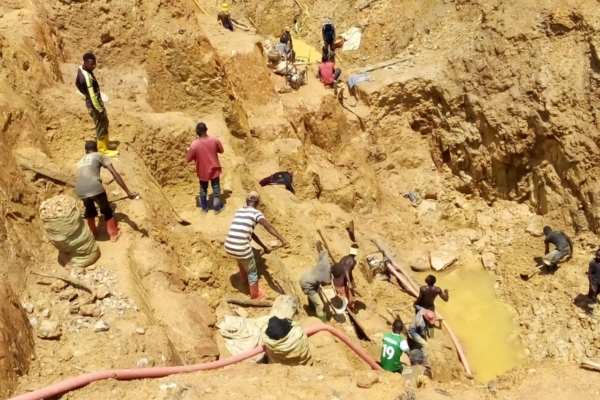
As part of the Madini project, a review of the current situation, trends and barriers in the production, trade and export of tin, tantalum, tungsten (3T) and gold from eastern Democratic Republic of Congo (DRC) was conducted by Levin Sources, with the aim to recommend concrete actions that can improve OECD-conformant sourcing of these minerals from eastern DRC. The link between the exploitation of
Promoting peaceful and seasonal migration in Northern Central African Republic
- Guillaume de Brier, Peer Schouten (DIIS/IPIS) | 9 februari 2021
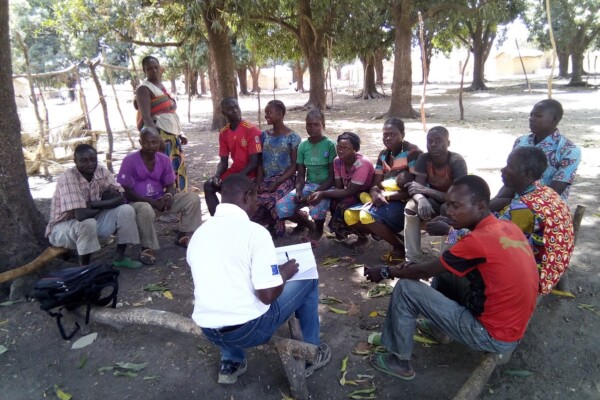
“You can negotiate with an armed group, not with the drought” The borderlands of the Central African Republic (CAR) are home to one of the largest seasonal livestock migrations (transhumance) in the world. Decades of unrest and crisis, however, have brutally disrupted most aspects of herding—the routes taken, the people involved, governance mechanisms, as well as relations to local populations. To
Het conflict in de Centraal-Afrikaanse Republiek
- Fiona Southward, Peer Schouten (DIIS/IPIS) | 9 september 2020
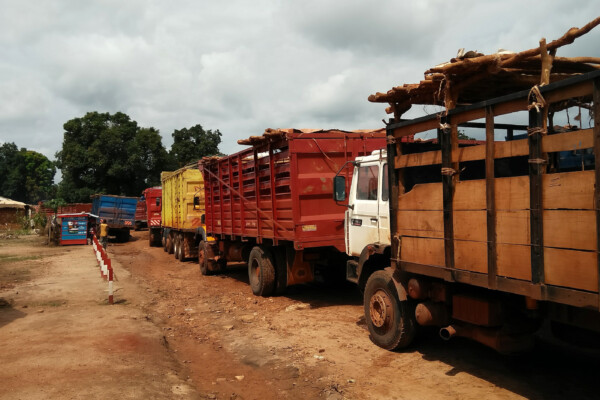
In 2014 deed IPIS een uitgebreid ‘conflict mapping’ onderzoek om inzicht te krijgen in de veiligheidssituatie in de Centraal-Afrikaanse Republiek (CAR). Dit leidde tot de publicatie van een publiek toegankelijke webkaart over belangrijke conflictdynamieken. IPIS bracht de gewapende groepen, mensenrechtenschendingen, natuurlijke rijkdommen, vluchtelingenstromen en migratieroutes van veehouders in k
Annual Report 2019
- IPIS | 26 augustus 2020
This 2019 annual report provides an overview of IPIS’ research projects, capacity enhancement and outreach activities throughout last year. Read the full activity report to see what IPIS has been up to in 2019.
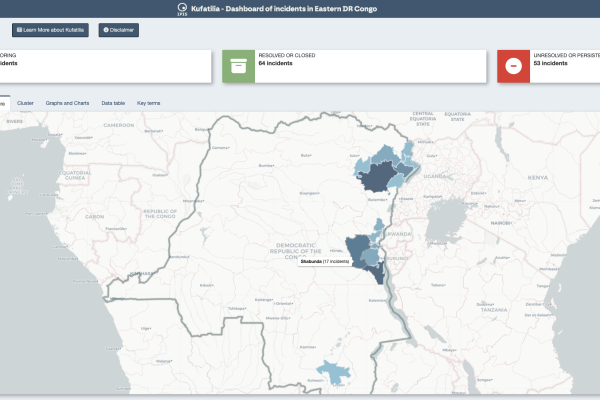
Dashboard of incidents in eastern DRC – Kufatilia
- Thomas Muller | 10 juni 2020
The Kufatilia platform (“to track” in Swahili) is an SMS based incident reporting and follow-up mechanism that has been launched in 2019 to increase transparency of minerals supply chains in Eastern DRC. Developed by IPIS in partnership with the Centre for Expertise on Mining Governance (CEGEMI) based in Bukavu, and powered by Ulula, Kufatilia is a tool for Congolese civil society organisations to
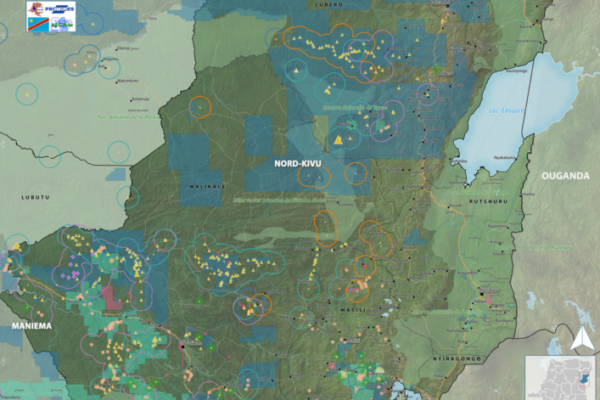
Maps of conflict minerals in Eastern DRC (2020)
- Alexandre Jaillon | 9 juni 2020
IPIS created maps of conflict minerals in eastern DRC, more particularly on Haut Uele, Ituri and North and South Kivu. These maps detail the type of minerals, the qualification of the mines, the mining titles and give an overview of armed presence in and around the mines. d Download the North Kivu map in full resolution Download the South Kivu map in full resolution Download the Haut