
Publications

A Code of Conduct for Arms Transport by Air. Transport Services under an Arms Trade Treaty Series
- Brian Wood, Peter Danssaert, Sergio Finardi | 12 août 2012
This report is a discussion of some key considerations for the development of and « Air Cargo Industry Voluntary Code of Conduct relating to the transport of arms, ammunition and other military equipment » (ACI Code). The purpose of such a Code is to encourage as many aviation companies and other actors as possible in the air cargo industry to adhere to existing and new standards relating to the tr

Rough Seas. Maritime Transport and Arms Shipments
- Peter Danssaert, Sergio Finardi | 6 juillet 2012
As stated by the authors in their report “Transparency and Accountability” (February 2012), the Chairman’s Draft Paper (14 July 2011) presented by the Arms Trade Treaty’s Preparatory Committee (ATT PrepCom) included within the ATT scope certain activities that should fall under the category of “services”, such as transport and brokering. However, no provision has been envisaged for the monitoring

Upstream Implementation of the OECD Due Diligence Guidance for Responsible Supply Chains of Minerals from Conflict-Affected and High-Risk Areas. Cycle 2 Interim Progress Report on the Supplement on Tin, Tantalum, and Tungsten
- IPIS | 20 juin 2012
Cycle 2 Interim Progress Report on the Supplement on Tin, Tantalum, and Tungsten. The following report is the second in a cycle of three on upstream companies’ implementation of the Supplement on Tin, Tantalum and Tungsten to the OECD’s Due Diligence Guidance for Responsible Supply Chains of Minerals from Conflict-Affected and High-Risk Areas. The objective of the following is to report on progres
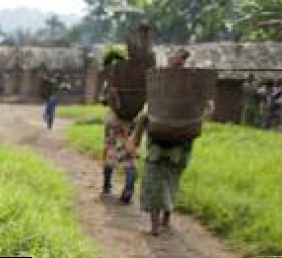
‘If you resist, we’ll shoot you’: The Democratic Republic of the Congo and the case for an effective Arms Trade Treaty
- Amnesty International, Peter Danssaert | 7 juin 2012
IPIS contributed to the research for this AI report. In July 2012 UN Member States are to agree the final text of a comprehensive Arms Trade Treaty. The experience of arms proliferation and abuse in the Democratic Republic of the Congo should help to persuade States to establish strict rules consistent with States’ existing responsibilities under international law. This report focuses on several c
Vlaams Wapenhandeldecreet: Analyse en aanbevelingen
- IPIS | 9 mars 2012
In november 2011 werd in het Vlaams Parlement een ontwerp van decreet ingediend ter vervanging van de federale wet van 5 augustus 1991 over in-, uit- en doorvoer van militair materieel, dit als gevolg van de regionalisering van de bevoegdheid inzake wapenhandel en van de Europese ICT-richtlijn die in mei 2009 goedgekeurd werd door de Raad en het Europees Parlement. Amnesty International toetste di

Study on the development of a framework for improving end-use and end-user control systems
- Brian Wood, Peter Danssaert | 16 février 2012
(UNODA Occasional Papers, No. 21, December 2011) Already, in 2002, the Security Council called upon States to establish an effective national end-user certificate system and to study the feasibility, as appropriate, of developing such a system at the regional and global levels, as well as information exchange and verification mechanisms. This study assesses existing practices regarding end-user ce

Transparency and Accountability. Monitoring and Reporting Methods Under An Arms Trade Treaty
- Peter Danssaert, Sergio Finardi | 8 février 2012
Without an understanding of the existing practices of States regarding their commonly agreed standards for the monitoring and reporting of their international transfers of conventional arms, it will be very difficult to draft many of the basic provisions of the Treaty to ensure compliance and enforcement. This report therefore seeks to clarify and discuss existing terminology and reporting practic

A Taxonomy of Non-State Armed Actors in the Central African Republic (2012)
- Jasper Bauters | 2 janvier 2012
This report hopes to provide an overview of how the Central African Republic got to where it is now, as well as to present the means to further our understanding of the current situation. First a genealogy of the current situation is provided, which is presented in the form of a narrative literature overview encompassing the postcolonial period. This is followed by a brief account on the main conf

Annual Report 2011 IPIS
- IPIS | 31 décembre 2011
Download in pdf or open with issuu reader. http://issuu.com/ipisresearch/docs/ipis_annualreport2011-1
Bisie. A one-year snapshot of the DRC’s principal cassiterite mine (2011)
- Filip Hilgert | 28 novembre 2011
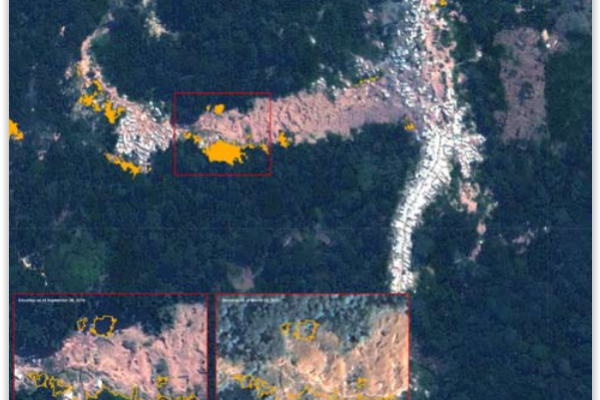
Much has happened in the mining sector of Eastern DRC over the last year. President Kabila imposed a ban on all mining activities last fall, during which production fell considerably. As soon as the suspension was lifted in the spring of this year, the major global electronic companies stopped buying minerals from the region, provoking a de facto embargo on Congo’s minerals with detrimental effect
Arms Transfers to the Middle East and North Africa: Lessons for an effective arms trade treaty
- Amnesty International, Peter Danssaert | 7 novembre 2011
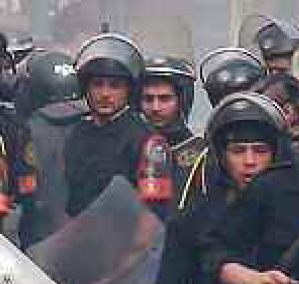
The numerous unlawful killings and other gross human rights abuses committed in response to the mass protests and demands for change that have gripped the Middle East and North Africa (MENA) region since late 2010 underscore, both vividly and tragically, the urgent need for the establishment and implementation of an effective global Arms Trade Treaty (ATT). All across the region, government author
Upstream Pilot Implementation of the OECD Due Diligence Guidance for Responsible Supply Chains of Minerals from Conflict-Affected and High-Risk Areas
- IPIS | 1 novembre 2011
Baseline Report on the Supplement on Tin, Tantalum, and Tungsten IPIS executed the research for and the writing of this OECD report. The present baseline report is the first in a cycle of three reports on the implementation by upstream companies of the Supplement on Tin, Tantalum and Tungsten of the OECD Due Diligence Guidance for Responsible Supply Chains of Minerals from Conflict-Affected and Hi
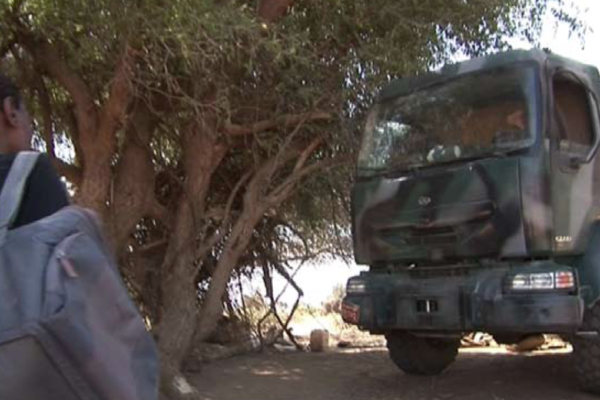
« Véhicules civils militarisables » and the EU arms embargo on Sudan
- Benoit Muracciole, Brian Johnson-Thomas, Ken Matthysen, Peter Danssaert | 13 septembre 2011
The ongoing humanitarian crisis in Darfur has been overlooked recently because the international community has been focusing on the popular revolts in North Africa in the first half of the year and South Sudan’s peaceful referendum on secession from northern Sudan, and the subsequent violence in and over the contested Abyei region, In December 2010, however, fighting in Darfur resumed and has cont

Kenya’s role in the trade of gold from eastern DRC
- Jeroen Cuvelier | 5 août 2011
On 11 September 2010, the Congolese Ministry of Mines put out a statement in which it announced President Kabila’s decision to suspend all exploitation and export of minerals from the provinces of North Kivu, South Kivu and Maniema until further notice. The statement explained that the ban was intended to put a stop to the illegal exploitation of natural resources in eastern DRC. In the decree est

The Arms Flyers. Commercial Aviation, Human Rights, and the Business of War and Arms
- Peter Danssaert, Sergio Finardi | 30 juin 2011
In the last decades, the « business of war » has attracted thousands of civilian transport and logistics companies, especially in the aviation sector. State and non-State actors engaged in armed conflicts or in military operations that require substantial logistic support have increasingly resorted to the services of civilian transport operators to fulfill their transport and logistics needs. For ai
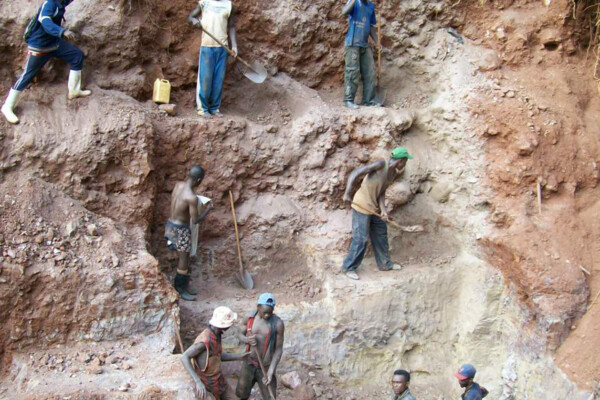
Guide to Current Mining Reform Initiatives in Eastern DRC
- Didier Verbruggen, Evie Francq, Jeroen Cuvelier | 17 avril 2011
US legislation has brought on a variety of initiatives aiming at mining reform in EDRC. This paper describes the basic elements of these initiatives, their genesis, the current state of affairs, the inkages between the initiatives and the main challenges they face. Further, the paper briefly evaluates the initiatives while focussing on the steps ahead. Download in pdf or open with issuu reader. ht
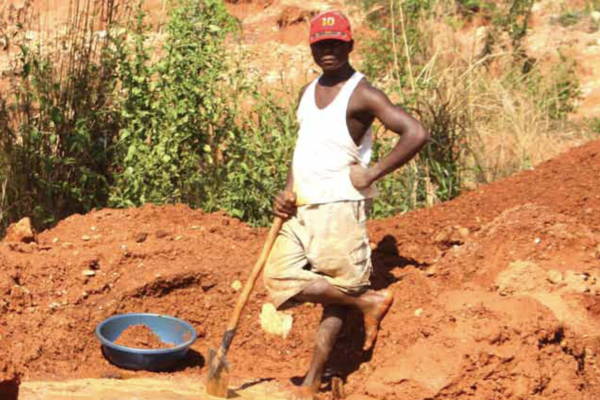
La complexité de la gestion des ressources dans un contexte de fragilité de l’État : le cas de l’est de la RDC
- Jeroen Cuvelier | 4 avril 2011
Bien que de nombreuses études publiées au cours de la décennie qui vient de s’écouler aient souligné le rôle central joué par le coltan, l’or et la cassitérite dans les conflits qui continuent de secouer la région, le mode opératoire des différents acteurs participant à l’exploitation et au commerce de ces minerais reste mal connu. Davantage d’informations sont requises sur le mode opératoire des
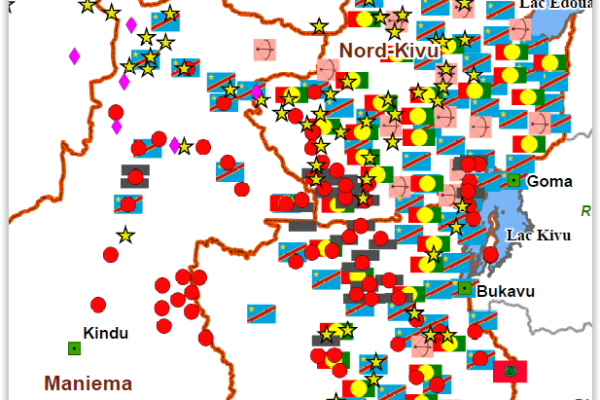
Cartes simplifiées illustrant le lien entre ressources naturelles et conflits armés en RD Congo
- Filip Hilgert | 17 janvier 2011
A la demande de plusieurs utilisateurs des cartes web d’IPIS, et avec l’appui de la Coopération au Développement belge (DGD), IPIS a produit une série de six cartes simplifiées et imprimables en format PDF illustrant le lien entre ressources minérales et conflits armés en République démocratique du Congo. Ces cartes simplifiées sont basées sur les cartes web interactives qu’IPIS a publiées sur ce

Jaarverslag 2010 IPIS
- IPIS | 31 décembre 2010
Download in pdf or open with issuu reader. http://issuu.com/ipisresearch/docs/jaarverslag2010-2

The Karamoja Cluster of eastern Africa: Arms transfers and their repercussions on communal security perceptions
- Brian Johnson-Thomas, Ken Matthysen, Peter Danssaert, Sergio Finardi | 31 décembre 2010
Nomadic peoples are often, if not universally, perceived as a problem by the governments of the nation states who have responsibility for them; this is particularly so in the case of the three nations with which this report is concerned, viz: Kenya, Uganda and (southern) Sudan. The pastoralist societies within the Karamajong cluster have been unable to adequately defend themselves politically agai