
Copper and cobalt are vital to the DRC’s economy, accounting for 90% of its total export value in 2023. With vast reserves concentrated in the Copperbelt that stretches across the southeastern provinces of Lualaba and Haut-Katanga, the DRC is at the center of global competition for the two minerals, which are indispensable for energy transitions and electrification. China currently dominates the sector through a series of joint ventures with Congolese state-owned enterprises, while Europe and the US are seeking to secure supply, including through strategic partnerships.
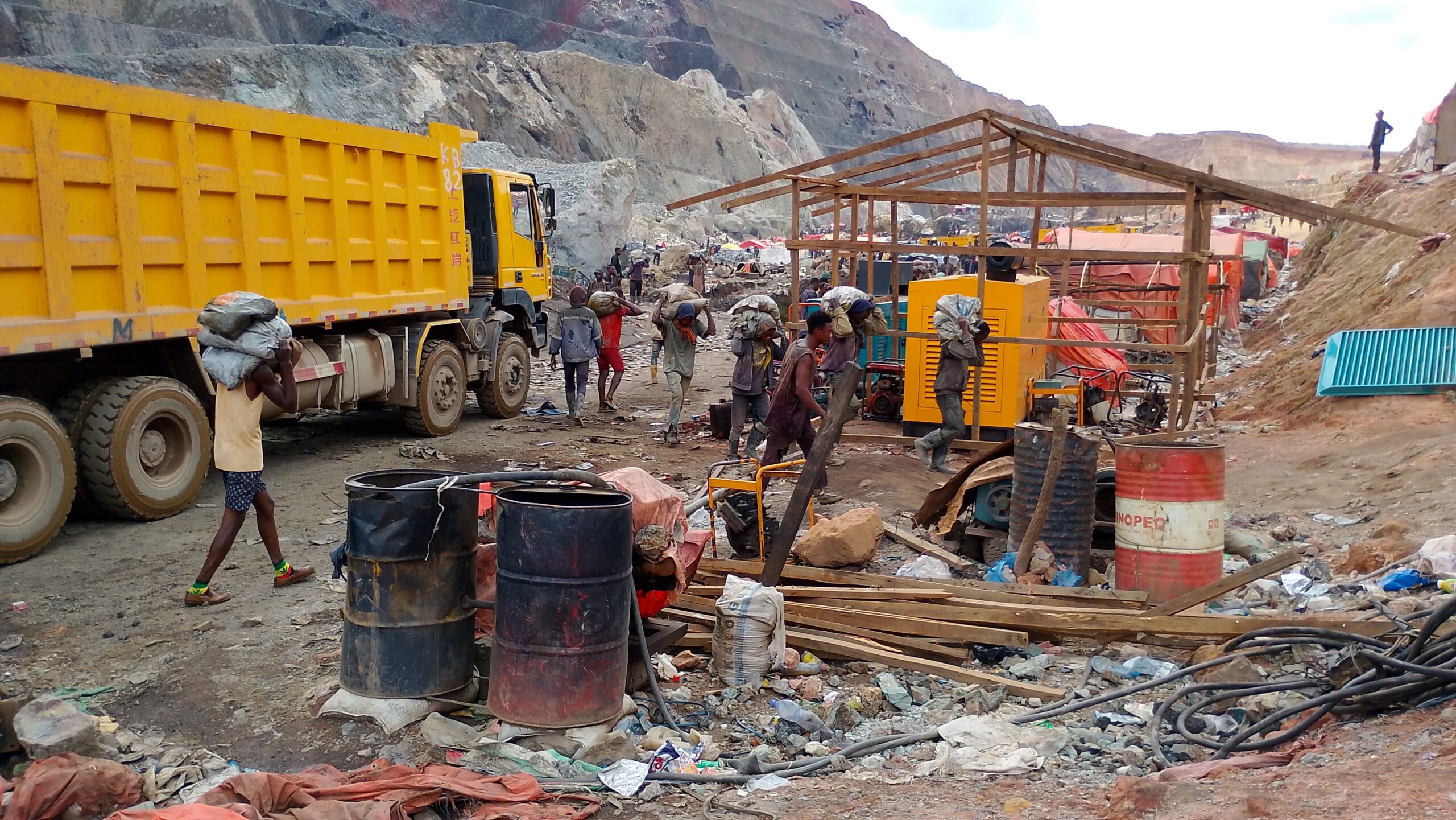
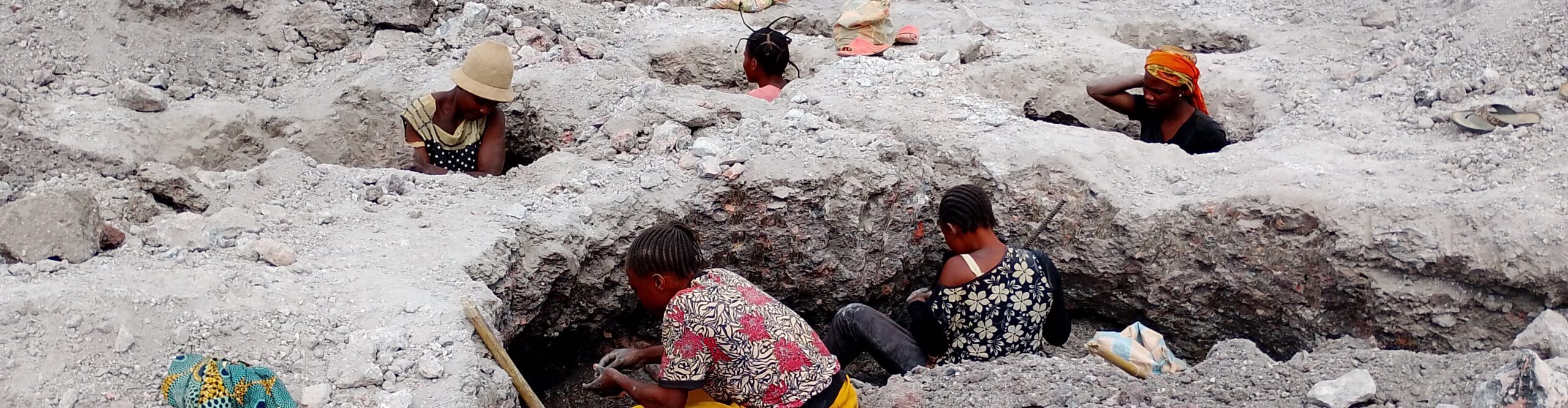
Alongside large-scale mining (LSM) companies, over a hundred thousand artisanal miners dig for copper and cobalt in the region. Although industrial actors tend to distance themselves from artisanal and small-scale mining (ASM) to avoid reputational risks – linked to the hazardous labor conditions and child labor associated with ASM – the two sectors are closely interlinked. Due to a lack of dedicated zones, artisanal mining largely occurs on industrial concessions and in residential areas, constituting a concern for both industry and the state.
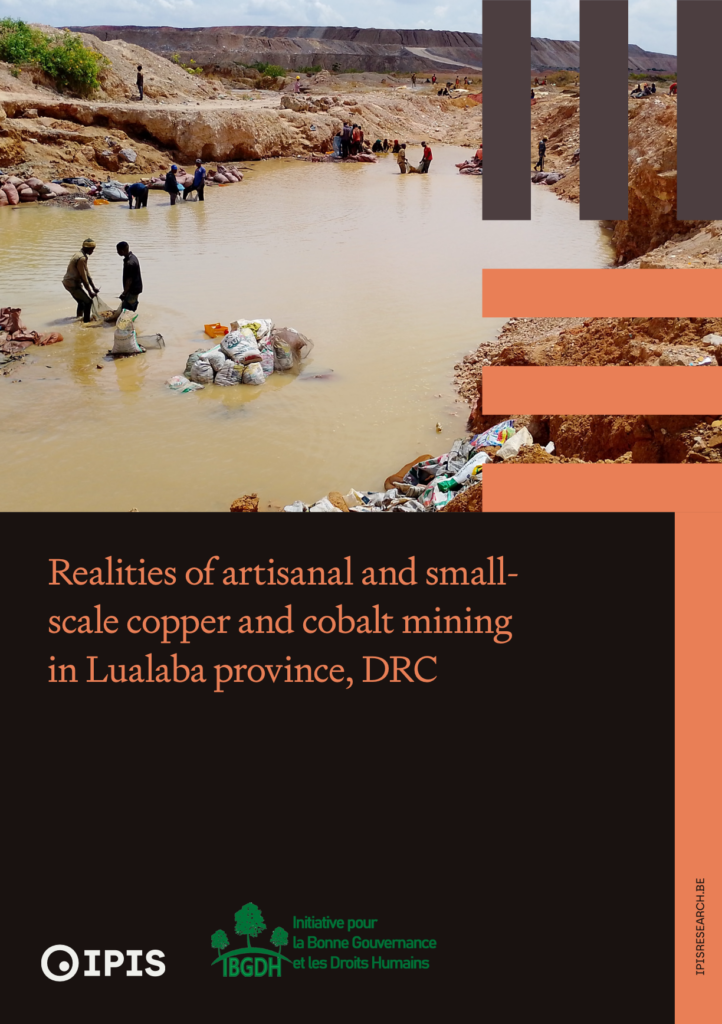
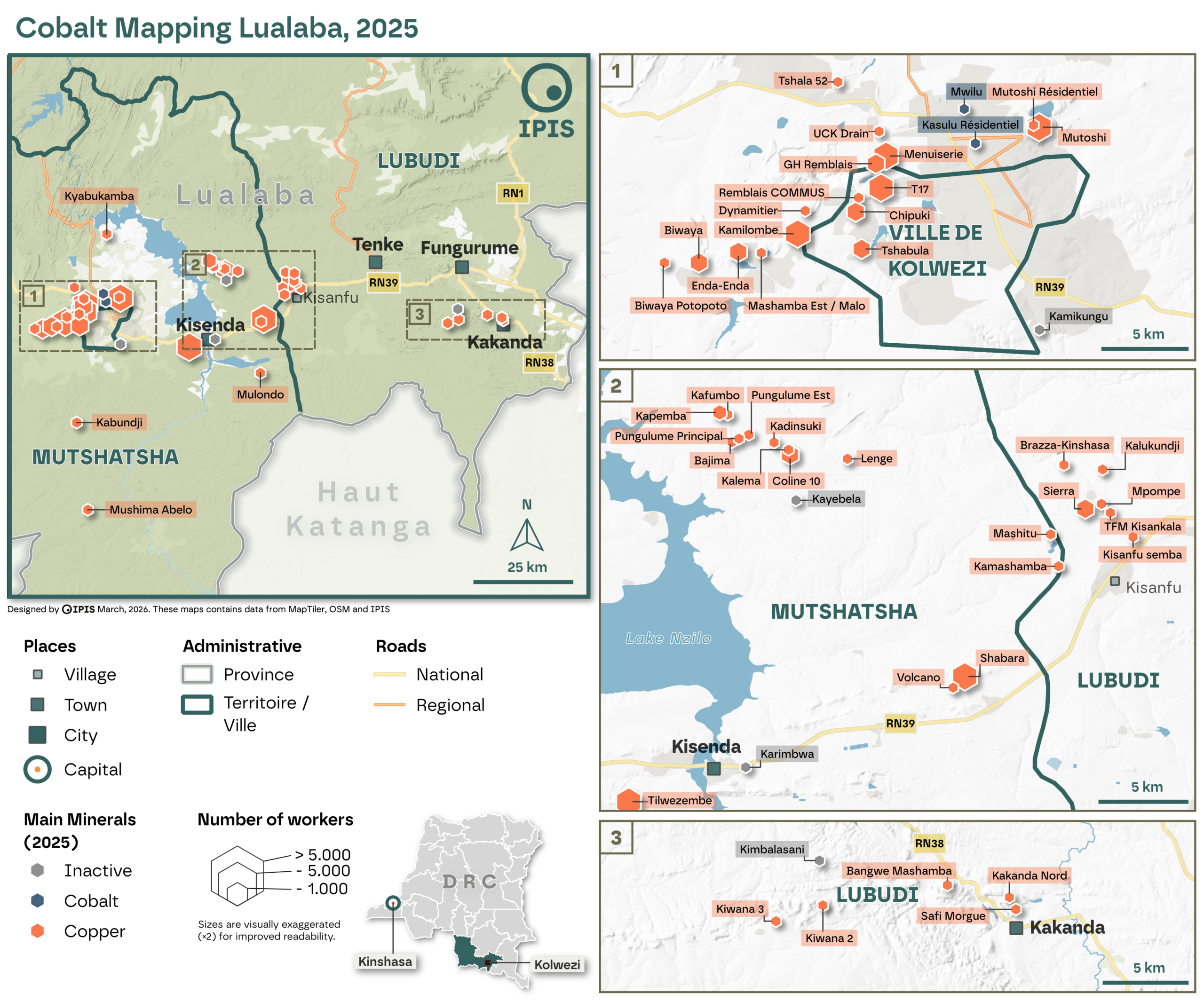
To better understand the copper and cobalt ASM sector and its challenges, IPIS collaborated with the Congolese mining service SAEMAPE and the Kolwezi-based civil society organization IBGDH, to map 51 ASM sites in Lualaba province and interview key mining stakeholders. The study examines production, supply chain actors and trade practices, interference of armed actors and the challenging coexistence of ASM with industrial actors, to identify key obstacles hindering the implementation of the regulatory framework and limiting the sector’s potential for local development.
The ASM landscape and domestic supply chain: Informality, elite capture, and foreign influence
High global demand and prices make copper and cobalt artisanal mining a relatively lucrative activity, sustaining the livelihoods of many in Lualaba and Haut-Katanga. Despite the sector’s male dominance, with women often excluded from the most lucrative on-site digging, the report shows that ASM still provides critical direct and indirect employment opportunities for women, allowing them to contribute to and benefit from the sector’s economic gains.
The report also highlights how the copper and cobalt (ASM) sector has historically been influenced by international price fluctuations and industrial activities, with miners frequently switching between ores based on market conditions. In May 2025, at least 109,00 people, were actively engaged in copper and cobalt mining in the sites visited by IPIS. Exact production levels are, however, difficult to measure as origin data is often lost along the supply chain and ASM output is frequently mixed with industrial minerals during processing.
The Congolese Mining Code restricts ASM to designated Zones d’Exploitation Artisanale (ZEAs). Due to a lack of (viable) ZEAs, many artisanal miners, however, operate informally on industrial concessions or in residential areas. As the report shows, while these activities are sometimes labeled “clandestine”, they are also sometimes “tolerated” by some industrial concession holders, to maintain social stability.
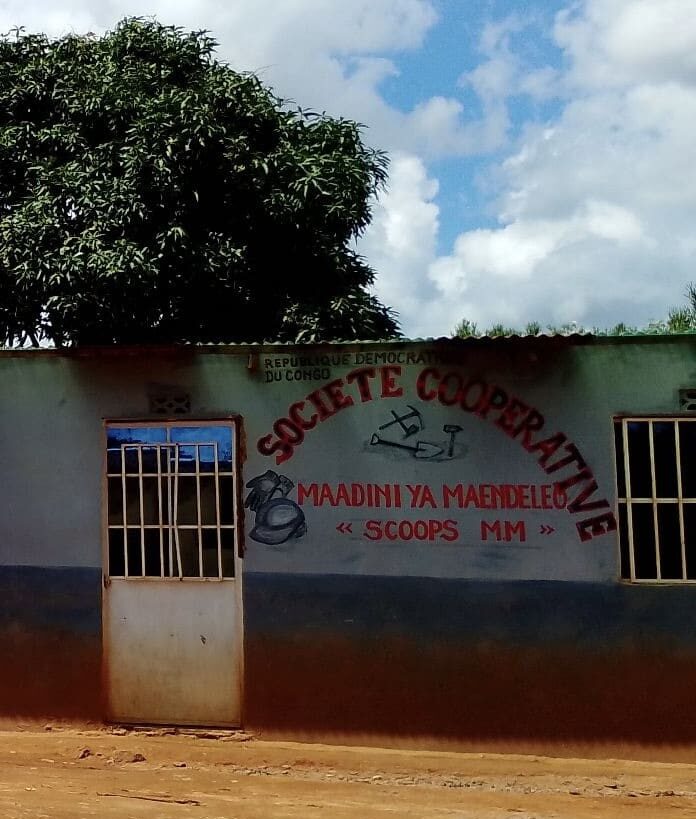
In addition, the Mining Code requires artisanal miners to operate in the context of a cooperative. In theory, cooperatives are set up by groups of artisanal miners to coordinate activities, share costs and revenues, and strengthen their bargaining power with public and private sector actors. However, cooperatives in Lualaba are often owned by individuals who employ artisanal miners, and at half of the visited mining sites, they were perceived as a burden for artisanal diggers. This was due to excessive production fees, a lack of investment, exploitative purchasing practices, and the semi-industrialization of mining activities at the expense of artisanal diggers. In recent years, semi-industrial mining has indeed emerged in response to depleting mineral deposits and the influence of foreign investors and local elites seeking to maximize profits.
Although the Mining Code reserves artisanal digging and trading rights for Congolese nationals to promote the emergence of a local middle class, artisanal mining supply chains are dominated by foreign trade networks, primarily Chinese and Lebanese, which invest in local business operations.
Formalizing ASM: The obstacles ahead
Despite its importance as a source of employment, the copper and cobalt ASM sector faces significant challenges that prevent local communities from fully benefiting. The report has identified several issues that undermine local development and contribute to a negative perception of the sector, overshadowing its economic importance. Key challenges include:
- Limited legal spaces for artisanal mining (Zones d’Exploitation Artisanale) – due to a lack of viable ZEAs, artisanal miners operate informally and in precarious conditions on industrial concessions.
- Hazardous working and living conditions – Miners work in dangerous conditions due to insufficient investments in maintenance, safety equipment, and minimal state oversight. Nearby communities face health risks, elevated metal exposure, and contaminated farmland.
- Child labor – Contrary to common perception, children (under 18) constituted no more than 0.6% of the workforce on visited sites. Their presence is often due to the proximity of sites to nearby villages. Some children perform auxiliary work like transport, and the selling of food, drinks or consumer goods.
- Limited oversight and traceability – State services lack the capacity for permanent oversight, contributing to a lack of transparency. It is difficult to trace the origin of copper and cobalt ores, because the production from various ASM sites is mixed with industrial ore at processing facilities.
- Exploitative purchasing practices – Dépôts (warehouses) often engage in exploitative purchasing practices, including scale tampering, underpayment, and ignoring the value of secondary minerals, while foreign buyers exploit their de facto monopsonies to suppress prices. Moreover, unauthorized state services were presented on most visited sites, seeking to share in the revenues generated by ASM. The Congolese army, for example, was present on 64% of the visited sites, mainly imposing illegal taxes, seizing production, and monopolizing the sale of consumer goods. In some cases, they also engage in mining operations through pre-financing.
- (Illegal) vertical integration of foreign investors – Local socio-economic progress within the copper and cobalt mineral trade is undermined by vertical integration of foreign capital as many local warehouses function as buying houses owned by foreign investors, operating through local frontmen. In some cases, cooperatives themselves are controlled by international traders who pre-finance their activities.
- Politicization and elite capture of mining cooperatives – While cooperatives are meant to empower miners, they are often hijacked by local elites to further their own interests.
- Difficult coexistence between LSM and ASM –Tensions between LSM and ASM remain high. Security measures to protect industrial concessions frequently result in intimidation and violent practices against artisanal miners.
- Increasing tensions due to mechanization – More profitable, semi-industrial exploitations are on the rise. They trigger conflicts between artisanal miners and the cooperatives that operate them, further exacerbating the marginalization of artisanal miners. Semi-industrial operations are also a contention point for industrial concession holders, as they induce higher losses.
- Increasing militarization – Companies rely on private and public security services to protect their concessions from artisanal miners, while elite-backed cooperatives call on police and military to safeguard their interests. Military forces have been accused of intimidation and violent behavior towards diggers, as well as collusion to enable clandestine mining. Their presence therefore fuels insecurity and exploitation of ASM stakeholders and hinders access to sites by legally entitled government agents.
In addition to some initiatives already launched by the government, such as the ARECOMS measures, and the establishment of the Entreprise Générale du Cobalt (EGC) and the Musompo trading center, the report identifies further avenues that could lead to the formalization of the ASM sector in Lualaba. These include measures to encourage fair-price setting, responsible cooperative behavior, and compliance with ESG standards. Addressing pressing local challenges will also require tackling deep-seated socio-political conflicts, such as the politicization of mining cooperatives, and the militarization of politics.
The report provides an overall analysis of the data collected and main observations. The collected data can also be consulted on IPIS’ interactive webmap of ASM sites, which hosts information on more than 3,000 ASM sites in DRC. Additionally, the data can be consulted and downloaded via IPIS’ open-data page.

Initiative Bonne Gouvernance et Droits Humains (IBGDH) is an organization that works to promote good governance in the DRC’s extractive sector and advocates for human rights and environmental protection. It defends the rights of local communities in the Lualaba mining region to strengthen their claims before the government and mining companies.


This publication has been produced with the financial assistance of the European Union and the Belgian Directorate-General for Development Cooperation and Humanitarian Aid (DGD). The contents of this document can under no circumstances be regarded as reflecting the position of these two institutions.