
Publications
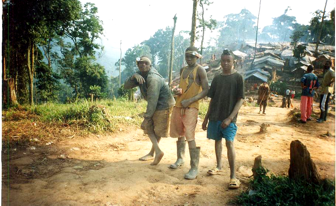
Travail des enfants dans le site minier d’exploitation artisanale de Bisie en territoire de Walikale. Une crise oubliée en République Démocratique du Congo
- Prince Kihangi Kyamwami | November 19, 2013
Plus de deux décennies après l’entrée en vigueur de la Convention relative aux droits de l’enfant (1989) en République Démocratique du Congo (RDC), la situation des enfants dans le territoire de Walikale demeure critique. Certes, le travail des enfants est un problème mondial, mais c’est essentiellement dans les pays en développement qu’il compte la grande majorité. L’expérience montre que le défi
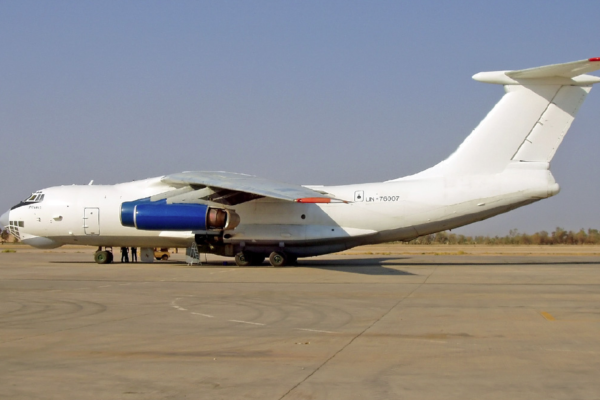
Ambushed in Bangkok? The U.N. Panel on North Korea and the case of the IL-76 “4L-AWA”
- Brian Johnson-Thomas, Peter Danssaert, Sergio Finardi | November 19, 2013
This new IPIS/Transarms report explains why the conclusion of the latest United Nations report on North Korea sanctions about an arms flight grounded in Thailand is not supported by facts, but based on a misalliance of wrong and misleading information gleaned both about the cargo aircraft. its flight and the entities involved, together with erroneous interpretations of standard aviation practices
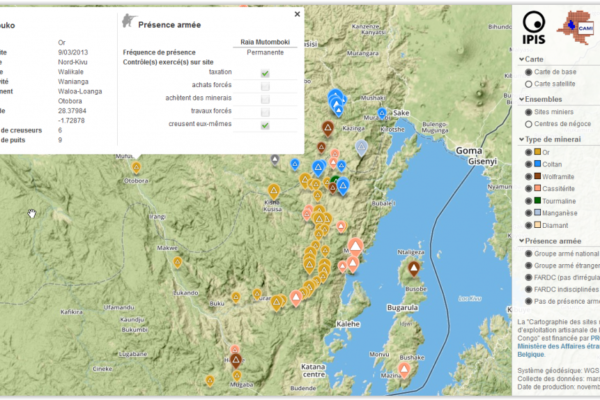
Analysis of the interactive map of artisanal mining areas in Eastern DR Congo (2013)
- Filip Hilgert, Steven Spittaels | November 13, 2013
In August 2009 the ‘International Peace Information Service’ (IPIS) published a first map of militarised mining areas in Eastern DR Congo. By 2012, the international interest in the issue had grown but the map was out-dated. To find a structural solution, IPIS sat down with the Congolese mining cadastre (CAMI) and agreed to set up a permanent system to monitor artisanal mining activities and the i
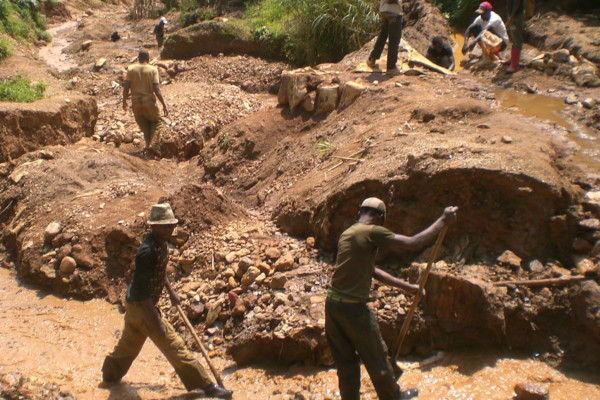
‘Conflict Minerals’ initiatives in DR Congo: Perceptions of local mining communities
- Andrés Zaragoza Montejano, Ken Matthysen | November 12, 2013
The exploitation of minerals is an important source of income for many communities in eastern Democratic Republic of Congo (DRC). Yet this mineral wealth also plays a significant role in the continuation of insecurity in parts of the country. Revenues from mineral trade have given armed groups the means to operate, and provided off-budget funding to (often poorly paid) state security forces. Whils
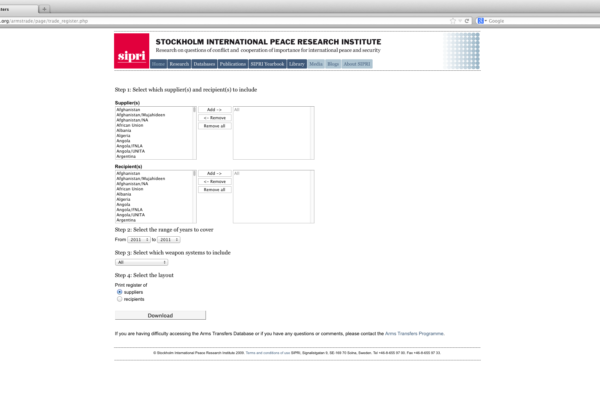
Online public databases for Arms Trade Research
- IPIS | August 29, 2013
In recent years IPIS has published several publications in collaboration with local African organisations. Such cooperation has allowed us to share know-how from over 30 years of research experience while benefitting from our partners’ networks and understanding of local issues. Although IPIS’ research assignments are often limited to a few months, we are increasingly trying to improve our working
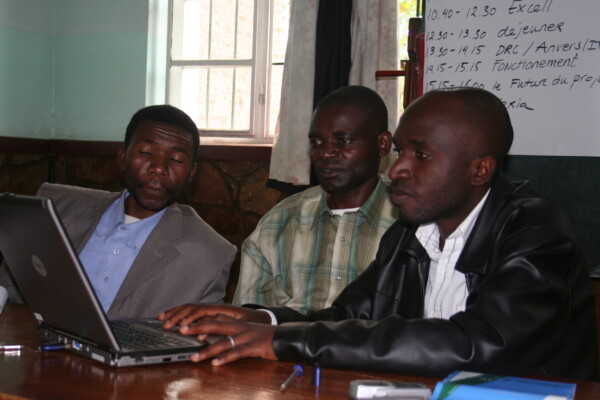
Planning and Running a Research Project
- IPIS | August 12, 2013
In recent years IPIS has published several publications in collaboration with local African organisations. Such cooperation has allowed us to share know-how from over 30 years of research experience while benefitting from our partners’ networks and understanding of local issues. Although IPIS’ research assignments are often limited to a few months, we are increasingly trying to improve our working

IPIS Insights: Why businesses should assess human rights impacts from the outset of projects. SOCO International Oil Company in Virunga National Park, DRC
- Gabriella Wass | August 5, 2013
SOCO International, a British oil company, is prospecting for oil in the Democratic Republic of Congo’s Virunga National Park – a World Heritage Site. For the past year, their presence has been criticised for putting a fragile environment at risk. However, more recently, their impact on human rights has also been questioned. Below, IPIS looks at why it is so vital for companies to employ rights-re

Strijd tegen conflictmineralen: sleutel tot conflictresolutie in Oost-Congo?
- Ken Matthysen | July 24, 2013
De PDF van dit artikel is met toestemming van de redactie overgenomen uit de /Internationale Spectator, Clingendael Magazine voor Internationale Betrekkingen/, uitgegeven door de Koninklijke Van Gorcum, te Assen namens het Nederlands Instituut voor Internationale Betrekkingen ‘Clingendael’ te Den Haag. Download in pdf of open met issuu reader. http://issuu.com/ipisresearch/docs/20130700_is_art_mat
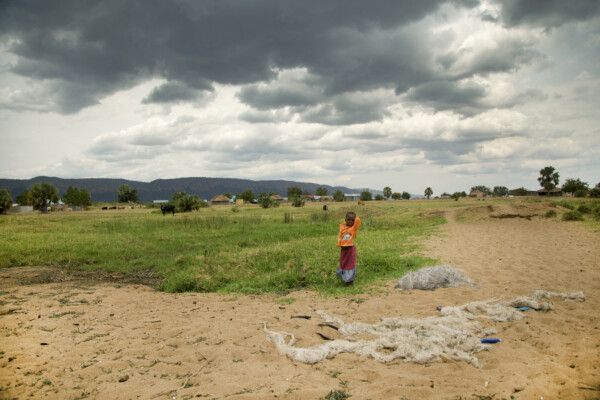
Business, Human Rights, and Uganda’s Oil. Part I: Uganda’s oil sector and potential threats to human rights
- Chris Musiime, Gabriella Wass | July 12, 2013
The following report is the first of a series of four collaborations between IPIS Research and ActionAid International Uganda. The series sheds a light on the oil sector in Uganda, its possible impact on human rights, and how government, companies, and civil society can best enable a positive bond between oil and the welfare of the Ugandan people. This first report opens by providing a situational
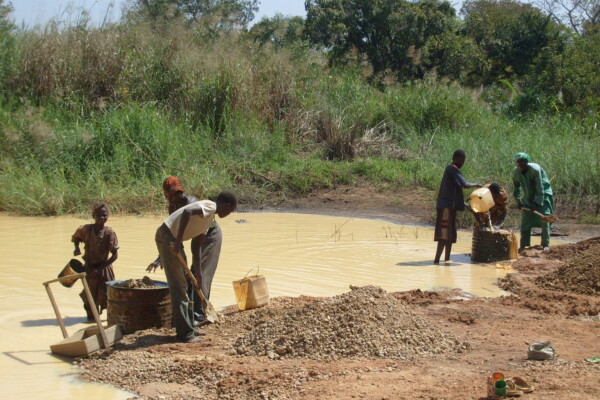
Gold and diamonds in the Central African Republic. The country’s mining sector, and related social, economic and environmental issues.
- Iain Clarkson, Ken Matthysen | March 29, 2013
Gold and diamonds in Central Africa easily conjure up images of conflict, rebel funding, human rights violations, and smuggling. As a country landlocked within an unstable region, neighbouring the Democratic Republic of Congo (DRC), and recently the scene of another coup, the Central African Republic (CAR) might be considered an appropriate candidate for analysis within the conflict-mineral perspe
Major Powers Fuelling Atrocities. Why the world needs a robust Arms Trade Treaty
- IPIS | March 15, 2013
IPIS contributed to the research for this AI report. Every year, thousands of people are killed, injured, raped and forced to flee from their homes as a result of abuses and atrocities committed with conventional arms and ammunition. Harrowing testimonies and images from conflict zones and human rights crises around the world underline the urgent need to end irresponsible arms transfers and illicit
The Arms Trade Treaty: Building a Path to Disarmament
- Brian Wood, Ken Matthysen, Peter Danssaert, Sergio Finardi | March 9, 2013
The goal of this article is to examine and suggest proposals that could enhance the role of the international Arms Trade Treaty—presently in discussion at the United Nations—in the regulation of the international arms trade and in addressing the role of the legal trade in: a) providing the bulk of the arms used in armed conflicts, armed violence and human rights abuses; b) the excessive arming of

Pinocchio Ltd. The NRA and its corporate partners: US shipments of small arms ammunition by sea
- Peter Danssaert, Sergio Finardi | March 5, 2013
The National Rifle Association (NRA) claims to have monitored in the last 20 years all United Nations activities that could impact Second Amendment rights. Its latest target is the Arms Trade Treaty (ATT), an international treaty to establish common international standards for the import, export, and transfer of conventional arms presently under discussion at the United Nations. The international

Upstream Implementation of the OECD Due Diligence Guidance for Responsible Supply Chains of Minerals from Conflict-Affected and High-Risk Areas. Final Report on one-year pilot implementation of the Supplement on Tin, Tantalum, and Tungsten
- IPIS | January 1, 2013
Final Report on one-year pilot implementation of the Supplement on Tin, Tantalum, and Tungsten. This report is the final in a cycle of three reports on the pilot implementation by upstream companies of the “Supplement on Tin, Tantalum and Tungsten of the OECD Due Diligence Guidance for Responsible Supply Chains of Minerals from Conflict-Affected and High-Risk Areas”. The goal of the report is to p

Annual Report 2012 IPIS
- IPIS | December 31, 2012
Download in pdf or open with issuu reader. http://issuu.com/ipisresearch/docs/20130410_annual_report2012-1

The formalisation of artisanal mining in the DRC and Rwanda
- IPIS | December 29, 2012
This report describes and evaluates initiatives to formalise the artisanal mining sector in the Democratic Republic of the Congo (DRC) and Rwanda, in order to locate lessons learned. We hope that these perspectives will support the formation of well-informed policy and regulatory options – both by the EU and by harvesting countries – concerning the formalisation of timber production in tropical co
Exploitation minière industrielle et artisanale au Sud-Kivu. Possibilités d’une cohabitation pacifique ?
- Gabriel Kamundala Byemba | December 29, 2012
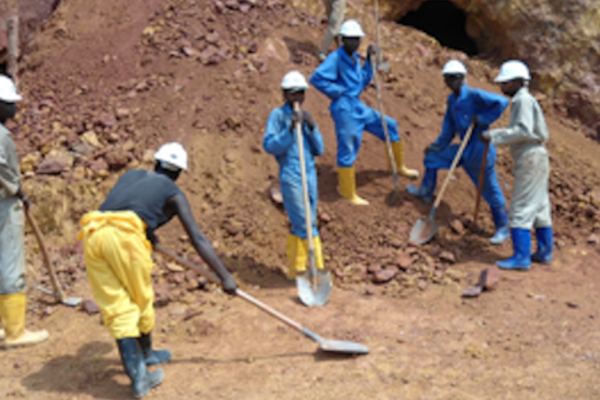
Le secteur minier en République Démocratique du Congo (RDC) en général et au Sud-Kivu en particulier alimente toujours les débats tant au niveau international qu’au niveau national. Présenté sous plusieurs facettes, ce secteur au Sud-Kivu a été dans le temps industriel, puis artisanal et aujourd’hui il est en même temps artisanal et industriel. Le retour en force, ces dernières années, des société
Mapping Conflict Minerals (2012)
- Elisabeth Schoepfer, Filip Hilgert, Kristin Sproehnle | December 28, 2012
How GMES supports the International Peace Information Service (IPIS), in: Window on GMES, Special Issue: Discover the “S” in GMES, pp. 82-88 Exploitation of natural resources has, in most cases, a strong impact on the environment, often even spoiling natural habitats and affecting people’s way of life. The exploitation and trade of minerals can also fuel armed conflicts, as it is the case in the E
Mapping Conflict Motives: M23 (2012)
- IPIS | November 30, 2012
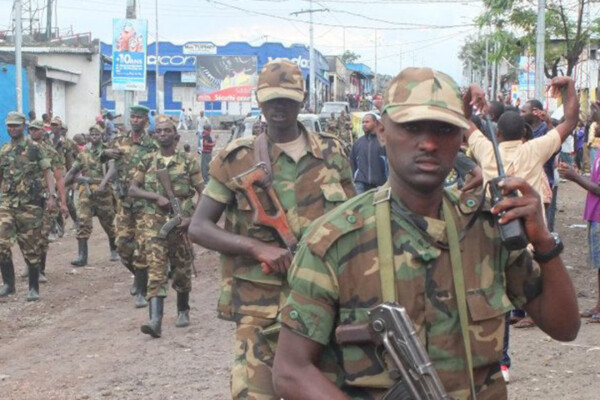
In light of the recent occupation of Goma by M23 and the renewed risk of large-scale armed conflict in the DRC, IPIS publishes an update to its 2007-2010 ‘mapping conflict motives’ report series focussing specifically on the intentions of M23. The M23 rebels show a clear political ambition and a tendency to establish political control over territory and challenge Kinshasa’s authority – strategic i

A Code of Conduct for Arms Transport by Air. Transport Services under an Arms Trade Treaty Series
- Brian Wood, Peter Danssaert, Sergio Finardi | August 12, 2012
This report is a discussion of some key considerations for the development of and “Air Cargo Industry Voluntary Code of Conduct relating to the transport of arms, ammunition and other military equipment” (ACI Code). The purpose of such a Code is to encourage as many aviation companies and other actors as possible in the air cargo industry to adhere to existing and new standards relating to the tr