
Publications

Voix du Congo: Child labor in artisanal gold mines in the Mariminza chiefdom, Watsa territory: case studies of Menze and Babarau
- RECOREN | July 16, 2024
A publication from the series: VOIX DU CONGO. Download the report (FR) This research raises the issue of child labor in the artisanal mines in the chiefdom of Mariminza, using the examples of the Menze and Bararau quarries (Watsa territory, Haut-Uélé province). Using a qualitative approach based on several field interviews and a literature review, the study identifies the causes of child labor and
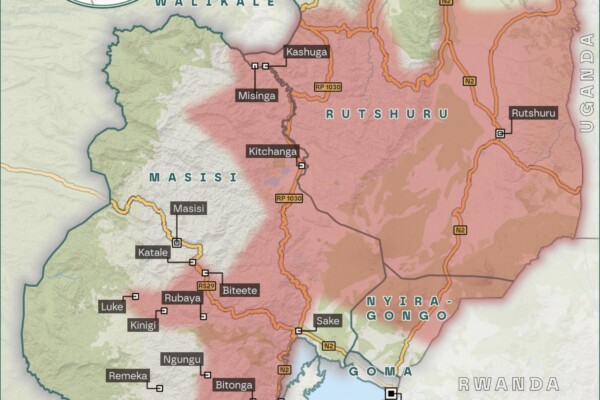
Shifting frontlines: Visualizing the evolution of the M23’s territorial influence in early 2024
- Ken Matthysen | June 20, 2024
In early 2024, IPIS, ASSODIP, and DIIS published a report on the stakes and motivations of the “March 23 Movement” (M23), a rebellion causing serious insecurity and humanitarian suffering in the eastern Democratic Republic of Congo (DRC). The movement took up arms again in 2021, and it rapidly seized vast territories in the south-east of North Kivu province in 2022, with military support
The M23 “version 2” – Local stakes, motivations, perceptions, and impacts
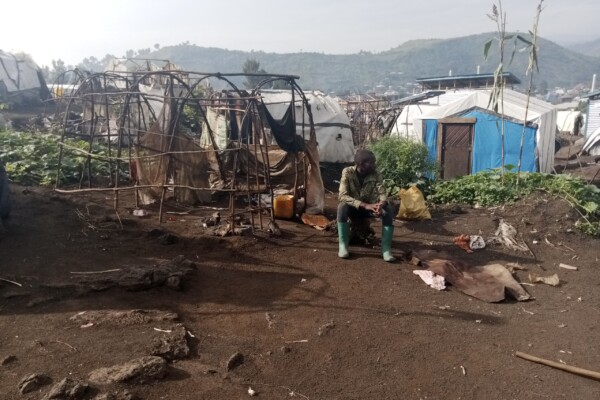
Since 2021, the eastern part of the Democratic Republic of Congo (DRC) has once again fallen victim to the “March 23 Movement” (M23). Supposedly defeated in 2013, the M23 took up arms again in 2021, and by 2022 had rapidly seized vast territories in the south-east of North Kivu province.
Roadblocks in Masisi and Walikale: Predation on movement in turbulent times
- Jan Leysen, Janvier Murairi (ASSODIP), Ken Matthysen, Peer Schouten (DIIS/IPIS), Saidi Kubuya (ASSODIP) | March 8, 2024
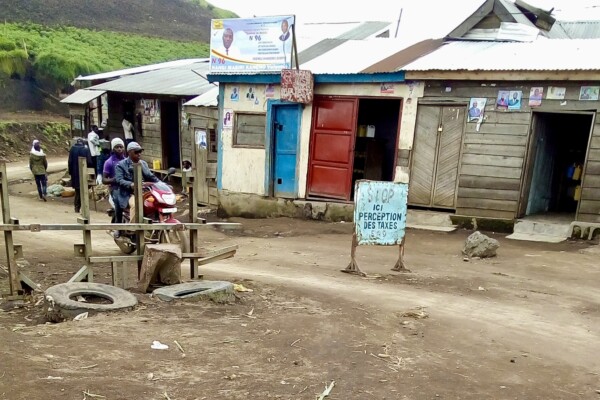
While minerals have centered in research on conflict financing in the Democratic Republic of the Congo, armed actors often rely on alternative sources of revenue to finance their struggles. Among these are the operation of roadblocks. In this report, produced together with ASSODIP and the Danish Institute for International Studies, IPIS studies the linkage between roadblocks and the local artisana
Mining and conflict in the eastern DRC: An interactive story map
- Alexeï Delanghe, Ken Matthysen | February 15, 2024
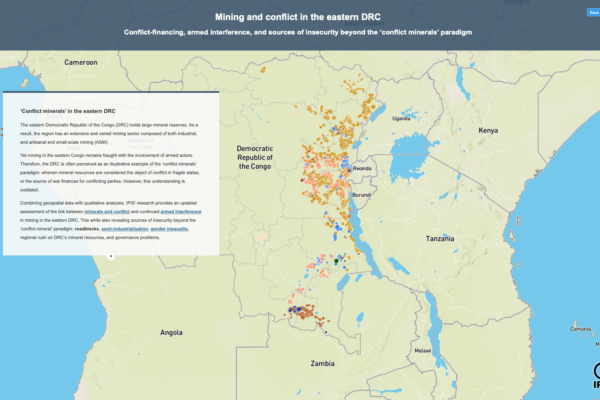
Conflict-financing, armed interference, and sources of insecurity beyond the ‘conflict minerals’ paradigm In this story map, IPIS presents its findings on the linkage between mining and conflict-financing in the eastern Democratic Republic of the Congo (DRC). Based on a survey conducted between 2021-2023 of 829 active mining sites (representing over 132,320 artisanal miners), IPIS’ research provid
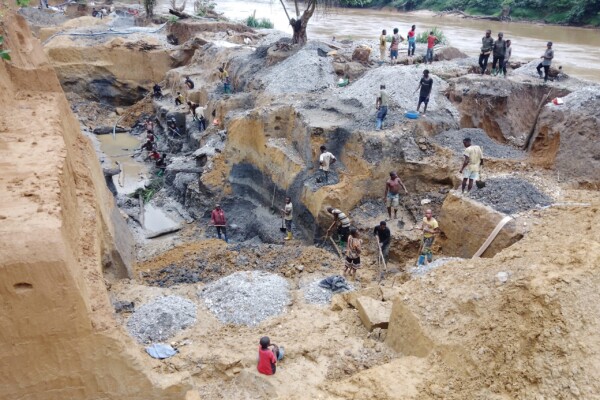
Analysis of the interactive map of artisanal mining areas in eastern Democratic Republic of Congo (2023 update)
- Jan Leysen, Ken Matthysen, Ntakobajira Zacharie Bulakali, Thomas Muller | December 22, 2023
Since 2009, IPIS has mapped and collected data at more than 2,800 Artisanal and Small-scale Mining (ASM) sites in the eastern Democratic Republic of the Congo (DRC). In this report, IPIS provides its 2023 update of the state of ASM in the eastern DRC, based on data from over 829 ASM sites in the eastern DRC between 2021-2023. The study analyses linkages between mining, conflict, and insecurity in

Increasing awareness of policy reforms on gender equality issues in artisanal and small-scale mining in eastern DRC: Case study of the Numbi, Nzibira and Nyabibwe sites
- Marie-Rose Bashwira Nyenyezi, Michaël Bahigira Akilimali | December 13, 2023
The mineral resources of the eastern Democratic Republic of the Congo’s (DRC) provide an important source of employment for both men and women involved in artisanal and small-scaling mining (ASM). Yet opportunities are not equal for men and women. Based on a series of interviews with various ASM stakeholders at the mines of Numbi, Nzibira and Nybibwe in the province of South Kivu, this
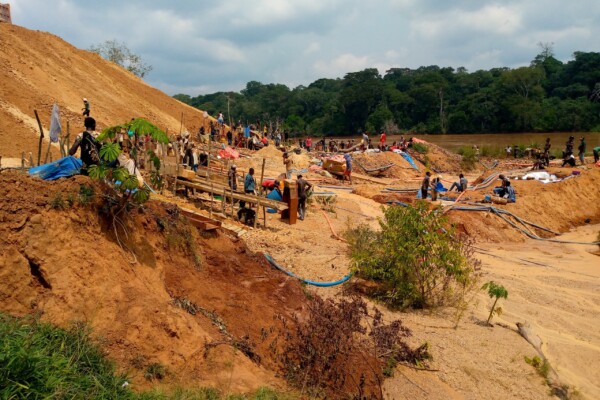
Mapping of artisanal mining sites in western Mambasa, Ituri Province, Democratic Republic of the Congo
- Guillaume de Brier | October 27, 2023
The western part of Mambasa territory, in Ituri province, has been overlooked by national authorities and international partners. This despite major expansions of artisanal and small-scale gold mining (ASM) operations, including in the Okapi Wildlife Reserve (OWR). These mining operations have caused tensions between native inhabitants, miners, armed actors, officials and conservationists. Se
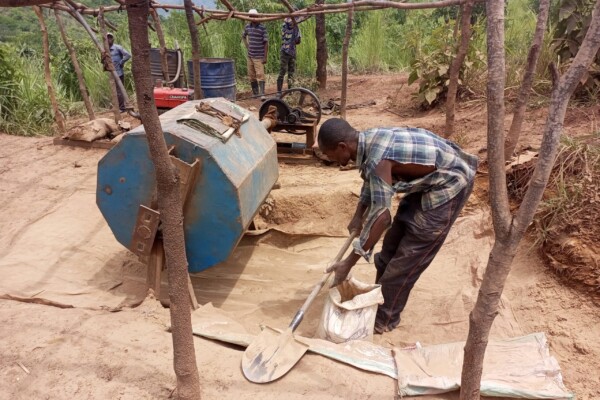
Securing insecurity: Semi-industrial gold mining and violence in Mwenga, South Kivu, Democratic Republic of Congo
- Claude Iguma Wakenge, Ken Matthysen | October 5, 2023
Since 2011, gradual introduction of novel mining equipment such as crushing mills has led to the increasing mechanization of artisanal gold mining operations in Mwenga territory (South Kivu), including the arrival of semi-industrial mining companies. This report is part of a USAID-funded project examining the linkage between armed conflict, insecurity and natural resource exploitation in the easte
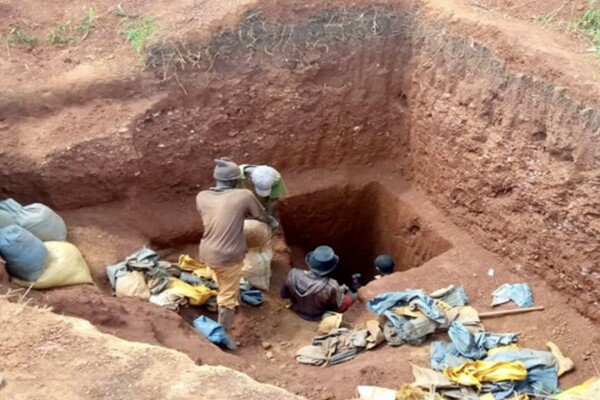
Voix du Congo: The role of artisanal mining in the demobilisation and reintegration of former FPRI fighters in the chefferie de Walendu Bindi, Ituri
- Pascal Takaibone, Réseau Haki Na Amani (RHA) | September 22, 2023
See our series: VOIX DU CONGO Located in the north-east of the Democratic Republic of Congo, the province of Ituri has experienced almost two decades of activism by the armed group Force de Résistance Patriotique de l’Ituri (FRPI). The failure of a demobilisation, disarmament and reintegration (DDR) programme launched in 2020 has led FRPI fighters to informally return to public life, finding
Armed groups, territorial control, land disputes, and gold exploitation in Djugu, Ituri, Democratic Republic of Congo
- Erik Gobbers, Josaphat Musamba | August 10, 2023
In late 2017, almost fifteen years after the end of the second Congo war, and after several years of relative peaceful coexistence, inter-communal tensions flared up once again in Ituri province, in eastern Democratic Republic of Congo (DRC). In December 2017, isolated violent incidents between members of the Hema and Lendu communities provoked an escalation and heralded the beginning of a new cyc
Unconditional Cash Transfers (UCT) in the DRC: Midline results of a pilot study in an artisanal mining zone in Maniema province
- Erik Gobbers, Thomas Muller | June 19, 2023
In October 2021, the Belgian non-profit organization Eight World, started a pilot project of Unconditional Cash Transfers (UCT) in a village in an artisanal mining zone in the territory of Pangi, in Maniema Province, in the Democratic Republic of Congo (DRC). Eight World transfers cash directly to individual beneficiaries via a mobile money system. Each adult living in the UCT village receives 20
Taxes and levies in the artisanal mining sites of South Kivu and Ituri: How much does an artisanal miner pay?
- Guillaume de Brier, Jean-Paul Lonema (IMPACT), Thomas Muller | April 14, 2023
This report is the result of a large-scale field study on taxation in the artisanal mining sector in the eastern Congolese provinces of Ituri and South Kivu. The main finding is that current regulations and practices in the field not only cause mineral smuggling, which leaves some of the sector’s fiscal potential untapped at the provincial and national levels, but also constitute a source of insec
Armed conflict, insecurity, and mining in eastern DRC: reflections on the nexus between natural resources and armed conflict
- Erik Gobbers, Ken Matthysen | December 7, 2022
This report offers a new framework for looking at the eastern Congo conflict, one within which new evolutions of the past twenty years find a place. Indeed, violent conflict in eastern Congo has changed dramatically in all its aspects over the past two decades. Yet too often policymakers and observers appear to assume that we are dealing with a proxy war orchestrated from the DRC’s eastern neighbo
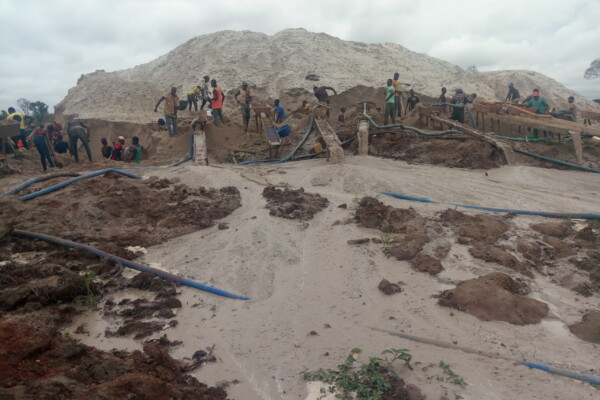
Analysis of the interactive map of artisanal mining areas in eastern Democratic Republic of Congo – 2022 update
- Ken Matthysen, Ntakobajira Zacharie Bulakali, Thomas Muller | November 29, 2022
In eastern Democratic Republic of Congo (DRC), the artisanal and small-scale mining (ASM) sector plays an important role in the local economy. While large-scale armed conflict over DRC’s mineral wealth has decreased significantly over the past twenty years, armed actors continuously interfere in the mining sector, and conflicts over resources at the local level are still common. Based on new minin
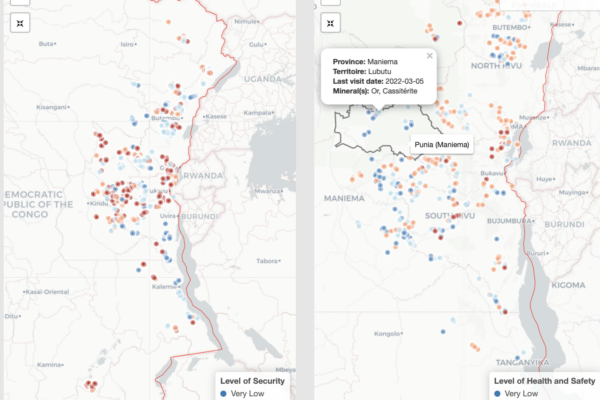
Responsible mining scorecard in eastern DRC
-
| August 31, 2022
Over the years, IPIS has systematically collected mine site and trade hub level data on artisanal and small-scale mining (ASM) in eastern DRC. This data collection has enabled IPIS to generate a sizable database of more than 3,000 ASM sites that draws both on sites visited by IPIS and data from third party sources including the Congolese mining cadastre and the Mini
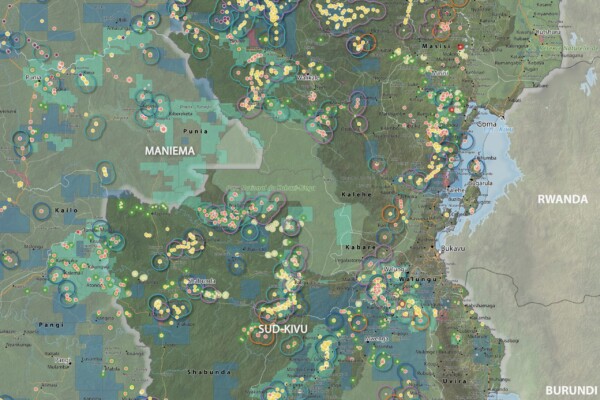
Maps of artisanal and small-scale mining in eastern DRC
-
| July 4, 2022
IPIS has created large format maps of known past and present ASM sites in eastern DRC. These A0 maps cover the provinces of Haut Uele, Maniema, Ituri and North and South Kivu. Each map details the type of minerals, the qualification status by official authorities, the mining titles and provide with an overview of armed presence in and around the mines as reported during field visits conducted by I
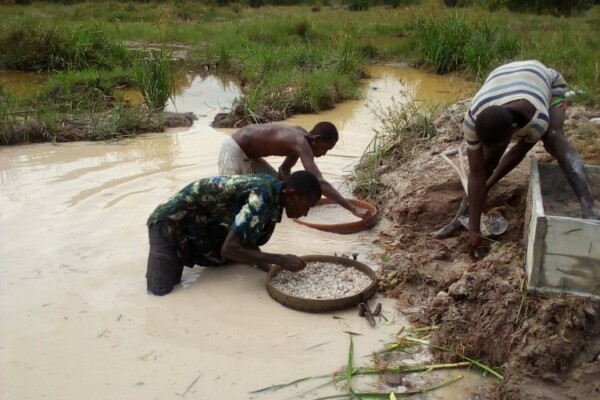
Grassroots research on local diamond mining impact
During 2021, IPIS supported members of the Kimberley Process Civil Society Coalition (KP CSC) in a series of grassroots studies on the human rights, socio-economic and environmental impact of diamond mining in eight African countries. IPIS provided online trainings on field survey methodology as well as editorial support to ten civil society organisations who carried out independent field res
Unconditional cash transfers in the DRC: A comparative baseline study in an artisanal mining zone in Maniema Province
- Erik Gobbers, Thomas Muller | March 1, 2022
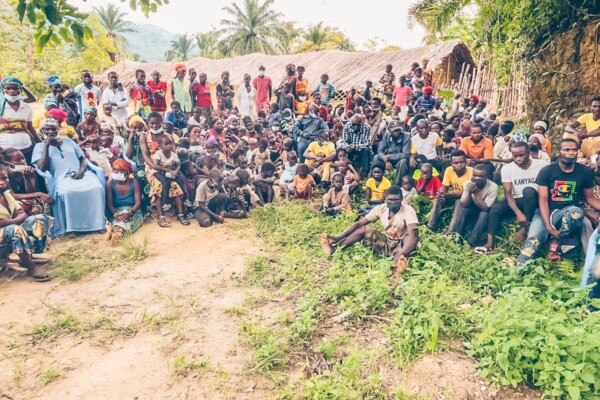
A controlled impact study will be conducted by IPIS to evaluate the net effects of Unconditional Cash Transfers (UCT) on the socio-economic well-being of recipients. A controlled study approach allows potential effects of the intervention to be assessed by monitoring specific indicators in the group of people receiving cash transfers (inhabitants of the UCT village), in comparison with a comparabl
Report of high-level workshop on the fight against fraud and smuggling of rough diamonds in Central Africa
- Didier Verbruggen, Mieke Thierens | February 14, 2022
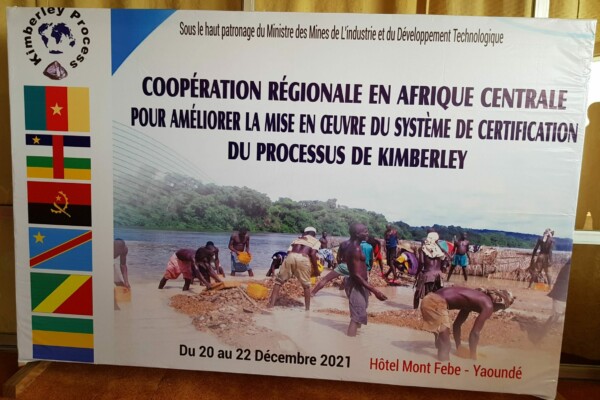
Regional Cooperation to Enhance the Implementation of the Kimberley Process in Central Africa In December 2021, the Working Group on Artisanal and Alluvial Production (WGAAP) of the Kimberley Process (KP) and the Cameroonian government hosted the second Central African regional cooperation workshop in Yaoundé to build understanding, share experiences and formulate recommendations on the fight agai