
The briefing is based on research in which IPIS itself was not involved. The data discussed were collected as part of a PhD research project at the Center for Security Studies (CSS) at ETH Zürich.
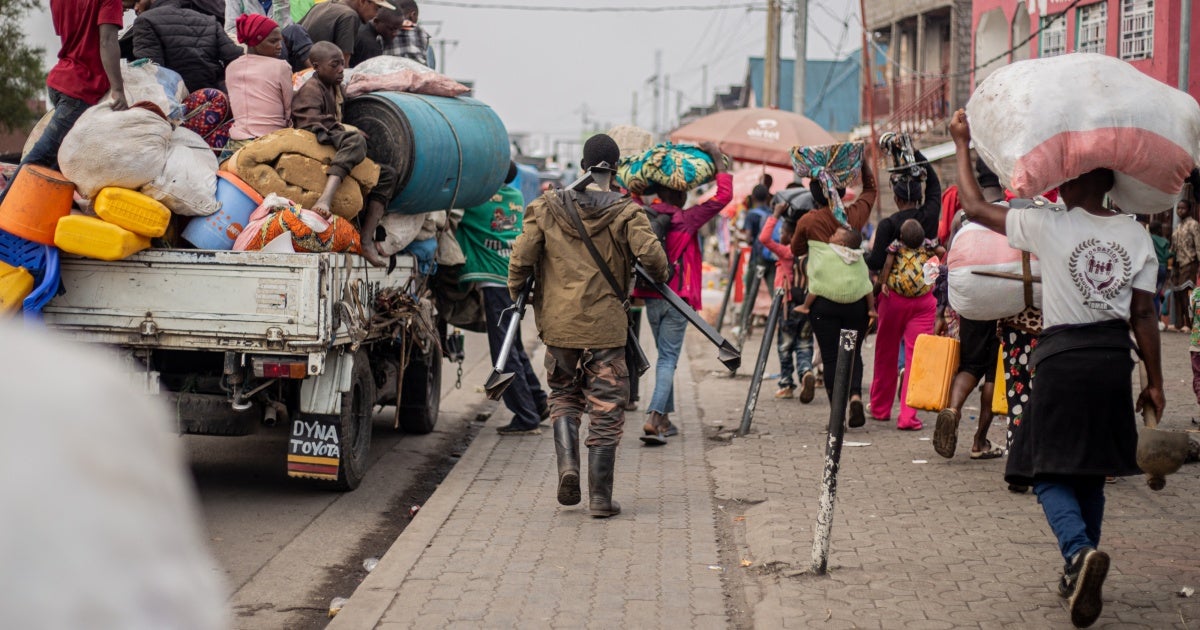
For over two decades, eastern Democratic Republic of the Congo (DRC) has experienced persistent violence shaped by a complex web of armed groups, shifting alliances, and limited state presence. The civilian population continues to be exposed to persistent and constantly changing risks, struggling for its safety. As armed groups continue to proliferate, and as new formations like the Wazalendo emerge, understanding the relationships between these actors and civilian populations is essential. What is the perspective of local populations on the different armed actors they are confronted with? How can they manage the various challenges these actors pose to them? While public discourse has often focused on military approaches and support by NGOs and the international community, there are local civilian actors that can play a significant role: For years, traditional leaders have quietly played a critical, yet underrecognized, role in navigating local security, mediating tensions, and providing governance even in remote places. This briefing examines how civilian populations regard armed actors and how traditional leaders mediate these relationships, thereby sometimes influencing community resilience, and contributing to, or resisting, the reproduction of violence in eastern DRC.
Conflict fragmentation in eastern DRC since the Congo Wars
Over the past three decades, conflict in eastern DRC has continuously evolved. During the First and Second Congo Wars in the late 1990s and early 2000s, large rebel groups controlled extensive territory and posed serious threats to the central government in Kinshasa. Although the 2003 Sun City agreements officially ended the Second Congo War, fighting in the east persisted, taking on a more localized and fragmented character. The number of armed groups grew from fewer than 30 in 2008 to over 120 by the early 2020s, mostly fighting over local issues.
While largely perceived by the national government in Kinshasa as posing a less existential threat, these groups inflicted immense suffering on local populations through continuous smaller-scale clashes and targeted violence. With declining external influence and no viable rebel movement credibly advocating political change, the legitimacy of armed groups’ claims to broader goals diminished. Increasingly, they started predating the communities they claimed to protect, often leading to the formation of new local self-defense groups.
The resurgence of M23 since 2021 marked a significant turning point. Larger political goals are back on the agenda and for the first time in years, two major conflict parties emerged, leading to widespread alliance-building. M23’s capacity to seize territory and challenge the state triggered the formation of a counter-alliance between the Congolese national army (FARDC) and numerous smaller armed groups, operating under the label “Wazalendo” (Swahili for “patriots”), many of which had previously fought the FARDC and were implicated in serious human rights abuses.
In light of the close ties between M23 and the Congolese Tutsi population, an ethnic group that many Congolese deny being Congolese after allas well as M23’s backing by the Rwandan army, the fight against M23 is widely regarded as a patriotic effort against an invading force. However, this role as national defenders came with rising expectations. Many Wazalendo now demand compensation, and when unmet by the state, they often resort to pressuring local populations—sometimes by force—to meet their needs.
Community-combatant relations in South Kivu
In such a context marked by decades-long fear and suffering, what many civilians care about most is security. To justify their presence and often also their demands for monetary or material compensation, most armed actors claim to provide protection to local communities if not the nation as a whole irrespective of their actual behaviour. In fact, often there is a striking discrepancy between armed actors’ claims and their deeds. For sure, there are many armed groups and units of the security forces that do their very best to protect local communities, and these communities are happy to provide them with whatever they have. But there is also a long history of armed actors that over time turned from those providing protection for communities into those the communities need protection from. As such, predatory behaviour as it can be observed from some of the Wazalendo is nothing novel for the civilian population in eastern DRC.
Often, local populations will expect state security forces, like the national army, to provide protection. But where security forces are too weak or have been a source of insecurity themselves, local populations will also turn to armed groups or even set up their own self-defense militias. They are therefore confronted with a complex and often changing landscape of different armed actors, ranging from state forces over rebel groups to local self-defense militias that is hard to navigate. The Wazalendo are just the latest element in this complex situation.
So what do civilians actually think about the different types of armed actors they are confronted with? Although they are most directly affected by these dynamics, the perspective of local communities often receives little attention in public discourse. And what role can civilian authorities such as traditional leaders play in this? With attention often focusing on military actors or higher-level politics, the role of local civilian authorities often goes unexplored.
In late January and early February 2025, a survey was conducted in the territories of Walungu and Mwenga in South Kivu province. The survey included 270 randomly selected civilians across 18 villages, complemented by interviews with each village’s traditional leader. M23’s capture of Goma, the capital of neighbouring North Kivu province, and the subsequent advance into South Kivu occurred within the survey period. Bukavu, the capital of South Kivu, was captured by M23 shorty after. When the interviews were carried out, the survey locations (Mulambi Centre in Mwenga and Nzibira in Walungu) were far enough away from the front lines not to be directly affected by the fighting. Yet discussions and worries about the advance of M23 were widespread and there was substantial mobilization of local Wazalendo groups, even though they were not actively involved in the fighting (yet). At the time of writing, M23 had taken control of the area surrounding the survey locations, confirming that participants’ concerns were justified, as illustrated by the map below.

In 12 out of the 18 villages surveyed, either the Congolese national army (FARDC) or Wazalendo were present frequently. The FARDC were present in 9 villages and Wazalendo were present in 6 villages, with three of them having both FARDC and Wazalendo presence. For the remaining 6 villages, no frequent presence was reported although FARDC and/or Wazalendo could be found within some kilometers.
In the military realm, the data shows great variation in what local populations think about the Wazalendo and/or state security forces that are present in or near their villages. At the same time, the population consistently values their civilian institutions. Most participants have a high regard for their traditional leaders and their ability to regulate local affairs even when armed actors are present. Traditional leaders themselves, however, are much more cautious about their own influence and their ability to moderate the influence of armed actors.
On average, civilians hold much more positive views about state security forces than about the Wazalendo. About half of the participants regard the FARDC as legitimate (53%) or trustworthy (48%), while of the Wazalendo are in the single-digit range or just above (legitimacy 13%, trust 6%). Yet there are stark differences between individual villages, mirroring the different experiences local populations have made with the FARDC and Wazalendo. For the FARDC, the values for legitimacy vary between 28 % and 92 % and for trust between 0 % and 73 % in the different villages. For the Wazalendo, values for legitimacy vary between 0% and 53% and for trust between 0% and 27%.
In one village in Nzibira for example, money is collected from the population to provide for an FARDC deployment that is stationed several kilometers away but never makes the effort to patrol the village. Trust in the FARDC is accordingly low (7%). In the two villages with the largest Wazalendo groups present (more than 50 members each), the Wazalendo take money from the population, either from the chiefdom (third level administrative unit in DRC, run by a traditional leader) or through setting up roadblocks and charging passage fees themselves. In both places, the Wazalendo are regarded as highly illegitimate (values of 0 and 13%, respectively).
Interestingly, ethnicity or personal ties between civilians and individual members of these armed actors do not seem to explain the different attitudes towards armed actors. Some of the Wazalendo groups in the study area share the same ethnicity as the local populations, while others are mostly from different ethnic groups. However, this does not appear to influence how they are perceived by the population. Trust in the FARDC is only slightly higher among civilians with FARDC members among their friends and family, and legitimacy and trust of the Wazalendo are not affected by personal ties between Wazalendo members and civilians.
It seems that the self-assigned status as defenders of the nation does not automatically pay off for the Wazalendo. Support by the civilian population needs to be gained through deeds. The same holds true for state security forces, though to a much lesser extent. Some survey participants mentioned negative experiences with armed groups before they became Wazalendo. Since then, survey participants reported only few new negative experiences, but often not enough positive ones to change the existing image of Wazalendo in a lasting way. Also, at the time of the survey, these Wazalendo groups were not actively participating in the fight against M23 yet. Actively joining the fight against M23 would allow them to back up their claim to protect the population and the nation with deeds. It seems plausible that this would improve their reputation among the population. At least as long as they do not turn on the civilian population at the same time, as has reportedly already happened in other areas of South Kivu.
The important role of traditional leaders
Traditional leaders often try to manage the relationship between armed groups such as the Wazalendo or state security forces on the one hand and the local population on the other hand. They often try to provide a setup that helps preventing problems or try to mediate and to bring about a solution when tensions emerge. In a village in the chiefdom of Burhinyi, traditional leaders successfully stepped in when civilians complained about Wazalendo harassing and collecting money from sellers at the local market. They engaged higher-level authorities and found a settlement where the chiefdom is providing the Wazalendo with weekly rations, so they do not have to find food and funding from the population themselves. The money for this is collected by village chiefs from the population across several villages. This new setup helped easing the tensions between Wazalendo and the local community. In Nzibira, traditional leaders engaged the higher-level authorities to demand the replacement of the local group of police officers. Relations between the police and local communities had already been sour and then further escalated when the police fired shots to disperse a crowd of young men that demanded justice for the unsolved death of one of their friends.
Accordingly, civilians regard their traditional leaders as highly legitimate (90%) and trustworthy (74%). And they perceive their traditional leaders to be highly influential: civilians think that rules regulating taxation, security or conflict resolution are mostly set by their traditional leaders and that their traditional leaders act largely independently from any armed actors. In contrast to the opinions on armed actors, the views on traditional leaders vary little between different villages. If at all, trust appears to be higher in areas with substantial armed group presence. In these areas, the role of traditional leaders as moderators between armed actors and the civilian population becomes more relevant.
Armed groups such as the Wazalendo and state security forces too, often turn to traditional leaders. Traditional leaders often have a better knowledge of the area, or they can help secure collaboration from the population. Research has shown that especially armed actors with low levels of legitimacy often seek cooperation with traditional leaders. But as they grow in strength or become unhappy with the degree of cooperation, some also seek to replace the traditional leader, even resorting to violence if deemed necessary.
This leaves traditional leaders in an important, but also very challenging role. In fact, their own perspective differs considerably from that of the population. 61% of the traditional leaders that were interviewed felt that they cannot really refuse demands by armed actors. In contrast to their perception among the population as being highly independent of armed actors, traditional leaders also reported the frequent involvement of state security forces in setting rules about local security and conflict resolution. When trying to protect their communities from violent threats, most traditional leaders responded that their best bet would be turning to the police or the FARDC. Not a single traditional leader reported that they would turn to the Wazalendo.
These answers illustrate the difficult situation traditional leaders find themselves in. When state security forces either lack the capacity to help (a widespread problem in eastern DRC) or are even part of the threat, there is not much traditional leaders can do to protect their communities.
The look ahead
Violent threats to communities are unlikely to disappear in the near future. Civilians fear violence and repression by M23. But even if their areas do not get captured by M23, tensions with the Wazalendo are likely to increase. Already now there are numerous reports about Wazalendo groups targeting civilian populations. And even if the M23 rebellion came to an end, this would not put an end to the Wazalendo. They could highlight their role in the fight and raise claims about compensation for their efforts or about integration into the FARDC. It seems highly unlikely, however, that the government will effectively accommodate these claims—even if they promise to do so. The Congolese government lacks the funds and the incentives to systematically compensate the Wazalendo. Relying on armed groups instead of expanding the FARDC is cheaper, allows for deniability of ceasefire violations and human rights abuses, and reduces the risk of the FARDC further splintering as happened after large-scale integration of armed groups in the 2000s.
With little to expect from the government, the Wazalendo will most likely seek to get their share from the local population. It therefore seems like there is significant risk that eastern DRC is heading towards yet another vicious cycle of conflict and instability—irrespective of the outcome of the fighting against M23. Once again, it would be the civilian population that would have to bear the brunt.
However, this scenario is by no means a foregone conclusion. There is ample research that shows how strong communities are more resilient to threats and can help overcome cycles of violence. Traditional leaders play an important role in this. On a local level, traditional leaders may be able to mediate between different actors.
They have connections to and can link the state hierarchy, the local civilian population and civil society, and a wide variety of local armed actors. Beyond their personal network, they can derive authority from their formal role within the administrative system and the widespread respect for custom. This puts them in an ideal position to mediate between relevant actors on the ground—and maybe also to bring them to reason.
In contrast to policy makers in Kinshasa, they have stronger incentives to actually work towards a peaceful solution. For sure, some of them have their own stakes in the conflict too and may therefore pursue other interests beyond the wellbeing of their local community. Still, if the situation further escalates, they are among the ones that will be directly affected.
Ultimately, however, traditional leaders are but one puzzle piece on the way towards strong and resilient local communities. Despite their importance, traditional leaders face constraints too, especially when facing armed adversaries. It is therefore important to include other actors that can help building strong communities, such as civil society organisations, religious leaders, local businessmen, or critical journalists. It takes broad and strong networks of local actors to navigate such a volatile and risky environment.
Further reading

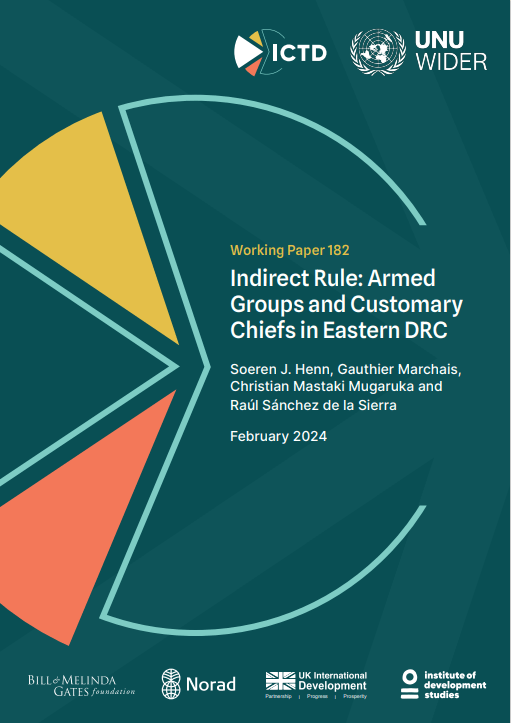
It investigates the emergence of the term “Wazalendo,” the history, and rationale behind this outsourcing of violence, and the impact on local communities. The Wazalendo are a continuation of a longstanding strategy in the region to outsource warfare to armed groups due to the weakness of the security services, in addition to the potential profits and the populist dividend that this backing can provide to politicians.

The research on which this briefing is based was supported by ETH for Development and the APSA Centennial Center.

This briefing was produced with the financial assistance of the European Union. The contents of the editorial is the sole responsibility of the author and can under no circumstances be regarded as reflecting the position of the European Union.