
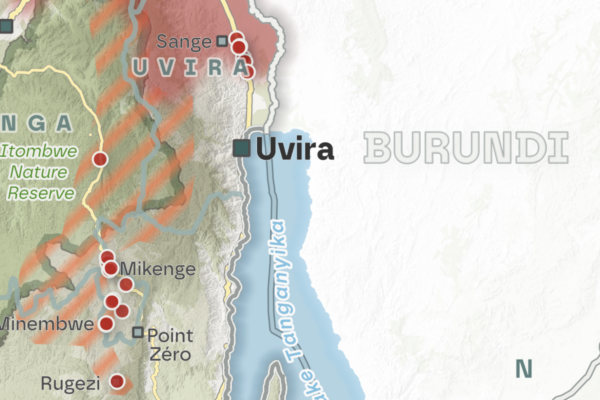
Shifting frontlines in 2026: New year – old challenges. Hostilities in eastern DRC continue amid increased diplomatic efforts
June 25, 2026As the conflict in eastern DRC entered its third year of major hostilities between the Rwanda-backed AFC/M23 alliance and the FARDC/Wazalendo coalition, diplomatic efforts continued in early 2026 to advance the peace process. Despite renewed diplomatic momentum and both parties’ stated commitment to the peace processes, the situation on the ground remained marked by continuous violent clashes, shi

Thorny issues risk jeopardising the US-brokered peace deal between the DRC and Rwanda, but can regional economic integration offer solace?
February 19, 2026On the 4th of December 2025, Presidents Félix-Antoine Tshisekedi and Paul Kagame symbolically signed the Washington Accords for Peace and Prosperity, thus ratifying the Peace Agreement between the Democratic Republic of the Congo (DRC) and Rwanda agreed to on the 27th of June 2025. The 4th of December was a busy day in Washington in terms of signing agreements, as the governments of DRC and Rwanda

The emergence of the Wazalendo in the fight against the AFC/M23 in North Kivu: Current situation, challenges and prospects
February 5, 2026On January 27, 2025, the Congo River Alliance/March 23 Movement (AFC/M23) – supported by Rwanda – took control of Goma, the capital of North Kivu province in the Democratic Republic of Congo (DRC), and then moved on to Bukavu, the capital of South Kivu, which fell in February 2025. The re-emergence of M23 in 2021 and its rapid advance prompted the Congolese government to resort to non-state armed

Shifting frontlines in October, November and December – Limits of diplomacy: AFC/M23 advances after Washington Accords
December 19, 2025On 4 December 2025, Rwanda and the Democratic Republic of the Congo (DRC) signed the US-brokered Washington Accords for Peace and Prosperity, committing to cease hostilities, establish a permanent ceasefire, and implement the 25 April Declaration of Principles and the 27 June Peace Agreement. However, critical questions have been raised about the prospects for lasting peace in eastern DRC, as Kig

Militarization, gender, and resource extraction in the Kivus post-January 2025
October 30, 2025The Kivu region of the Democratic Republic of the Congo (DRC) has experienced a significant shift in its conflict landscape over the last few years, and particularly after January 2025, involving a major territorial expansion by the M23 rebellion, and in response, the increased presence of local armed groups under the banner of the “Wazalendo”. This intensification of conflict has led to increased

M23’s territorial advances in July, August, and September 2025 – Escalating violence and fragile peace in eastern DRC’s Kivu regions
October 17, 2025New peace agreements from Washington and Doha have brought hope for initiating a pathway to resolve the ongoing M23-conflict in DRC’s eastern territories in recent months. However, after the signing of the Declaration of Principles in Doha on 19 July, direct negotiations between the DRC and AFC/M23 were intended to result in a comprehensive peace agreement and were planned to begin no later than 8

Navigating insecurity: Community-combatant relations and the role of traditional leaders in Eastern DRC
September 23, 2025The briefing is based on research in which IPIS itself was not involved. The data discussed were collected as part of a PhD research project at the Center for Security Studies (CSS) at ETH Zürich. For over two decades, eastern Democratic Republic of the Congo (DRC) has experienced persistent violence shaped by a complex web of armed groups, shifting alliances, and limited state presence. The

Voix du Congo – The smuggling of coltan from South Kivu to Rwanda: Routes, factors, and implementation
July 22, 2025The escalation of conflict in eastern DRC has sparked increased media attention on coltan and its role as a driver of violence. While most coverage has focused on the production and (il)legal trade of coltan in North Kivu, smuggling is also widespread in South Kivu. This report examines the key smuggling routes, contributing factors, and practices.

M23’s territorial advances in June – A long path to peace: Renewed efforts to resolve the M23 conflict in Eastern Congo
July 18, 2025New mediation efforts have been made throughout June to end the ongoing conflict between the Rwandan-backed M23 rebels and pro-government forces in the North and South Kivu regions of eastern Congo. On June 27th, the Democratic Republic of Congo and Rwanda signed a peace agreement in Washington, D.C., aimed at de-escalating tensions and fostering regional stability after years of conflict in easte

M23’s territorial advances in May – From Doha to Goma: The disconnect between diplomacy and reality in Eastern Congo
June 12, 2025Despite the ongoing peace negotiations between the Rwandan-backed M23 rebels and the Congolese government in Doha (Qatar), and the signature of a declaration of principles between Rwanda and the DRC, under the patronage of the United States in Washington, D.C. in April, the evolution of the conflict in eastern DRC has shown no sign of abating.

The rising spotlight on coltan: Understanding its strategic importance and role in the Eastern Congo conflict
March 25, 2025In the past two decades, there has probably been no time when coltan has been discussed as much as it is today. Initially brought to global attention in the early 2000s, coltan was wrongly portrayed as the main cause of the conflict in Eastern Congo and was subsequently labelled as a “conflict mineral.” However, following the capture of Goma by the M23 rebel group in January 2025, supported by the
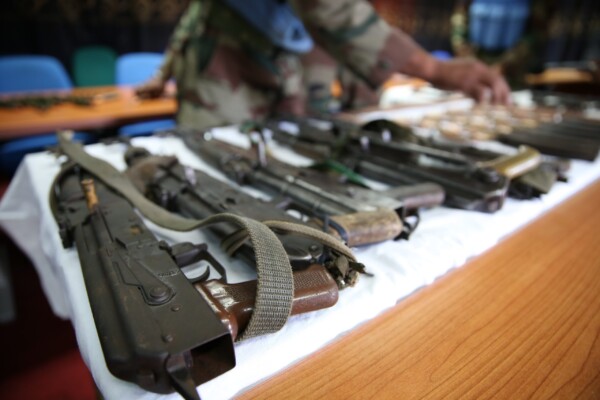
Promoting DDR programmes while arming non-state armed groups: Congo’s paradoxical conflict resolution policies in the context of the M23 insurgency
February 11, 2025When President Félix Tshisekedi came to power in 2019, he firmly promised the Congolese citizens to end the conflicts and restore peace in Eastern Democratic Republic of Congo (DRC). To reach these goals, his government wanted to combine regional diplomacy to establish political and security cooperation between DRC and neighbouring countries, with enhanced military operations against armed groups

The (new) M23 offensive on Goma: Why this long-lasting conflict is not only about minerals and what are its implications? – Q&A
February 6, 2025By the morning of January 29th, the rebels largely controlled the strategic city of Goma. To provide a quick and understandable explanation of the causes of this humanitarian crisis, the role of natural resources, and in particular minerals, is often overemphasized. While mining and mineral trade inevitably play an important role — being a vital part of the local economy — it is important to asses
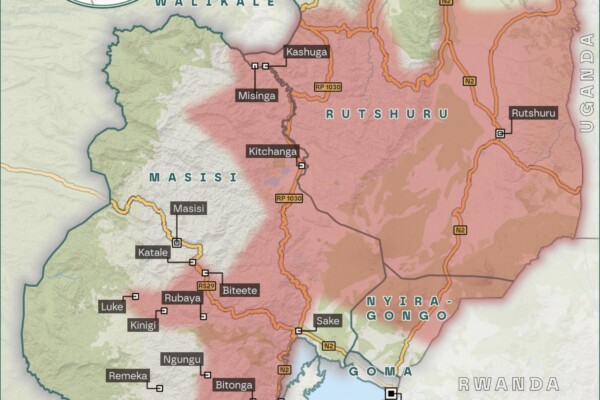
Shifting frontlines: Visualizing the evolution of the M23’s territorial influence in early 2024
June 20, 2024In early 2024, IPIS, ASSODIP, and DIIS published a report on the stakes and motivations of the “March 23 Movement” (M23), a rebellion causing serious insecurity and humanitarian suffering in the eastern Democratic Republic of Congo (DRC). The movement took up arms again in 2021, and it rapidly seized vast territories in the south-east of North Kivu province in 2022, with military support from the
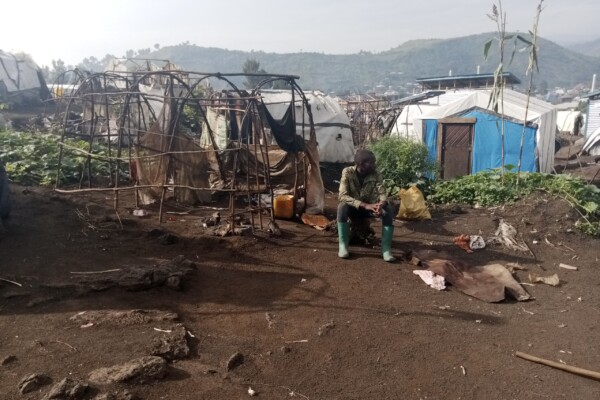
The M23 “version 2” – Local stakes, motivations, perceptions, and impacts
April 4, 2024Since 2021, the eastern part of the Democratic Republic of Congo (DRC) has once again fallen victim to the “March 23 Movement” (M23). Supposedly defeated in 2013, the M23 took up arms again in 2021, and by 2022 had rapidly seized vast territories in the south-east of North Kivu province.
M23 crisis flares again in North Kivu: context, dynamics and risks
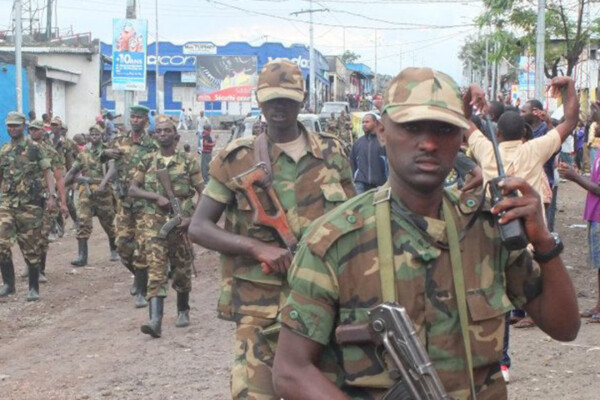
November 16, 2023Past October, violence resurged in North Kivu province, as clashes intensified between the Movement of March 23 (M23) and various local militias, as well as the Congolese army (FARDC). An additional 200,000 people have been displaced last month, exacerbating the dire humanitarian situation in the province which already counted over 590,000 internally displaced persons (IDPs) due to the M23 crisis
Why M23 is not your average rebel group
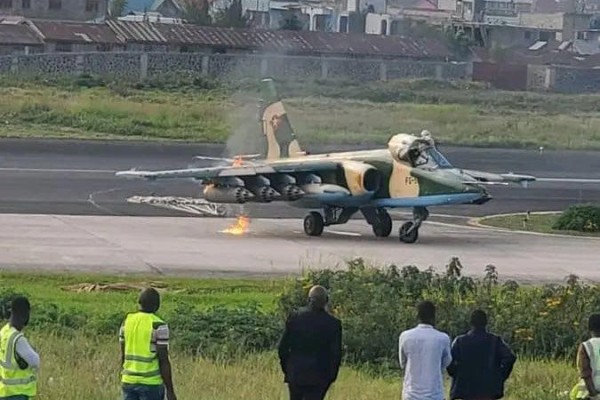
February 6, 2023Ce briefing est également disponible en français The past year saw some major changes in the eastern part of the Democratic Republic of the Congo (DRC), which has been ravaged by armed groups for decades. One group in particular rose to the forefront, the Mouvement du 23 Mars (M23). The objectives of M23 are perched at the intersection of local, national and regional power interests as w
Mapping Conflict Motives: M23 (2012)
November 30, 2012In light of the recent occupation of Goma by M23 and the renewed risk of large-scale armed conflict in the DRC, IPIS publishes an update to its 2007-2010 ‘mapping conflict motives’ report series focussing specifically on the intentions of M23. The M23 rebels show a clear political ambition and a tendency to establish political control over territory and challenge Kinshasa’s authority – strategic i