
Annual Report 2019
August 26, 2020This 2019 annual report provides an overview of IPIS’ research projects, capacity enhancement and outreach activities throughout last year. Read the full activity report to see what IPIS has been up to in 2019.
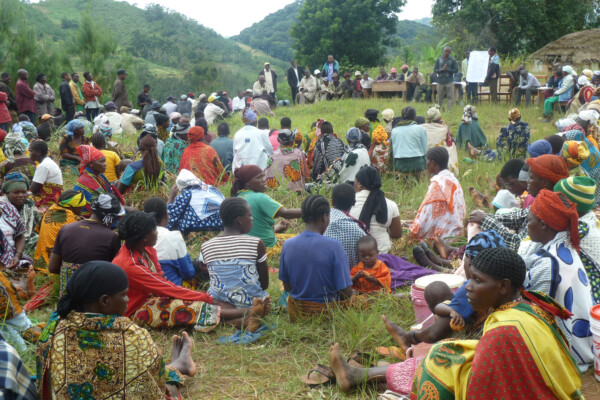
Voices from Tanzania – Land rights and environment: Case studies on Business & Human Rights
June 15, 2020The second volume of “Voices from Tanzania” presents four cases studies that focus on “land rights and environment”. Download this publication in pdf Pakua muhtasari kwa kiswahili The studies are conducted by Tanzanian civil society organisations Lawyers’ Environmental Action Team (LEAT) , HakiArdhi (the Land Rights Research and Resources Institute), Tanzania Women Empowerment in Action (TAWEA) a
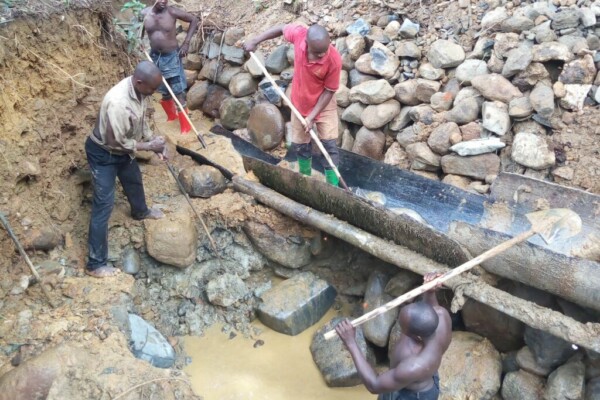
How much does a miner earn? Assessment of miner’s revenue; basic needs study in the DRC
May 7, 2020How much does a miner earn in Democratic Republic of the Congo (DRC)? Can a miner’s family cover its basic needs? In a new report, IPIS and Levin Sources compare the income of miners and their basic needs expenditures, to provide a better and nuanced understanding of why ASM communities seem to remain extremely poor and identify the factors that impact their income. This report is the first to fin
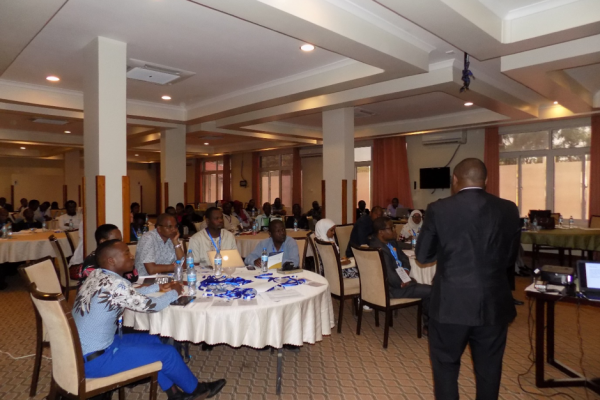
Report on the Second Multi-stakeholder Conference on Business and Human Rights in Tanzania
March 18, 2020This report presents a summary of the outcomes of the Second Multi-stakeholder Conference on Business and Human Rights in Tanzania which was held in Dar es Salaam, Tanzania on the 18th of March 2020, at Seascape Hotel. The conference was part of the project “Improving, monitoring, research and dialogue on business and human rights in Tanzania”, which aims at building local and natio
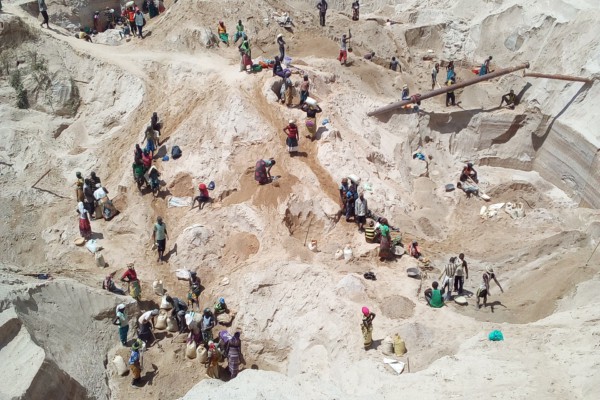
IPIS Insights on Due Diligence in Mineral Sourcing – Regulating Responsible Sourcing of 3TG Minerals
January 9, 2020Comparative analysis of Section 1502 of the US Dodd-Frank Act and the EU Conflict Minerals Regulation, lessons learned and risks for implementation
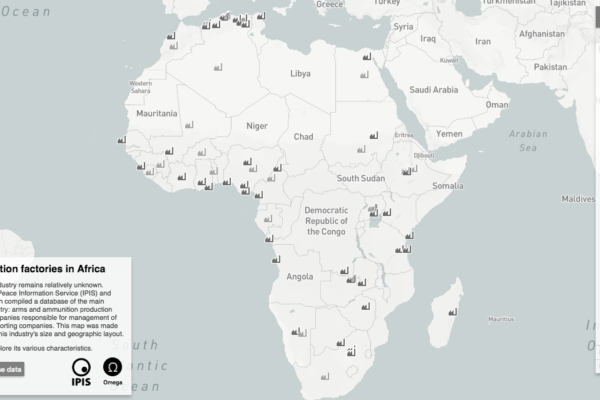
Defence-related companies in Africa
January 1, 2020Africa’s domestic defence industry remains relatively unknown. Therefore, the International Peace Information Service (IPIS) and Omega Research Foundation have compiled a database of the main entities comprising this industry, including companies that manufacture, assemble or maintain: arms and ammunition; aeronautical components; vehicles; as well as importing and management companies. This data
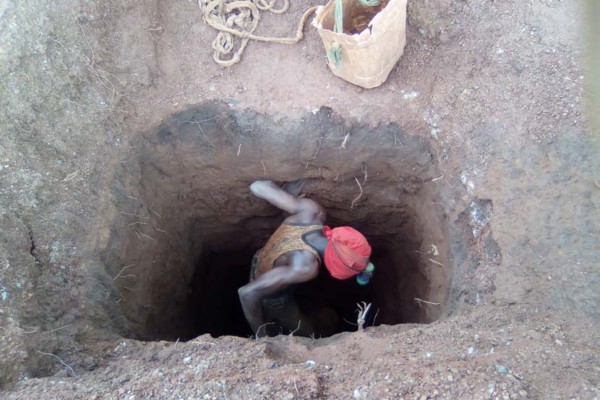
Piloting a digital stakeholder engagement platform for Tanzania’s mining sector: Incident tracking & mobile surveys
October 31, 2019As part of a project on mining and human rights, IPIS undertook a large-scale mobile data collection exercise on operational, socio-economic and human rights aspects of artisanal and industrial mining in northwest Tanzania. Building on this baseline data gathered in the first phase of this project on the nature, scope and impact of artisanal and small-scale mining and local community perceptions o

Dissecting the social license to operate: Local community perceptions of industrial mining in northwest Tanzania
August 28, 2019Discussions on industrial mining often revolve around the sector’s contribution to domestic revenue generation. The local impact on the rural communities wherein most of these companies operate receives much less attention. To bring the voices of these communities to the centre of the debate, IPIS conducted surveys on community perspectives in 32 villages nearby six industrial mines in northwest T
Annual Report 2018
June 27, 2019This 2018 annual report provides an overview of IPIS’ research projects, capacity enhancement and outreach activities throughout last year. IPIS consolidated its work in DRC, Central African Republic and Tanzania and deepened its expertise on mapping, data analysis and research on conflict drivers, natural resources, Business & Human Rights and arms trade. IPIS worked closely with civil societ
Assessing the impact of due diligence programmes in Eastern DRC: A baseline study
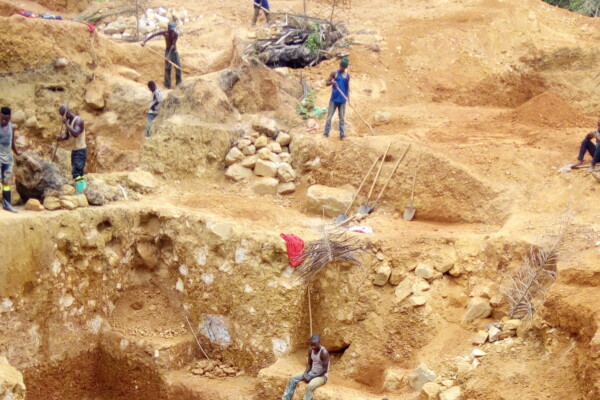
April 24, 2019Over the past decade, various legislative and due diligence programmes (DDP) have been developed to improve mining communities’ livelihoods and reduce human rights abuses in conflict affected and high- risk areas, with a special focus on the African Great Lakes region. Despite significant growth and investments in minerals certification and traceability schemes, data on the impact of due diligence

Voices from Tanzania – Case studies on pertinent corporate human rights issues in Tanzania
April 24, 2019“Voices from Tanzania – case studies on Business and Human Rights (Volume 1)” presents five studies on pertinent corporate human rights issues in Tanzania as conducted by Business and Human Rights Tanzania (BHRT), the Commission for Human Rights and Good Governance (CHRAGG), Governance Links Tanzania, the Legal and Human Rights Centre (LHRC) and IPIS’ project manager in Tanzania. The case studies
Report on the first Multi-Stakeholder Meeting on Business and Human Rights in Tanzania
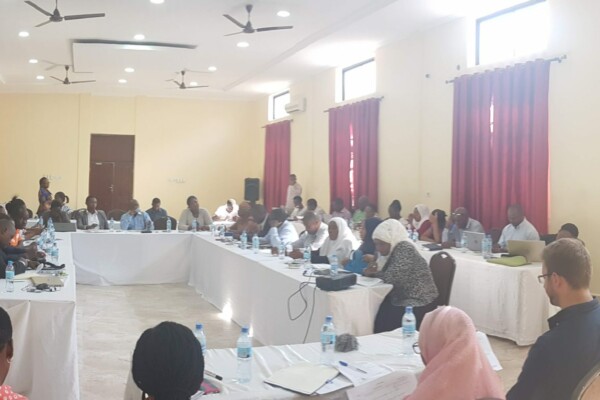
March 21, 2019This report presents a summary of the outcomes of the conference titled “Multi Stakeholder Conference on Business and Human Rights in Tanzania” which was held in Dodoma, Tanzania on the 21st of March 2019, at Royal Village Hotel. The conference was part of the project “Improving, monitoring, research and dialogue on business and human rights in Tanzania”, which aims at building local and national
Toolbox for Business and Human Rights
January 25, 2019On the 70th anniversary of the Universal Declaration of Human Rights, the Federal Institute for Sustainable Development (FIDO/IFDD) has launched the Toolbox Human Rights. This toolbox bundles the most important human rights conventions and regulations into one comprehensive website. This website aims to help companies, organisations and their stakeholders to easily align their policies/practices i
Annual Report 2017
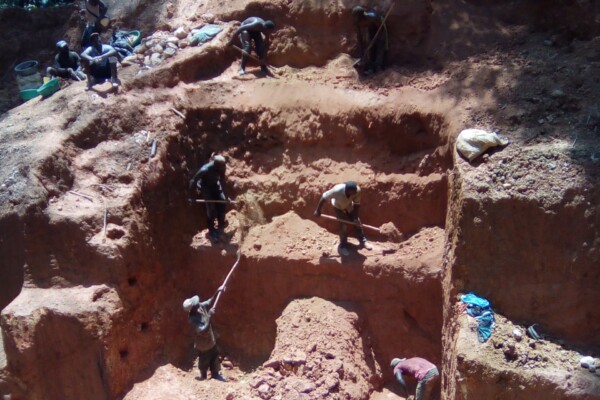
August 21, 2018In its 2017 annual report, IPIS gives an overview of its research projects and activities. It covers the four research programmes that IPIS focusses on: natural resources, arms trade, conflict mapping and business and human rights. IPIS explains among others its mapping work of artisanal mining sites in the Democratic Republic of Congo, its work on Human Rights in mining in Northwest Tanzania an
Annual report 2016
June 23, 2017In its 2016 annual report, IPIS gives an overview of its research projects and activities. It covers the four research programmes that IPIS focusses on: natural resources, arms trade, conflict mapping and business and human rights. In 2016, IPIS continued to be a rally point for hard to get data on natural resources, often visualised in maps. Our flagship map for 2016 is the interactive map of art
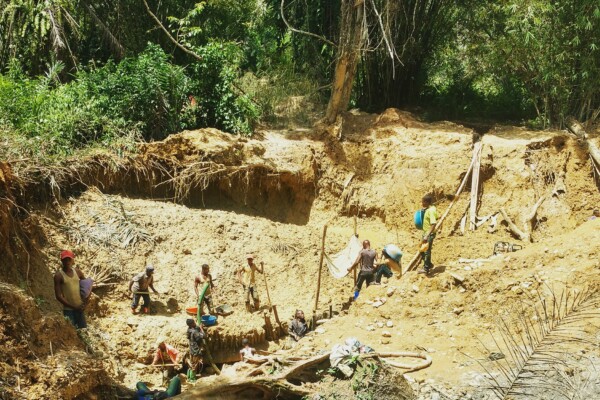
Artisanal Gold Monitoring Pilot – Progress reports
June 20, 2017With the support of the Public Private Alliance for Responsible Minerals Trade (PPA), IPIS set up its Artisanal Gold Monitoring Pilot in Mambasa (Ituri Province, DRC) between April 2016 and July 2017. The findings of the research are summarized in three progress reports, which can be found below, and a final monitoring report, which can be found here. Progress report August – September 2016
Annual Report 2015
August 31, 2016Download pdf or open with issuu reader http://issuu.com/ipisresearch/docs/2016_10_10_ipis_jaarverslag_2015_20
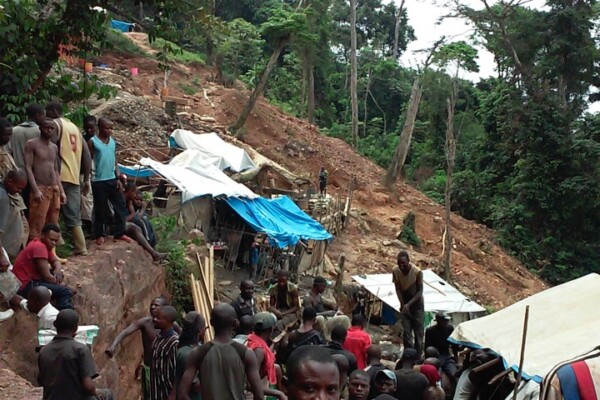
Third Party Review of the Bisie Security Report
July 19, 2016The so-called ‘Bisie Mineral Stock’ encompasses about 1,000 tons of cassiterite, extracted by artisanal miners at Bisie mines between November 2010 and June 2015. A number of bans on mining and mineral trade in this region, as well as some hesitance further down the supply chain to buy untagged minerals, meant that mineral production was not marketed, but stored in warehouses. From 2014 onwards, n

Coloured gemstones in eastern DRC: Tourmaline exploitation and trade in the Kivus
May 11, 2016Responsible sourcing efforts in the Democratic Republic of Congo (DRC) to date have focused predominantly on the so-called 3TG (tin, tungsten, tantalum and gold) sector. Nevertheless, the artisanal exploitation of other minerals including semi-precious gemstones, such as tourmaline, can also make notable contributions to local livelihoods […]

Business, Human Rights and Uganda’s oil. Part III: Respect and Remedy: Implementing corporate responsibility under the UN Framework on Business and Human Rights
December 31, 2015The following is the third in a series of four reports exploring business and human rights issues in Uganda’s oil sector. This series is a collaboration between IPIS vzw and ActionAid Uganda. The 2011 UN Guiding Principles on Business and Human Rights operationalise the 2008 Protect, Respect and Remedy Framework. In accordance herewith, this third report assesses the duty of businesses to respect