
Publications
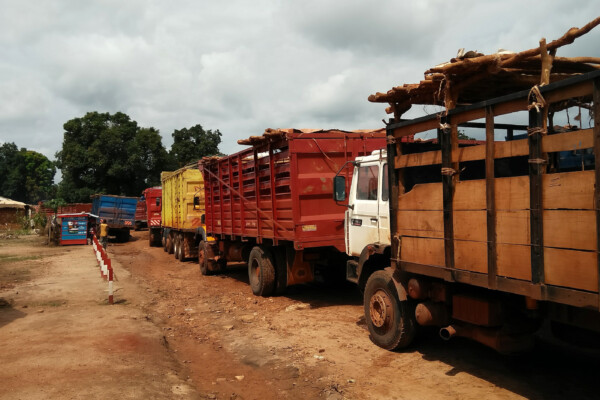
Het conflict in de Centraal-Afrikaanse Republiek
- Fiona Southward, Peer Schouten (DIIS/IPIS) | January 27, 2017
In 2014 deed IPIS een uitgebreid ‘conflict mapping’ onderzoek om inzicht te krijgen in de veiligheidssituatie in de Centraal-Afrikaanse Republiek (CAR). Dit leidde tot de publicatie van een publiek toegankelijke webkaart over belangrijke conflictdynamieken. IPIS bracht de gewapende groepen, mensenrechtenschendingen, natuurlijke rijkdommen, vluchtelingenstromen en migratieroutes van veehouders in k
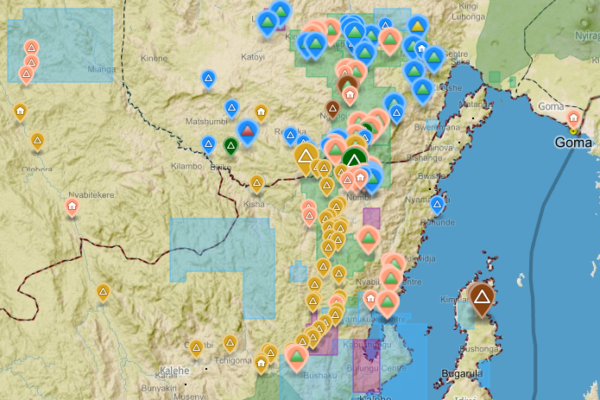
Analysis of the interactive map of artisanal mining areas in eastern DR Congo – 2015 update
- Ken Matthysen, Lotte Hoex, Yannick Weyns | October 25, 2016
The Belgian research group IPIS has collected data on 2026 artisanal mining sites in eastern DRC over the last couple of years. IPIS observed an armed presence in more than half of the mines. In an interactive map, updated in 2015, IPIS provides information about the on-site presence of armed groups and the Congolese army (FARDC) as well as indicators of the relative importance of the site. It als
Annual Report 2015
- IPIS | August 31, 2016
Download pdf or open with issuu reader http://issuu.com/ipisresearch/docs/2016_10_10_ipis_jaarverslag_2015_20
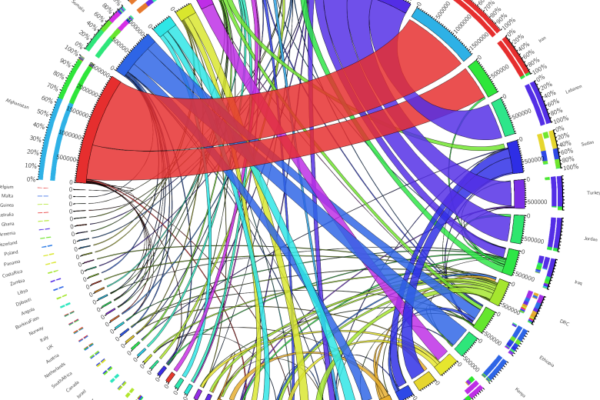
Accessible and Interactive: New Methods of Data Visualization as Tools for Data Analysis and Information Sharing in Transitional Justice Research
- Alexandre Jaillon, Tim Rosenkranz | March 24, 2016
Abstract The production and use of datasets is a growing area in transitional justice research. One constant limitation, however, is the way this data is visualized. Relying only on static graphics and tables, many of these datasets are insufficiently explored and analyzed, and remain inaccessible for other researchers. Interactive data visualization tools are an ideal method for overcoming this g
Mineral supply chains and conflict links in eastern democratic republic of congo
- Fiona Southward | November 25, 2015
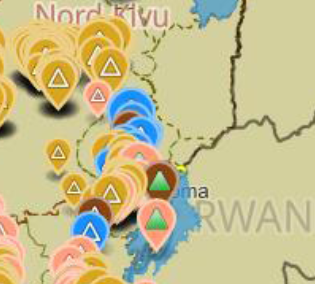
Between 2009 and 2010 IPIS collected data on over 550 mining sites as part a conflict mapping exercise focusing on Eastern Democratic Republic of Congo (DRC). With the collaboration of Congolese researchers, IPIS collected the coordinates of the most important mining sites and information on on-site security in North and South Kivu provinces, Maniema, Northern Katanga and southeast Province Orient
Mapping Conflict Motives: the Central African Republic (2012-2014)
- Filip Hilgert, Lotte Hoex, Steven Spittaels, Yannick Weyns | November 21, 2014
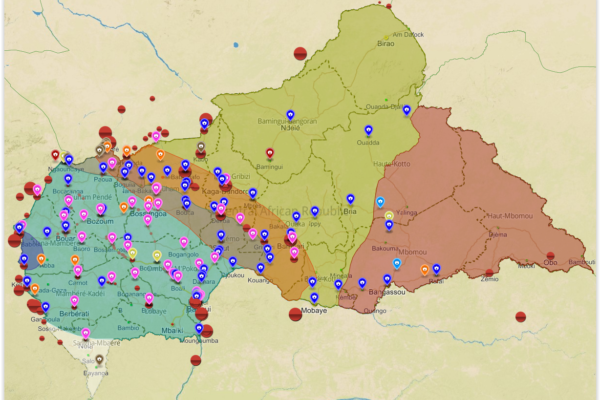
In this study, IPIS analyses the conflict dynamics in the Central African Republic (CAR) since the outbreak of the latest crisis in September 2012 up to September 2014. The analysis specifically looks into the motivations and interests of the main conflict parties, Seleka and anti-balaka, and the influence and interests of neighbouring countries. The report covers the following key questions. What
Analysis of the interactive map of artisanal mining areas in Eastern DRC – May 2014 Update
- Anna Bulzomi, Filip Hilgert, Ken Matthysen, Steven Spittaels, Yannick Weyns | April 30, 2014
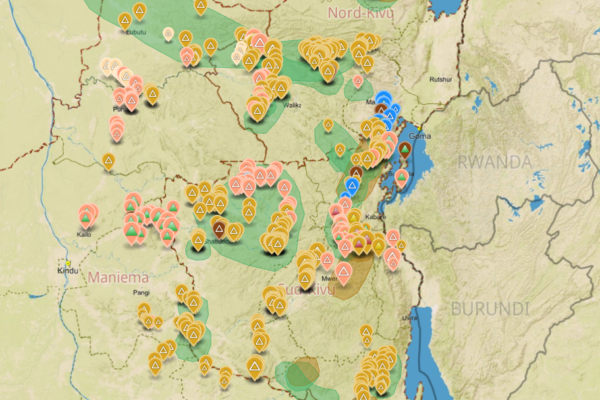
In collaboration with the Congolese mining cadastre (CAMI), mining service SAESSCAM and representatives from local civil society organisations, IPIS organised a series of field visits to monitor artisanal mining activities and the involvement of armed groups and criminal networks in mineral exploitation and trade. This resulted in the publication of an interactive web map providing information on

Wereldbeeld: Nieuwste VN-vredesmissie start in de Centraal- Afrikaanse Republiek: Geweld, een zwakke veiligheidssector en de rol van de internationale gemeenschap. Lotte Hoex. pp 6-13
- Lotte Hoex | March 3, 2014
Om burgers te beschermen tegen het aanhoudende geweld in de Centraal-Afrikaanse Republiek (CAR), ging op 15 september 2014 de nieuwste vredesmissie van de Verenigde Naties (VN) van start. De CAR ligt in centraal Afrika, telt vijf miljoen inwoners en is één van de armste landen ter wereld. Sinds de onafhankelijkheid van Frankrijk in 1960 kampt de CAR met een onstabiele politieke situatie en regelma
Mapping Conflict Motives: the Sudan – South Sudan border
- Steven Spittaels, Yannick Weyns | January 23, 2014
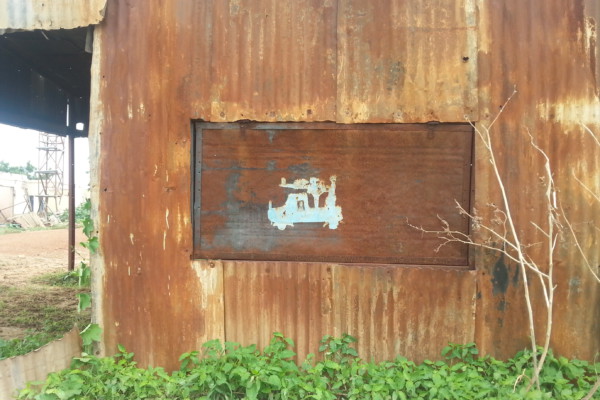
In “Mapping Conflict Motives: the Sudan-South Sudan border”, IPIS analyses the conflict dynamics in the wider border area spanning Sudan and South Sudan. The analysis specifically looks into the motivations and interests of the parties involved in the interstate, intrastate and local conflicts in this area. The report covers the following key questions: Where are conflict parties focussing their e
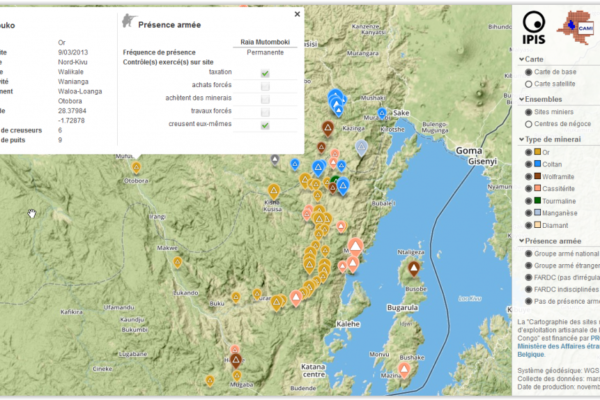
Analysis of the interactive map of artisanal mining areas in Eastern DR Congo (2013)
- Filip Hilgert, Steven Spittaels | November 13, 2013
In August 2009 the ‘International Peace Information Service’ (IPIS) published a first map of militarised mining areas in Eastern DR Congo. By 2012, the international interest in the issue had grown but the map was out-dated. To find a structural solution, IPIS sat down with the Congolese mining cadastre (CAMI) and agreed to set up a permanent system to monitor artisanal mining activities and the i
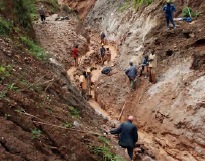
Mapping Conflict Minerals (2012)
- Elisabeth Schoepfer, Filip Hilgert, Kristin Sproehnle | December 28, 2012
How GMES supports the International Peace Information Service (IPIS), in: Window on GMES, Special Issue: Discover the “S” in GMES, pp. 82-88 Exploitation of natural resources has, in most cases, a strong impact on the environment, often even spoiling natural habitats and affecting people’s way of life. The exploitation and trade of minerals can also fuel armed conflicts, as it is the case in the E
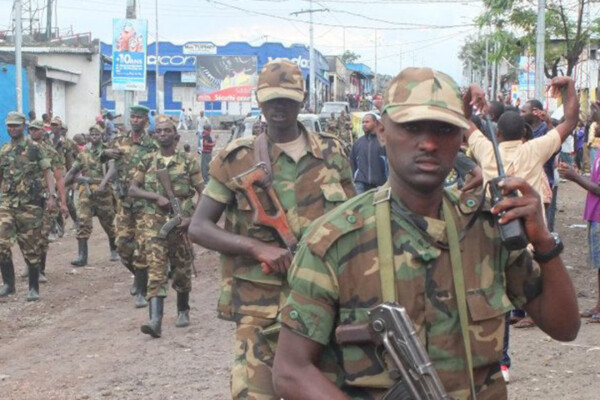
Mapping Conflict Motives: M23 (2012)
- IPIS | November 30, 2012
In light of the recent occupation of Goma by M23 and the renewed risk of large-scale armed conflict in the DRC, IPIS publishes an update to its 2007-2010 ‘mapping conflict motives’ report series focussing specifically on the intentions of M23. The M23 rebels show a clear political ambition and a tendency to establish political control over territory and challenge Kinshasa’s authority – strategic i
A Taxonomy of Non-State Armed Actors in the Central African Republic (2012)
- Jasper Bauters | January 2, 2012
This report hopes to provide an overview of how the Central African Republic got to where it is now, as well as to present the means to further our understanding of the current situation. First a genealogy of the current situation is provided, which is presented in the form of a narrative literature overview encompassing the postcolonial period. This is followed by a brief account on the main conf
Bisie. A one-year snapshot of the DRC’s principal cassiterite mine (2011)
- Filip Hilgert | November 28, 2011
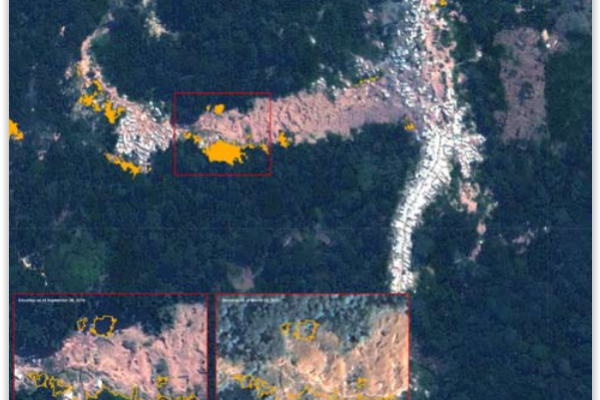
Much has happened in the mining sector of Eastern DRC over the last year. President Kabila imposed a ban on all mining activities last fall, during which production fell considerably. As soon as the suspension was lifted in the spring of this year, the major global electronic companies stopped buying minerals from the region, provoking a de facto embargo on Congo’s minerals with detrimental effect
Simplified maps illustrating the link between natural resources and armed conflict in the DR Congo (2011)
- Filip Hilgert | January 17, 2011
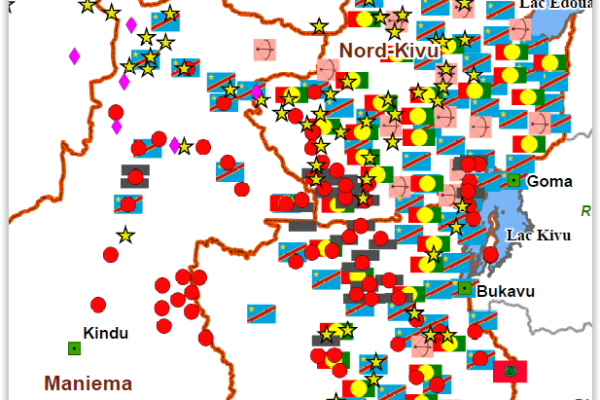
Simplified maps illustrating the link between natural resources and armed conflict in the DR Congo (in French) (January 2011) At the request of different users of the IPIS web maps, and with the support of the Belgian Development Cooperation (DGD), IPIS has produced a series of six simplified and printable PDF maps illustrating the link between mineral resources and armed conflict in the Democrati
The complexity of resource governance in a context of state fragility: An analysis of the mining sector in the Kivu hinterlands (2010)
- Filip Hilgert, Ken Matthysen, Steven Spittaels | November 30, 2010
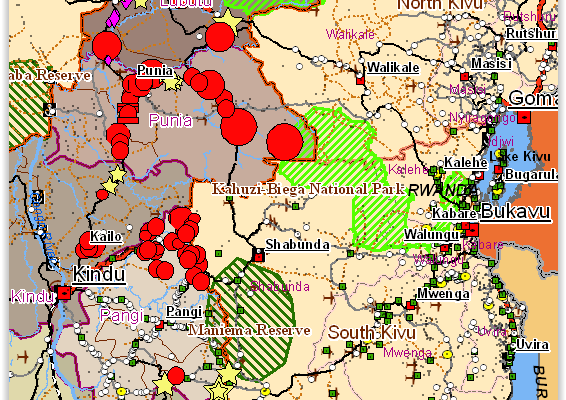
The report ‘Mining activity and mineral trade in the Kivu hinterland’ was commissioned by the Directorate General for Development (DG DEV) of the European Commission and aims to fill an information gap by identifying the principal mining sites and analysing the trade networks of the ‘eastern hinterland’ of the Democratic Republic of the Congo (DRC), located in Maniema, North Katanga and Orientale
Mining Concessions in the DR Congo (2010)
- Filip Hilgert | August 17, 2010
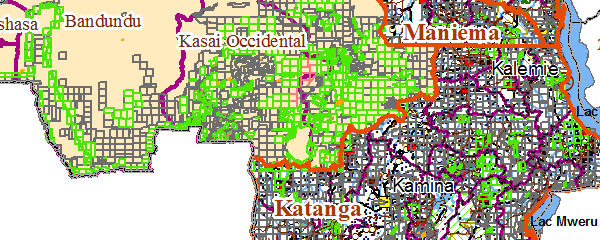
Mining Concessions in the DR Congo (August 2010) IPIS has produced an interactive web map of all mining concessions in the Democratic Republic of the Congo. The current map follows a concession map we published in August 2009 (as an addition to our Interactive Map of Militarised Mining Areas in the Kivus – MiMiKi), which shows concession areas in the Kivu provinces. The idea for an extended and up
Mapping Conflict Motives: ‘Province Orientale’ (DRC) (2010)
- Filip Hilgert, Steven Spittaels | March 22, 2010
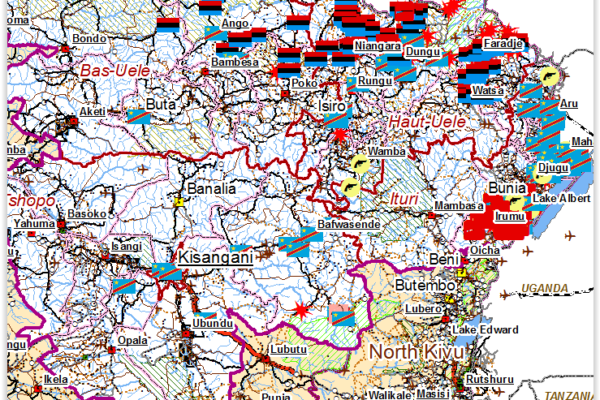
The districts of Ituri, Haut-Uele, Bas-Uele and the territory of Bafwasende continue to suffer from armed groups. Generally speaking, the strength of the armed groups throughout Orientale is limited and their effectives are few. Moreover, there is a considerable presence of the Congolese army. The Uele districts are the two most northern districts of Orientale bordering the Central African Republi
Accompanying note on the interactive map of militarised mining areas in the Kivus (2009)
- Filip Hilgert, Steven Spittaels | August 16, 2009
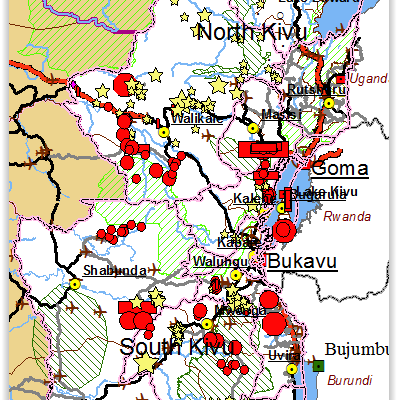
The MiMiKi map is a snapshot of the situation as it was in the period May-July 2009. All the armed groups deployed in the region profit directly from the mining activities. Armed groups have positions at more than half of the sites listed on the MiMiKi map where they obtain an (extra) income. The FARDC control some of the most important mining sites and do not restrain themselves from intervening
Mapping Conflict Motives: Central African Republic (2009)
- Filip Hilgert, Steven Spittaels | February 18, 2009
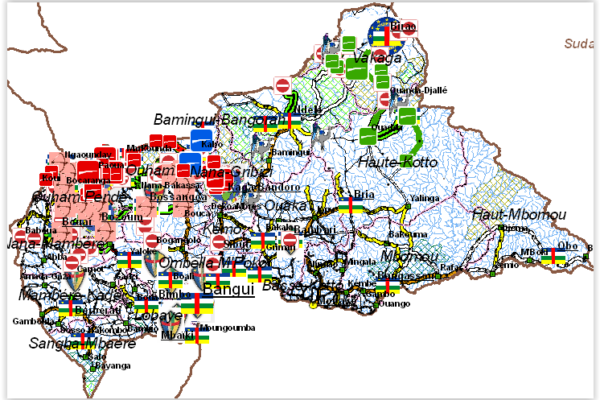
Not many areas in the Central African Republic are really secure. Although the country is scarcely populated, it is tormented by a multitude of armed actors. These belligerents use their weapons for a diversity of reasons but they have one thing in common: each of them would be a weak opponent for any well-organised state, but then this is exactly what the country lacks. Firstly, there are three C