The past year has left many of us witnessing a collapsing world order. While the wars in Ukraine and Gaza have continued, the end of 2024 also marked a rapid offensive by the M23 movement in the Democratic Republic of Congo, culmulating in the capture of Goma and Bukavu by this rebel group in early 2025.
In this rapidly evolving global landscape, marked by increasing geopolitical fragmentation, growing competition over critical minerals, and shifting alliances, IPIS has remained focused on its mission: provide governments and private sector actors with fact-based perspectives, support civil society across Sub Saharan Africa and Belgium, and be present at relevant forums with insights grounded in field research and collaboration with civil society partners.
Notably, the war in Gaza, with its catastrophic toll on civilians and civil infrastructure, challenged the boundaries of what can be called an ‘armed conflict.’ While most European countries, including Belgium, halted arms exports to the Israeli military, IPIS has contributed to closing loopholes in regulations and practices.
The ongoing war in Ukraine provoked a renewed debate on defense expenditures in all European countries with policymakers and civil society actors struggling to find a balanced position between supporting Ukraine and a looking for pathway towards durable peace. This became even more challenging in early 2025 with the re-election of Donald Trump, essentially causing a fundamental shift towards rearmament. IPIS was part of the civil society dialogue to find avenues for a nuanced and critical engagement in this situation.
In eastern Congo, the escalation of the armed conflict towards the end of the year was the continuation of a persistent crisis rooted in regional tensions, historical grievances, local power dynamics, and access to minerals. Our research offered a deeper understanding of the ongoing crisis, shedding light on the intersection of natural resources, conflict, human rights, and accountability across fragile state contexts.
Also noteworthy is IPIS’ expansion of the Kuf(u)atilia incident monitoring platform in Tanzania, our continued research on the impact on communities of diamond and cobalt supply chains, and case studies on conflict drivers in the Sahel and West Africa.
In 2024, IPIS made important contributions to international policy debates, from the OECD Forum on Responsible Mineral Supply Chains and EU Raw Materials Week to the UN Business and Human Rights Forum, where our data and analysis continue to inform ongoing debates on due diligence, access to remedy, and corporate accountability.
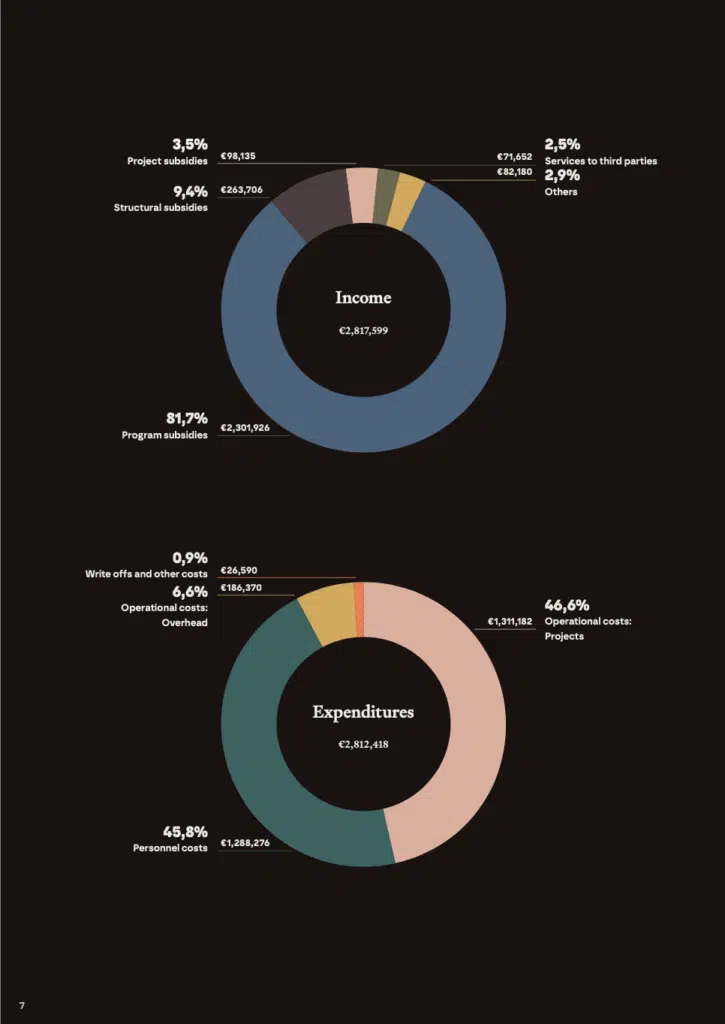
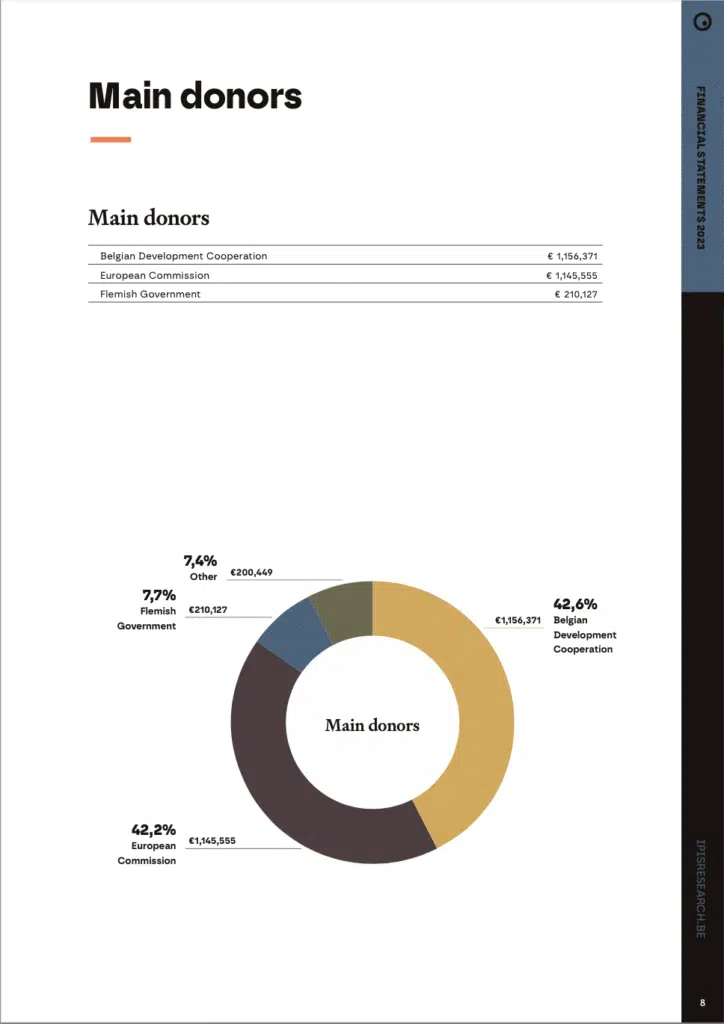
This annual report gives an overview of all research projects, capacity enhancement initiatives, and outreach activities conducted by IPIS in 2024. Our financial statements for the fiscal year are available in an extended format.