Onafhankelijk onderzoeksinstituutvoor vrede, duurzame ontwikkeling en mensenrechten.
Laatste publicaties
On 4 December 2025, Rwanda and the Democratic Republic of the Congo (DRC) signed the US-brokered Washington Accords for Peace and Prosperity, committing to cease hostilities, establish a permanent ceasefire, and implement the 25 April Declaration of Principles and the 27 June Peace Agreement. However, critical questions have been raised about the prospects for lasting peace in eastern DRC, as Kigali continues to deny its backing of the M23 despite documented UN evidence, and separate peace talks between the Congolese government and the AFC/M23, held in Qatar, have so far stalled following the signing of the Doha Framework of Comprehensive Peace on 15 November.
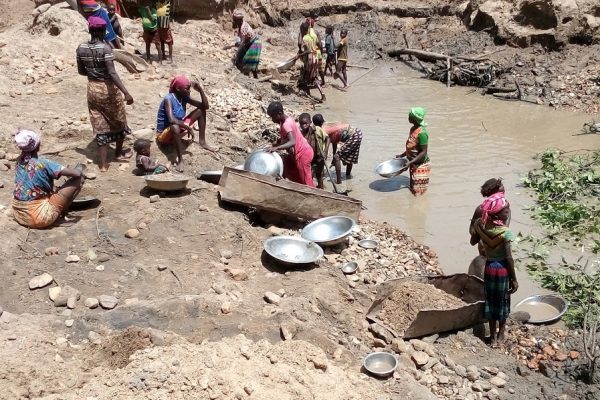
In the Faradje administrative territory in the northeastern Democratic Republic of Congo’s Haut-Uélé province, more than 5,000 people rely on artisanal gold mining to earn a living and support their families. Many artisanal-mining families have done so for generations. They currently work on sites that now fall largely within mining permits owned by Kibali Goldmines (Kibali), a joint venture of Barrick Mining Corporation, AngloGold Ashanti, and the Congolese parastatal Société minière de Kilo-Moto (SOKIMO). Community members have long criticized the lack of dialogue with both the company and the Congolese authorities.
Since 2020, West Africa has been experiencing political turmoil characterised by a series of coups d’état, which led to the emergence of two blocs: the coastal countries, which are still members of the Economic Community of West African States (ECOWAS), and Burkina Faso, Mali and Niger, who founded the Alliance of Sahel States (AES) in 2023. Combining literature review with primary data collected from Nigerien civil society organisations working on pastoralism and agriculture, as well as from current and former transhumant pastoralists from Benin, this Insight explores the potential of pastoralism in contributing to peace, stability and the sustainable mitigation of climate-related challenges in the region.
Since 2022, western Democratic Republic of Congo (DRC) has been plagued by a major security and humanitarian crisis, with more than 5,000 dead, and 280,000 still displaced. While international attention has focused on the violent conflicts in eastern DRC, an intercommunity conflict at the on the outskirts of Kinshasa is sinking into a spiral of violence, with very little attention from national authorities and international partners. Against this backdrop, and as part of the awareness-raising campaign led by Caritas International Belgium and Justice & Paix, this report seeks to draw attention to the Mobondo crisis and its consequences.
The European Union has developed a set of due diligence frameworks aimed at improving corporate accountability in mineral supply chains, particularly those linked to conflict-affected and high-risk areas. These regulations, such as the Conflict Minerals Regulation, the Battery Regulation, and the Corporate Sustainability Due Diligence Directive (CSDDD), seek to address both social and environmental risks associated with mineral extraction. This IPIS report argues that while these frameworks represent an important step, their current implementation does not sufficiently account for the complex nexus between environmental harm, conflict dynamics, and poor governance in areas like eastern DRC.
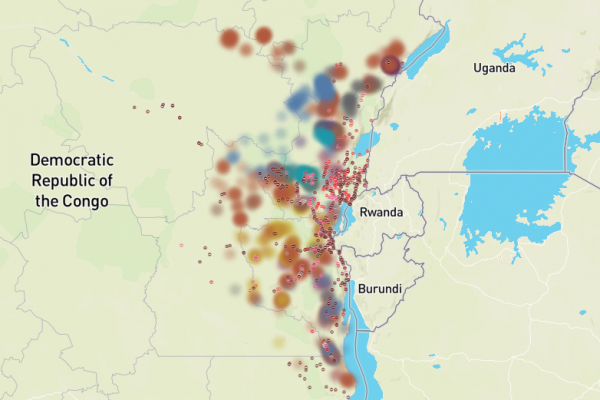
New peace agreements from Washington and Doha have brought hope for initiating a pathway to resolve the ongoing M23-conflict in DRC’s eastern territories in recent months. However, after the signing of the Declaration of Principles in Doha on 19 July, direct negotiations between the DRC and AFC/M23 were intended to result in a comprehensive peace agreement and were planned to begin no later than 8 August. By the end of September, however, these negotiations had still not commenced. Despite the new permanent ceasefire agreed on in Doha, continuous clashes between the AFC/M23 and the FARDC-Wazalendo coalitions persist in the DRC’s North and South Kivu provinces.
Women have historically contributed to mining activities across the world, yet their roles have often been overlooked or undervalued. Also in Tanzania’s artisanal and small-scale gold mining (ASGM) sector, women face systemic barriers rooted in cultural norms, legal frameworks, and socio-economic structures. In this study, Thubutu Africa Initiatives (TAI) explores the cultural and social factors that hinder women's involvement in gold mining in Mwakitolyo, a key artisanal and small-scale gold mining site in Shinyanga region where women represent a significant albeit minority portion of the ASGM labor force.
Nieuws
Following this research, the results were presented in workshops in the above-mentioned territories to mining monitoring committees and project stakeholders in August 2025, facilitated by(...)
Earlier this year, IPIS published a report, “Diamonds in the DRC: A sector struggling to shine again”, which analyzed the current dynamics in the DRC’s(...)
Laatste briefing
Schrijf je in voor IPIS updates
Do you want to receive the IPIS briefing with a selection of articles, news and updates on natural resources, armed conflict, business and human rights, and arms trade? The IPIS briefing also includes a topical editorial and related articles, and updates on IPIS’ research findings, new maps, reports and briefings.