
The Congolese government has recently taken several initiatives as part of its plans to reform its mining sector. In October 2026, the authorities decided that tens of thousands of artisanal miners had to leave the artisanal copper and cobalt mine of Kamilombe near Kolwezi, the capital of the Congolese province of Lualaba. Figures range from 20,000 to 50,000 affected miners, depending on the sources; IPIS surveyors visited the site in April 2025 and estimated the number of miners then at 18,000. The informal but so far tolerated site of Kamilombe had made progress in terms of working conditions and responsible sourcing over the past years, with a functioning cooperative overseeing the production. Yet, with little to no prior notice for miners, artisanal production on this site will give way to an industrial actor. Artisanal miners are left with a new legal space to which they can relocate, but it is distant, and its economic potential remains very uncertain.
This case raises some doubts about whether the DRC’s mining development approach will succeed in reconciling the expansion of (international) industrial mining operations with artisanal mining and local economic development. In a mineral-rich region where many communities have seen limited benefits from industrial mining, prioritising industrial expansion at the expense of artisanal mining may risk further fuelling existing frustrations and social tensions and could therefore be counterproductive.
Located in the Congolese Copperbelt, the province of Lualaba hosts some of the world’s richest copper and cobalt reserves. For that reason, its territory is almost entirely covered by industrial mining permits. Alongside industrial mining, the extraction and processing of copper and cobalt also employ well over one hundred thousand artisanal miners in Lualaba, representing a crucial source of livelihoods and a key potential for local development. However, the artisanal sector is largely informal and characterised by a lack of legal spaces to operate, corruption, poor labour conditions, elite capture, and ongoing conflicts with industrial actors. Reforming the sector is therefore necessary but should not ignore the socio-economic impact and development potential of artisanal mining.
Tens of thousands of miners suddenly forced to relocate
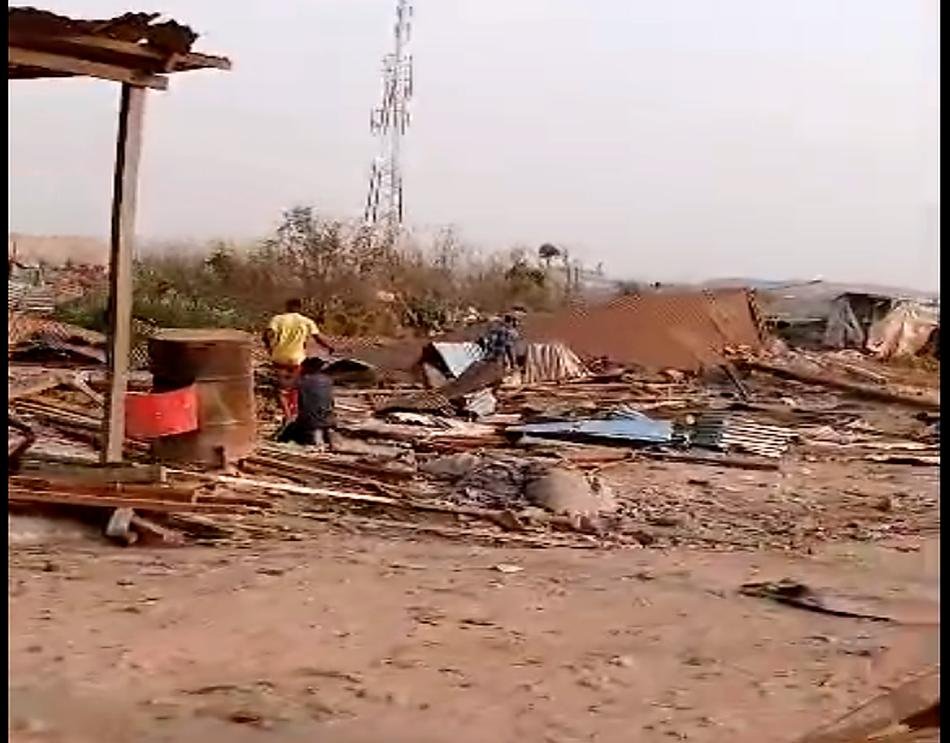
Following rumours that had been circulating in Kolwezi for some time, the governor of Lualaba, Fifi Masuka Saini, confirmed that a memorandum of agreement had been signed on Friday, 23October 2026, during a meeting she chaired with the commission for relocation and the cooperatives, to record the eviction of the artisanal miners of Kamilombe. The memorandum foresees relocating miners to ZEA 371, an artisanal mining zone (Zone d’Exploitation Artisanale orZEA) more than 30 km south of the neighbourhood of Kapata (Kolwezi), where Kamilombe is located.
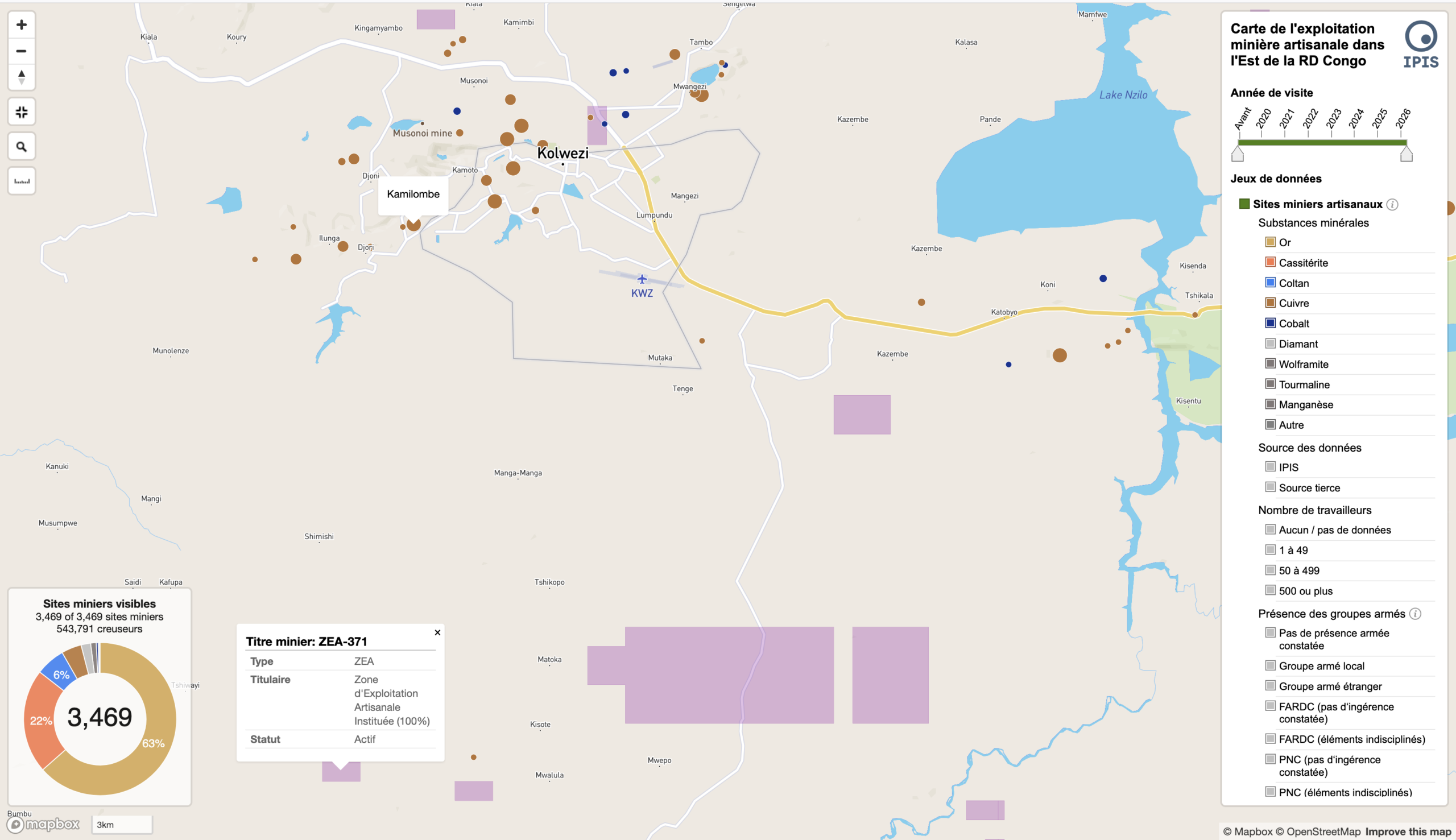
The government explains this displacement operation as part of its policy to restore order in the artisanal mining sector and improve state oversight of artisanal exploitation in Lualaba, framing it as an essential step toward formalising the artisanal mining sector.
According to the Congolese Mining Code, artisanal mining operations can indeed only take place in designated ZEAs and under the supervision of a mining cooperative. Like many artisanal mines in Lualaba, Kamilombe is not located on a ZEA. IPIS demonstrates in its latest report, co-authored with the Kolwezi-based civil society organisation Initiative pour la Bonne Gouvernance et les Droits Humains (IBGDH), that most of the artisanal mines in Lualaba are located within concessions of public and private industrial mining companies, because of a chronic shortage of viable ZEAs in this region. Some of these artisanal operations are tolerated by the concession holder, whereas others are considered clandestine.
A productive site, supervised by a functioning cooperative that had provided some social improvements
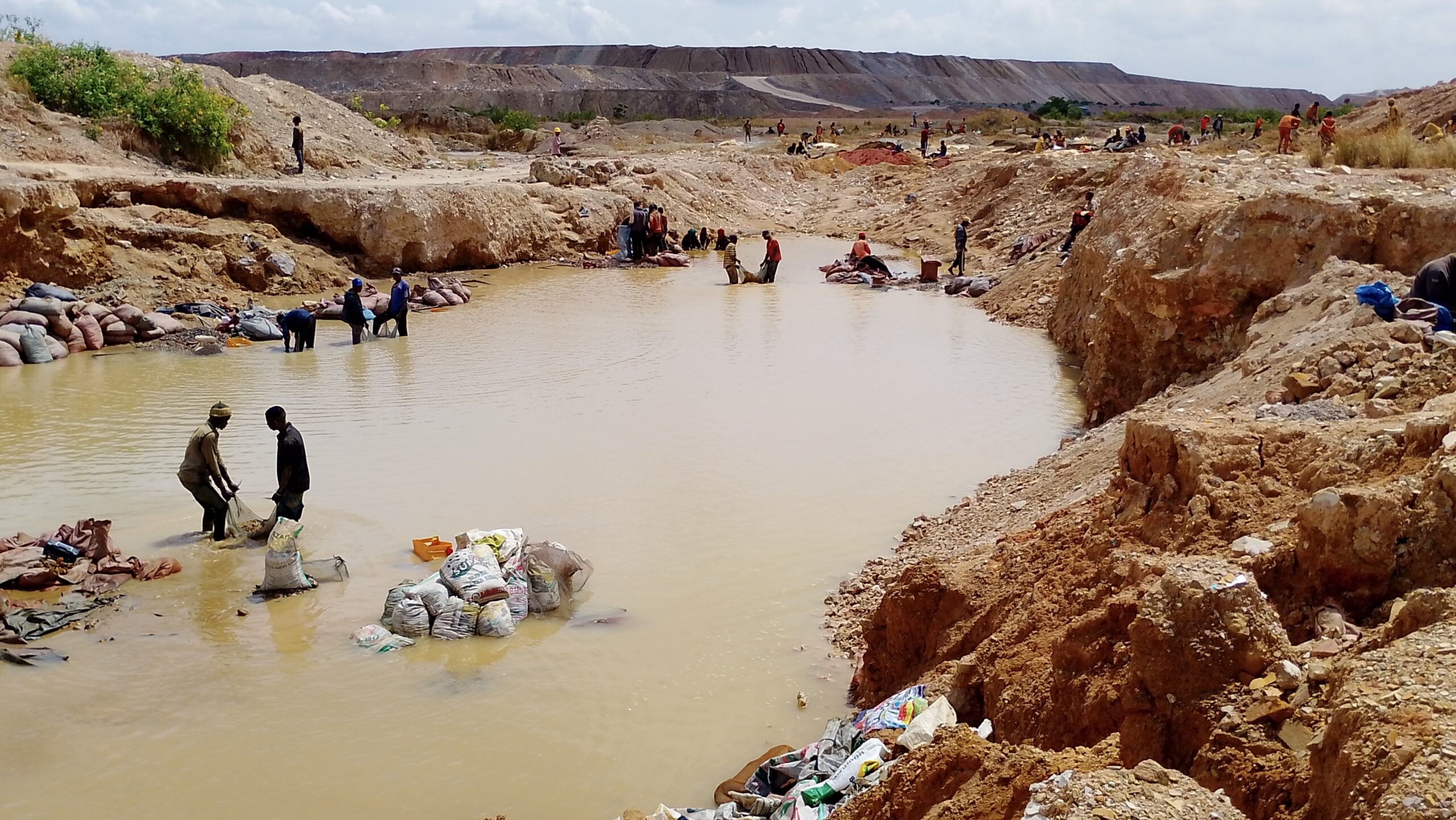
The Kamilombe mine is located on concession PE11599 of the state-owned mining company Gécamines, and was, until recently, regarded as a tolerated mining site where artisanal mining operations were supervised by the Coopérative Minière pour le Développement et le Social (CMDS). For many years, CMDS has enjoyed the tacit approval of Gécamines, and in 2017 the provincial government of Lualaba granted CMDS permission to oversee artisanal mining activities at the site (this approval was confirmed by the national Ministry of Mines). As a result, CMDS has been collaborating for several years with the Fair Cobalt Alliance to improve working conditions in the Kamilombe mine and to promote mineral traceability. IPIS’ research teams observed in 2025 that CMDS assisted the artisanal miners of Kamilombe in a structured way, providing them with social support and taking measures to improve their safety. Moreover, agents of the Service d’Assistance et d’Encadrement de l’Exploitation Minière Artisanale et de Petite Échelle (SAEMAPE) and the Division Provinciale des Mines, two state services responsible for overseeing artisanal mining, were permanently present in the mine.
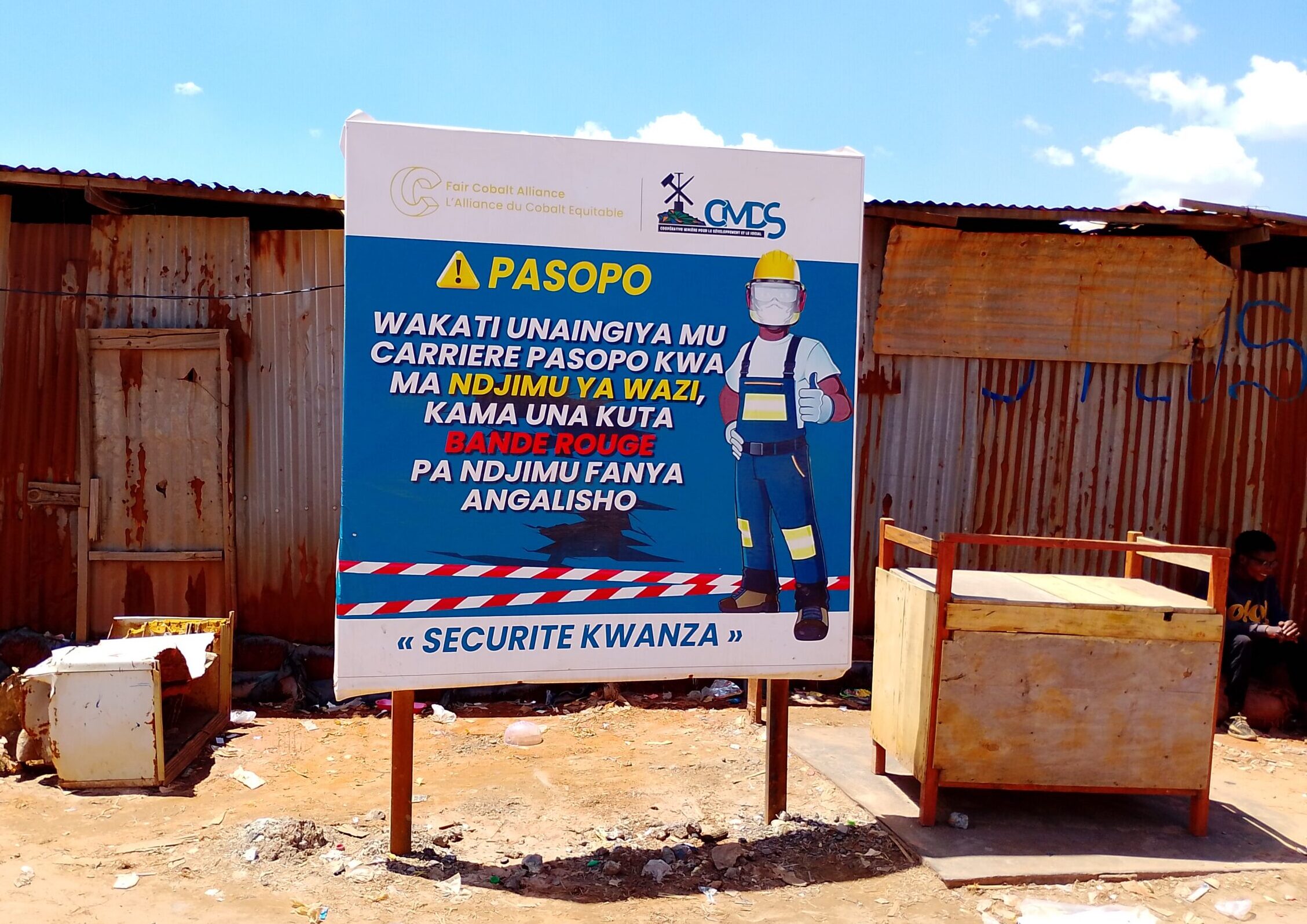
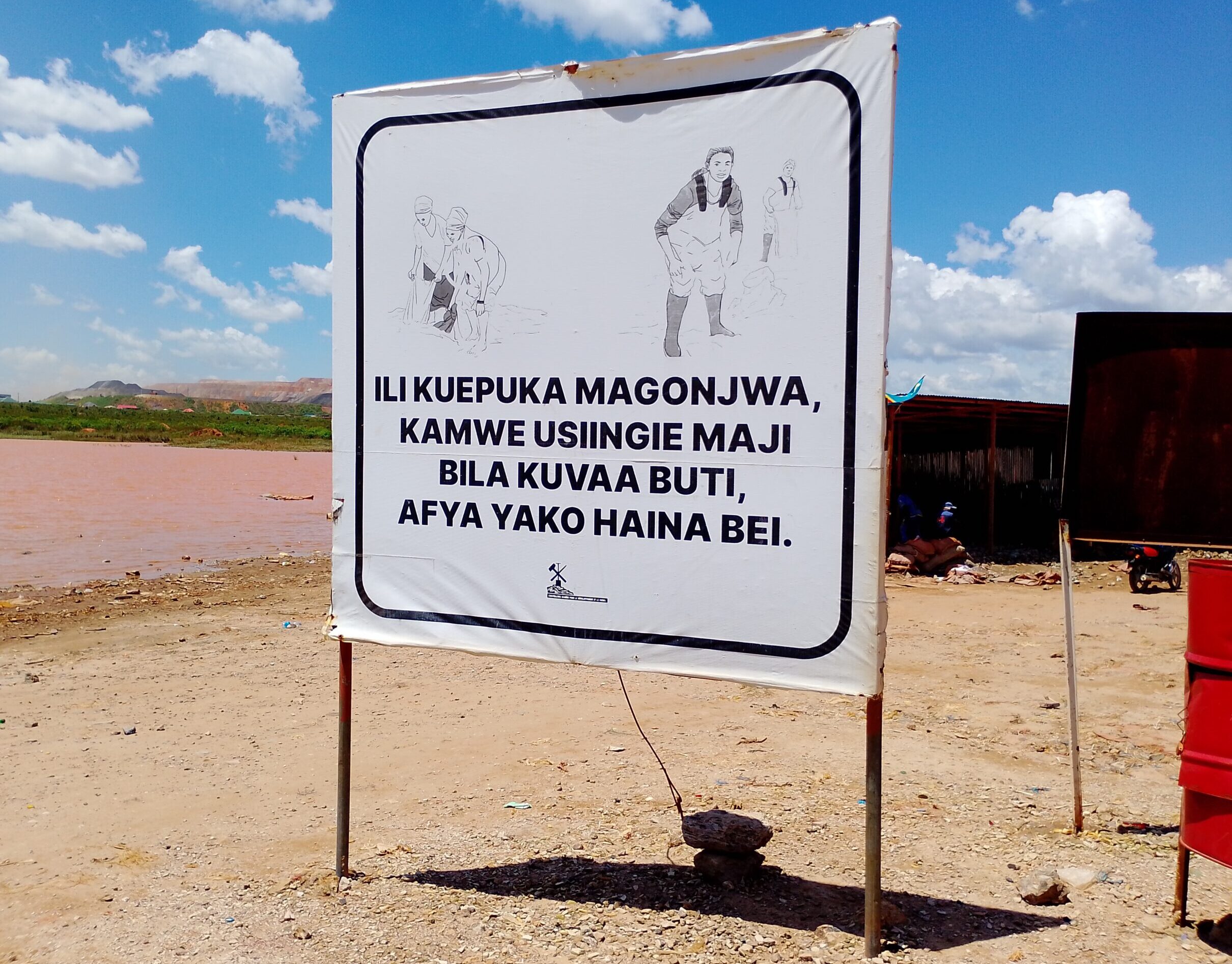
Billboards displaying safety recommendations, featuring the logos of the Fair Cobalt Alliance and the CMDS cooperative.
Relocation to a new distant and not yet viable dedicated zone, with little compensation
Creating legal spaces for artisanal miners is indeed an essential step towards better regulation of the sector, but care must be taken to ensure that new ZEAs are viable, meaning that the mineral content of the soil and the accessibility of those minerals are favourable for artisanal mining. Before being able to produce, artisanal miners must sometimes make significant investments to find a productive vein. In late 2024, there were 55 ZEAs in Lualaba, of which only two were operational, partly because these delimited zones are not (yet) viable.
Article 30e of the Mining Code also allows for a ZEA to be superimposed on an existing mining concession, if the titleholder grants permission and is willing to relinquish the part covered by the ZEA. Since his appointment in August 2025, the national Minister of Mines, Louis Watum Kabamba, has repeatedly stated his ambition to reform the artisanal mining sector, announcing the creation of 64 new viable ZEAs in the provinces of Haut-Katanga and Lualaba. In November 2025, the Congolese authorities indeed established several new ZEAs in Lualaba by ministerial decree, but it appears that mining operations have not started at any of them since then. In July 2026, a so-called pilot site was launched in ZEA 786 in Kasulo, attracting some media attention. However, according to a 2023 report of the Extractive Industries Transparency Initiative in the DRC (ITIE-RDC), ZEA 786 has already existed since 2017 and, at some point in the past, employed more than 3,000 artisanal miners. The same EITI report stated that ZEA 786 was one of the few viable ZEAs available in Lualaba, whilst ZEA 371 – designated to host the miners of Kamilombe and also mentioned in the report – was not among them.
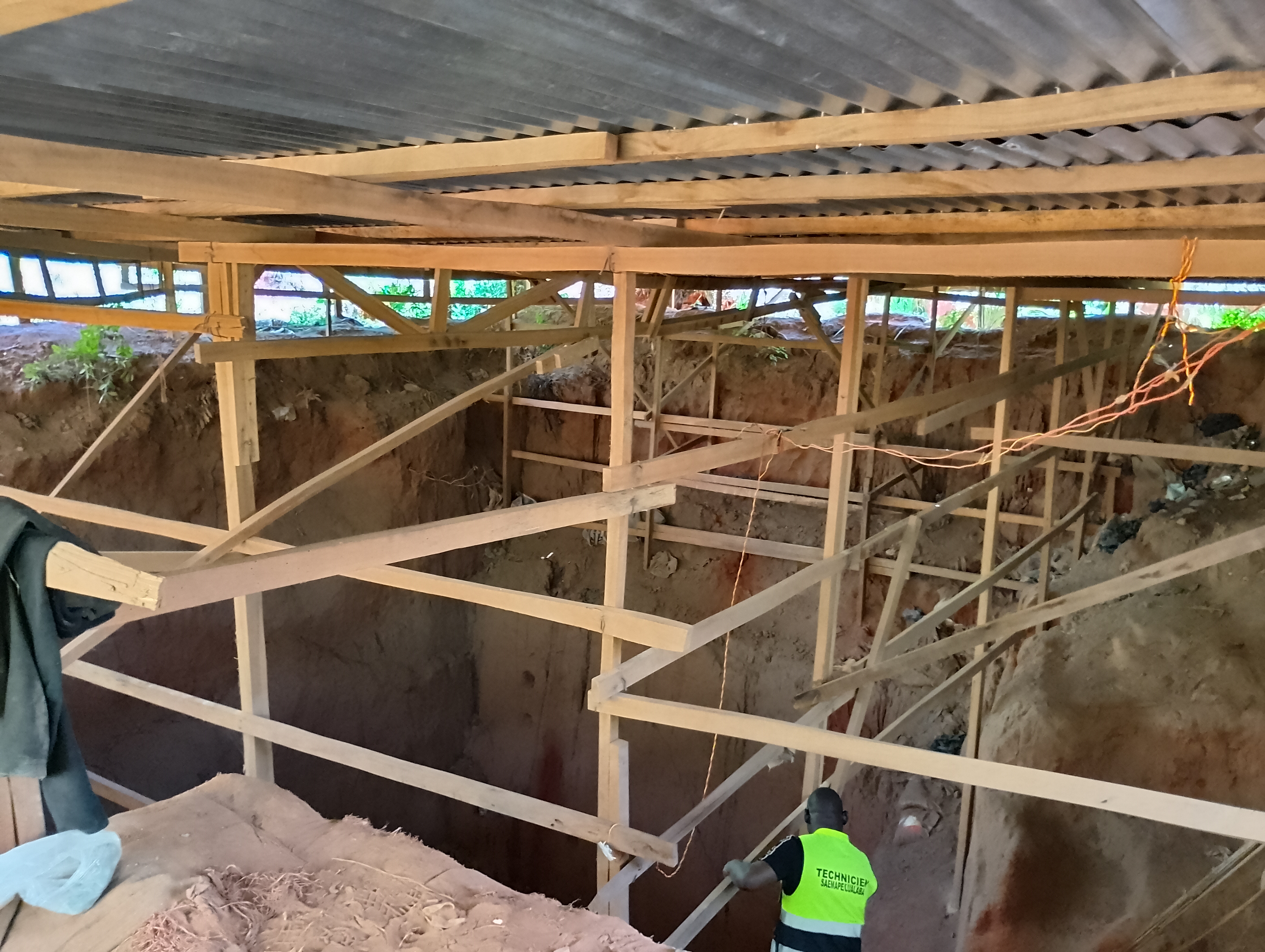
Doubts have therefore been raised about the viability of ZEA 371, which is supposed to provide employment to tens of thousands of artisanal miners, ore washers and transporters, in the very near future. According to a recent report by a synergy of local civil society organisations, Synergie des Organisations de la société civile du Lualaba oeuvrant dans le secteur des ressources naturelles (SOLORN, including IBGDH), representatives of the cooperative CMDS have been informed that work would start to make ZEA 371 viable, while miners have been summoned to leave the site of Kamilombe immediately. However, SOLORN also notes that a week after the forced eviction, the Congolese government has not even begun work to make ZEA 371 viable.
For miners, losing access to Kamilombe means having to abandon prior investments of time and capital in making the site productive. Furthermore, the above-mentioned human rights organisations consider the compensations proposed by the government for investments made by artisanal miners in Kamilombe, as insufficient. SOLORN criticises the lack of transparency in the calculation of the amount of compensation, in which the miners had no say. Moreover, the compensations were paid up-front as a lump sum per mining pit (the amounts then had to be distributed among the stakeholders, among others the artisanal miners).
Uncertainties surrounding artisanal production and trading are a source of social unrest in Kolwezi
The government’s initiative regarding the massive relocation has sparked unrest among artisanal miners in Kolwezi who are concerned about the remoteness and the viability of ZEA 371, and about their economic future in general. This comes on top of social turmoil, caused by recent control operations carried out by the government in trading centres in Kolwezi. Copper and cobalt trade are largely dominated by Chinese and Lebanese trading networks, which have established a de facto trade monopsony. As part of the government’s campaign to formalise the trade of artisanal minerals, local authorities have conducted inspections in trading centres (dépôts), resulting in the arrest of some of their employees. According to certain sources, some of the dépôts have been closed. In this regard, Governor Masuka has announced the relaunch of the trading centre of Musompo, as well as a measure that makes it compulsory to sell artisanal minerals via this centre. The centre of Musompo was established by the government in 2023 to tackle informal trading networks but never became operational. As a result of this unclear situation, artisanal miners fear they will no longer be able to sell their minerals and therefore will struggle to secure income.
Artisanal miners driven out to make way for the industry?
While artisanal miners were given little to no prior notice of their obligation to leave Kamilombe, the decision to grant the artisanal site to an industrial actor appears to have been made much beforehand. An analysis of mining contracts revealed that, in October 2025 – one year before the October 2026 Memorandum of Agreement – Gécamines had already signed an agreement concerning the partial transfer of the mining concession PE11599 hosting Kamilombe, to the company Kabulungu Kamilombe Mining (KKM). KKM is a joint venture between Gécamines and Falcon Resources. The latter is a private company that – according to Africa Intelligence – is linked to the Emirati conglomerate International Holding Co.
The perception has therefore emerged that the artisanal miners of Kamilombe are being driven out to make way for an industrial mining actor. It also seems that the cooperative and the miners at Kamilombe, were only informed of the relocation plans of the government at a very late stage. According to SOLORN, the main affected actors were never consulted or given prior notice. Only a few meetings were organised with leaders of CMDS to inform them about the compulsory departure of the miners, with no room for negotiation. The cooperative has requested a one-year moratorium to prepare ZEA 371 and ensure its viability, as well as to guarantee a smooth transition for the miners, but that request was rejected. SOLORN therefore questions the legality of the procedure followed by the authorities regarding relocation and indemnification of the miners.
What does this mean for formalisation efforts and the development potential of artisanal mining in Lualaba?
Most artisanal mines in Lualaba are located on industrial concessions, meaning that artisanal miners operate in a legal grey zone; at best, they are tolerated, but whatever acquired rights they may enjoy, this offers them no legal certainty. In 2025, IPIS surveyed 47 artisanal mines in Lualaba, of which only one was located in a ZEA. However, evicting artisanal miners from a currently productive site comes with significant socio-economic consequences that should be anticipated and mitigated.
If the case of Kamilombe is representative of the official formalisation policy, and if, in the (near) future, more miners will be forced to relocate towards ZEAs with uncertain viability, then the risk is real that social unrest, which is already flaring up, will intensify further. It seems that miners have been intimidated by the actions of the commission responsible for their relocation, or at least are being appeased with a one-time compensation payment and a vague promise of future work within a legal framework, without any guarantee that the zone allocated to them will yield any income.
Alternatively, the government could have opted to allow the miners to continue working in Kamilombe and to convert the mining site into a legal artisanal mining space, with the collaboration and approval of the concession holder. This scenario was recently achieved at the Mulondo mining site in Lualaba, where an agreement was signed between the private concession holder and the cooperative, allowing artisanal operations in clearly defined zones of the concession. Furthermore, the Enterprise Générale du Cobalt, a state-owned enterprise established to promote the formalisation of the Congolese artisanal mining sector, could have been involved, as it has previously entered into public-private partnerships with industrial actors to formalise artisanal mining activities on their concessions.
Further reading


This briefing was produced with the financial assistance of the European Union and is based on research co-financed by the Belgian Development Cooperation. The contents of the editorial are the sole responsibility of IPIS and can under no circumstances be regarded as reflecting the position of the European Union or the Belgian Development Cooperation.