
The prefecture of Boké in the Republic of Guinea is home to the world’s largest bauxite reserves. Bauxite is used to produce aluminum, a metal that is essential to the defense, construction, aerospace, and renewable energy industries. Driven by global demand, bauxite mining in Guinea has accelerated significantly since 2015. In 2022, it accounted for 44% of the country’s exports and is therefore a significant source of revenue for the public treasury.
However, the environmental impact of the mining industry is undermining communities living in and around the mining areas, which depend mainly on fishing, agro-pastoralism, and livestock farming. This report analyses the little-studied effects of bauxite mining on communities living from agro-pastoral and fishing activities in the prefecture of Boké, and more specifically in the sub-prefectures of Sangarédi, Kolaboui, and Kamsar.
This study is based on a mixed approach combining quantitative and qualitative tools. Two visits to Sangarédi, Kamsar, and Kolaboui took place in May and June 2025 to meet with local communities in focus groups and collect individual data from 160 people. The mining companies Ashapura, GAC, CBG, and SMB were contacted by email for an interview, but none of them responded. As for COBAD, it does not have a website and could not be contacted.
Fishing activities under pressure
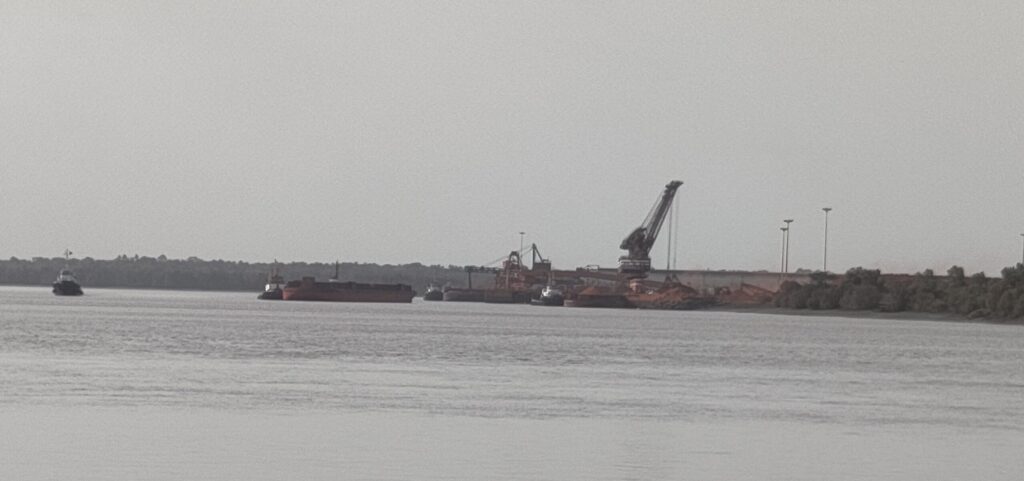
In coastal areas and along the Rio Nunez River, the construction and expansion of mineral ports, as well as increased traffic from barges transporting bauxite, are threatening fishing activities. The destruction of mangroves – essential for fish reproduction – and damage to nets is making small-scale fishing both more dangerous and less productive. Fishermen report longer trips at sea and declining catches. As a result, almost all the fishermen interviewed feel poorer since mining companies established themselves in their region. The deterioration of social cohesion is another indirect consequence of mining. The scarcity of fish and the shrinking of fishing areas are fueling competition and causing tensions among artisanal fishermen.
Reduced agropastoral land
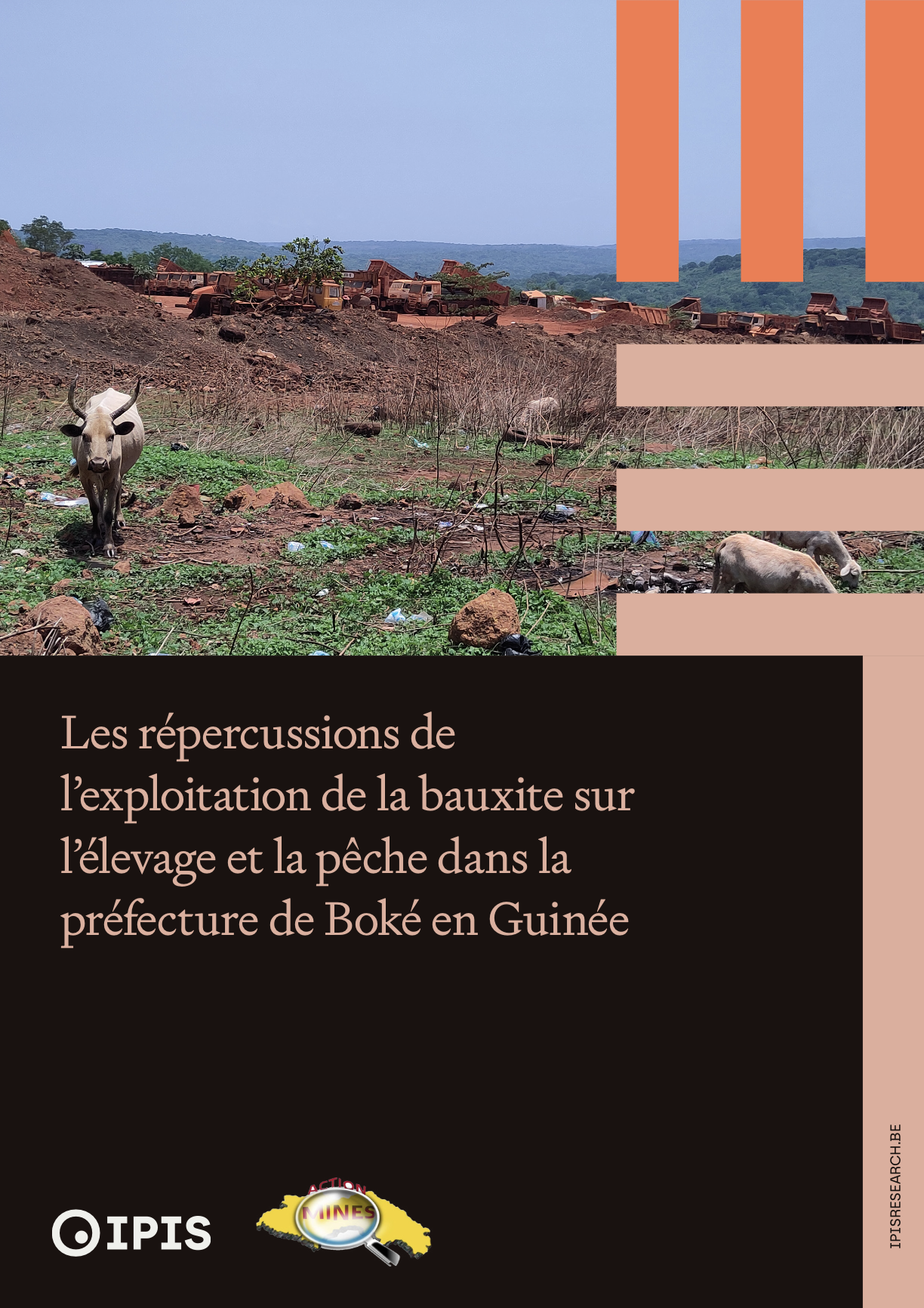
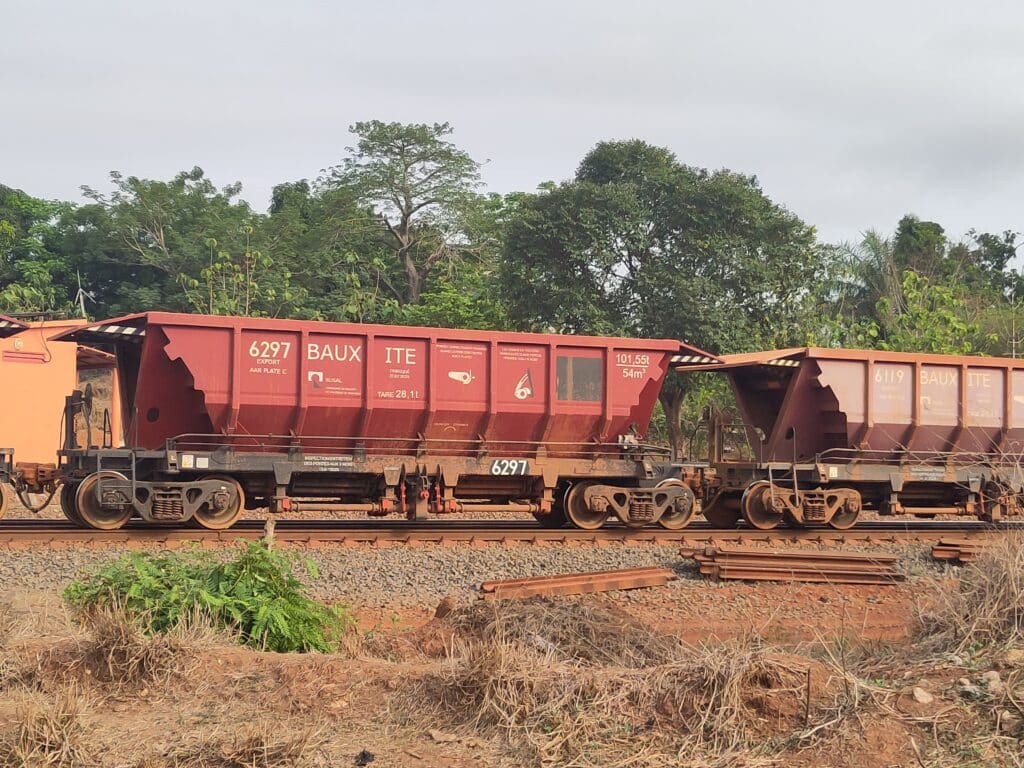
Livestock farming is also affected. A large part of the agricultural and pastoral land is now located on concessions held by bauxite mining companies, which currently occupy 80% of Sangarédi’s territory. Only 20% of the territory’s land is currently used for agricultural and pastoral activities, of which less than 6% is used for livestock farming. Coexistence between these mining and agro-pastoral activities is difficult: there are numerous accidents between mining trucks and livestock, and mining pollutes and dries up water sources that are essential for livestock farming. As a result, livestock farmers are forced to move to other regions of Guinea or even to neighboring countries. In addition, conflicts with farmers over damage to fields caused by livestock are on the rise due to the shrinking of grazing land and the lengthening of the transhumance period.

Map of mining concessions, mining ports, small-scale fishing ports, and railroads.

Livestock grazing near bauxite mining sites.
Information, consultations, and compensation for affected communities
Despite the existence of a legal framework requiring information, consultation, and compensation for affected communities, the vast majority of those interviewed said they had not been consulted before the projects began. Complaint mechanisms are considered ineffective, and compensation is rare or insufficient, particularly for fishermen and livestock farmers whose losses are not always recognized. Following the destruction of their livelihoods and unfulfilled promises of employment, 84% of the 160 people we interviewed say they are poorer than before mining operations began in 2015
An issue for food security
Guinea’s food security is also threatened by the destruction of these livelihoods. In Boké, the disappearance of fishing and livestock farming risks destroying local self-sufficiency and thus increasing Guinea’s dependence on food imports.


Recommendations
Action Mines Guinée and IPIS made concrete recommendations on three levels:
To mining companies:
- Organize consultations based on the free, prior and informed consent of local populations affected by mining activities before, during and after the development of the company’s activities.
- Establish a participatory dialogue and a simple, fair, and well-known complaint mechanism for the population.
- Reduce environmental impacts and make ore transport safer.
To local and national authorities:
- Develop land use plans that take into account agro-pastoral and fishing areas.
- Prosecute mining companies that do not comply with the mining code and the rights of local communities.
- Ensure that communities affected by mining activities have been informed and consulted in a free and transparent manner.
- Require companies to implement the concrete measures mentioned above.
- Include fishermen as beneficiaries of compensation for the destruction of their livelihoods.
- Implement policies aimed at harmonizing the coexistence of livestock farming and cashew cultivation.
To local communities:
- Form cooperatives and groups to better defend their interests collectively.
- Document all accidents (animals killed, accidents involving mining boats) and incidents (soil and water pollution) involving a mining company and submit them to mediation with a view to obtaining fair compensation.




This publication has been produced with the financial assistance of the European Union. The contents of this document can under no circumstances be regarded as reflecting the position of the European Union.