
The Democratic Republic of Congo (DRC) holds about 9% of the world’s known diamond reserves, the bulk of which are concentrated in Kasaï Oriental. This huge geological resource could be a major driver of economic growth and social stability in a region marked by socio-economic underdevelopment.
Yet, the country’s diamond sector has been in a prolonged crisis: production has declined significantly over the last 20 years, from around 30 million carats at the start of the century to an average of 11.5 million carats per year since 2019.

Key takeaways from the workshop
Earlier this year, IPIS published a report, “Diamonds in the DRC: A sector struggling to shine again”, which analyzed the current dynamics in the DRC’s diamond mining sector, including production trends, key challenges for both the large-scale (LSM) and artisanal and small-scale mining (ASM) sectors, as well as efforts and opportunities to revive the sector and increase its impact on local development. On 12-13 September 2025, IPIS, together with GAERN (Groupe d’Appui aux Exploitants des Ressources Naturelles), CDH (Centre des Droits de l’Homme et du Droit Humanitaire), and the Kimberley Process Civil Society Coalition (KP CSC) organized a meeting in Mbuji-Mayi (Kasaï Oriental), during which they presented the report’s findings, screened the KP CSC’ documentary “Beyond Shining Illusions”, and gathered feedback from local stakeholders.
A total of fifty stakeholders from the Kasaï diamond sector — including miners, diamond traders, CSO representatives, state agents, and local authority representatives — participated in the 2-day meeting. The discussions highlighted the stark dual reality of the diamond sector in Kasaï Oriental:
- Huge economic potential: the diamond mining industry remains the backbone of the region’s economy and is a crucial source of income for local communities.
- Governance challenges: weak state oversight, pervasive fraud, poor traceability, and a profound distrust between local communities, authorities, and economic operators undermine the sector’s development impact.
However, participants stressed that there are ample opportunities to reverse the decline of the diamond sector. There is a strong will from civil society, community leaders, and other local actors to transform the sector into a source of sustainable development. To this end, meeting participants identified three main areas for action within the diamond sector in Kasaï-Oriental.
Main challenges:
- Strengthening governance and transparency
Although the DRC’s legislation and institutional framework for mining are relatively well-developed, weak implementation and limited capacity across agencies hinder effective governance of the diamond sector. This translates into pervasive issues of informality, fraud, limited compliance with ESG standards, and lack of transparency in both industrial and artisanal mining.
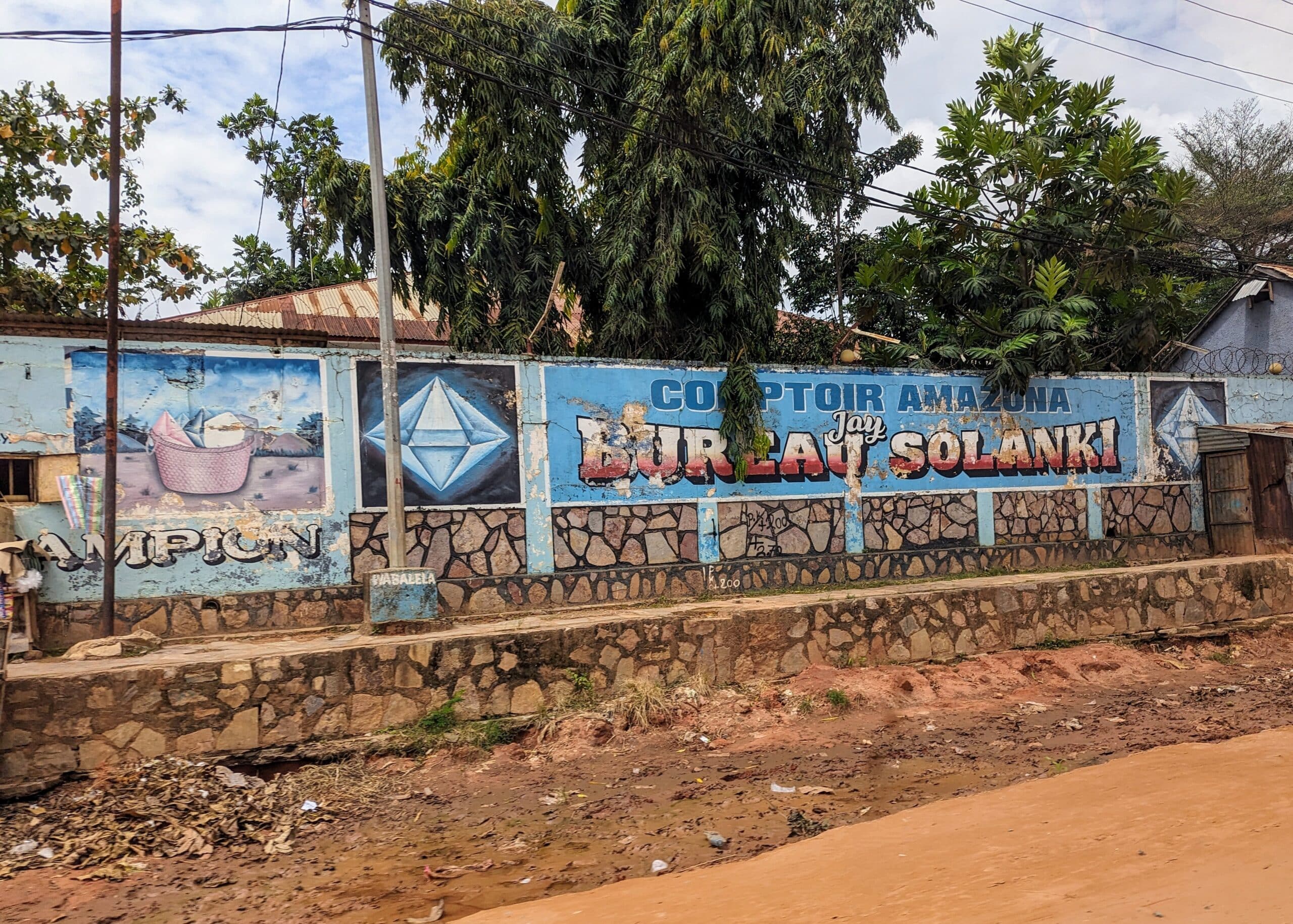
Under the Mining Code, licensed local mineral traders (négociants) are authorized to buy diamonds at or near mines from mining cooperatives and sell them either to other traders further down the supply chain or directly to trading houses (comptoirs) who can export diamond parcels. In practice, however, the diamond supply chain is much more complex, and many transactions go unrecorded, involving numerous additional and often informal actors. While local traders and ‘mini-marchés’ (privately owned mini-markets where most smaller transactions take place) are only authorized to do business during the day, respondents reported that many important transactions take place at night, outside the local state services’ supervision.
Moreover, the IPIS report documented the lack of support from state agencies to ASM actors, excessive and illegal taxation, harassment and abuses of power by certain officials. All of this deters ASM actors from engaging with state services to formalize their operations.
Consequently, due to deep-rooted informality — with many ASM stakeholders evading formal oversight by the state — these state agents lack the capacity to monitor the many small artisanal mines, face distrust from miners, and are at times even obstructed by other (informal) authorities. Government agencies try to channel the diamond trade as much as possible in the formal supply chain but are unable to conduct effective site-level monitoring. Consequently, they are obliged to rely on the volumes and origins of diamonds declared by local traders, with no reliable means of verification.
On the industrial side, the report and meeting participants noted issues of transparency, allegations of embezzlement of diamonds and tax fraud, leonine (or exploitative) contracts, and poor management of mining revenues.
- Leveraging diamonds for local development
Participants echoed the IPIS report, stressing that diamonds should not be perceived as “blood diamonds” and can even become a pillar of local development if governance is improved and legal provisions are enforced. In order to achieve this, several priority pathways were identified.
First, concerns were raised over the non — or incomplete — direct payment of the ‘redevance minière’ (mining royalties) owed to local authorities (ETDs, entités territoriales décentralisées), the non-respect of the cahier des charges (agreement outlining commitments of investments from the mining company to the benefit of the local community), and the allocation of a minimum 0.3% of turnover, which is due to community development projects. Participants stressed that effective and transparent management of these financial obligations is essential to rebuild trust and demonstrate the developmental value of the diamond sector. To this, civil society must also organize itself more effectively to increase scrutiny in the sector and monitor the implementation of development projects financed by revenues from diamond mining, and to ensure land rehabilitation by companies after operations.
Next, the formalization of the ASM sector would be a first step to work towards a more sustainable impact of ASM on local development. Meeting participants identified a few priorities to promote ASM formalization:

- Reducing the financial and administrative burden of creating cooperatives;
- Improving the services and capacities of technical services of the Ministry of Mines — including, for example, SAEMAPE (Service d’Assistance et d’Encadrement de l’Exploitation Minière Artisanale et à Petite Echelle);
- Creating additional officially designated artisanal mining areas (zones d’exploitation artisanale, ZEA), noting that Kasaï Oriental currently only has four;
- Strengthen the capacity of civil society for advocacy and monitoring of the implementation of international standards and national mining regulations. This would enable more informed local oversight and help ensure companies meet their social and environmental obligations.
- Addressing harmful practices in the diamond sector
Finally, participants drew attention to several practices they consider particularly harmful, including the politization of the parastatal diamond miner Société Minière de Bakwanga (MIBA), the militarization of the mining sites of the Société Anhui-Congo d’Investissement Minier (SACIM), and the presence of unauthorized actors (e.g. military, judicial authorities, and intelligence service (ANR) agents) on artisanal and semi-industrial mining sites.
As SACIM is the leading industrial diamond mining company in the country, it also received a lot of attention in the discussions. SACIM has faced longstanding criticism from civil society for alleged violations of worker rights, tax fraud, and failure to contribute to local development. In order to address allegations of fraud (notably irregular declarations and undervaluation), the government adopted a ministerial decree in 2022, restricting the company’s right to market precious stones, obliging them to sell their diamonds exclusively through five pre-approved Congolese exporters. This measure led a sharp decline in SACIM’s revenues, salary arrears of up to 13 months, triggering worker protests and claims that the company was on the brink of bankruptcy. Following mounting concerns, a new ministerial order was issued on June 2, 2025, repealing the previous restriction and reinstating the company’s commercial freedom in line with the Mining Code.

MIBA, once the economic engine of the Kasaï region, has been in severe decline for the past two decades, and none of the relaunch attempts have succeeded so far. As an 80% state-owned company, it has been heavily politicized and exploited. During the Congo Wars, the company helped Laurent-Désiré Kabila to finance his war effort. The chairman is also nominated by the President, meaning the position is held by individuals close to political elites, who according to CSOs, often serve political rather than corporate interests. In early 2023, the DRC government adopted a five-year US$453 million recovery plan for MIBA. However, observers have questioned its feasibility and political motivations. Jeune Afrique suggested it may have been more about consolidating Tshisekedi’s electoral support in his home region. Funding had consistently lagged behind promises. In April 2025, a report from the Kasaï Oriental governorate indicated that the US$50 million promised for MIBA’s relaunch had still not been disbursed. In October 2025, renewed protests erupted: the Collectif des Enfants MIBA denounced the political, administrative and financial bottlenecks preventing the use of the US$50 million they consider already released.
Lastly, harassment and extortion by state actors are another challenge for diamond sector participants. A 2015 survey by GAERN and IMPACT found that “100% of dealers, artisanal diamond miners and mine committees” had experienced persistent harassment from government actors, including political, administrative, military, police and judicial authorities. The most egregious forms of illegal interference were attributed to the DRC’s security forces, who engage in illicit activities both at artisanal mining sites and around (semi-)industrial operations. The IPIS report noted allegations of violence against local community members, artisanal miners and intruders at industrial concessions, often committed by FARDC (the Congolese army) and police forces (PNC, Police Nationale Congolaise). These forces are also known to facilitate illegal access to SACIM’s and MIBA’s concessions, in exchange for illegal entrance fees. As such, they play a contradictory role: officially tasked with guarding company installations, yet they also enable unauthorized entry for personal gain.
Final declaration and recommendations

The workshop concluded with a Final Declaration developed by local leaders and CSO representatives affirming that diamonds from Kasaï can be a vector of sustainable development, while recognizing a series of persistent challenges. On this basis, the declaration set out targeted recommendations:
- To the Congolese government: ensure effective implementation and vulgarization of mining laws, create additional ZEAs, provide SAEMAPE with adequate resources, and guarantee the fair and transparent redistribution of mining revenues.
- To companies: fully comply with legal obligations, respect traceability requirements, as well as social and environmental standards. Additionally, respect legal obligations related to local development impact, notably to effectively pay the 0.3% of turnover (earmarked for community development) and the mining royalties, and implement the cahier des charges.
- To artisanal miners: operate within the legal framework, organize in mining cooperatives, and integrate social, security and environmental considerations into their practices.
FURTHER READING



This document has been produced with the financial assistance of the European Union. The contents of the document are the sole responsibility of IPIS and can under no circumstances be regarded as reflecting the position of the European Union.