
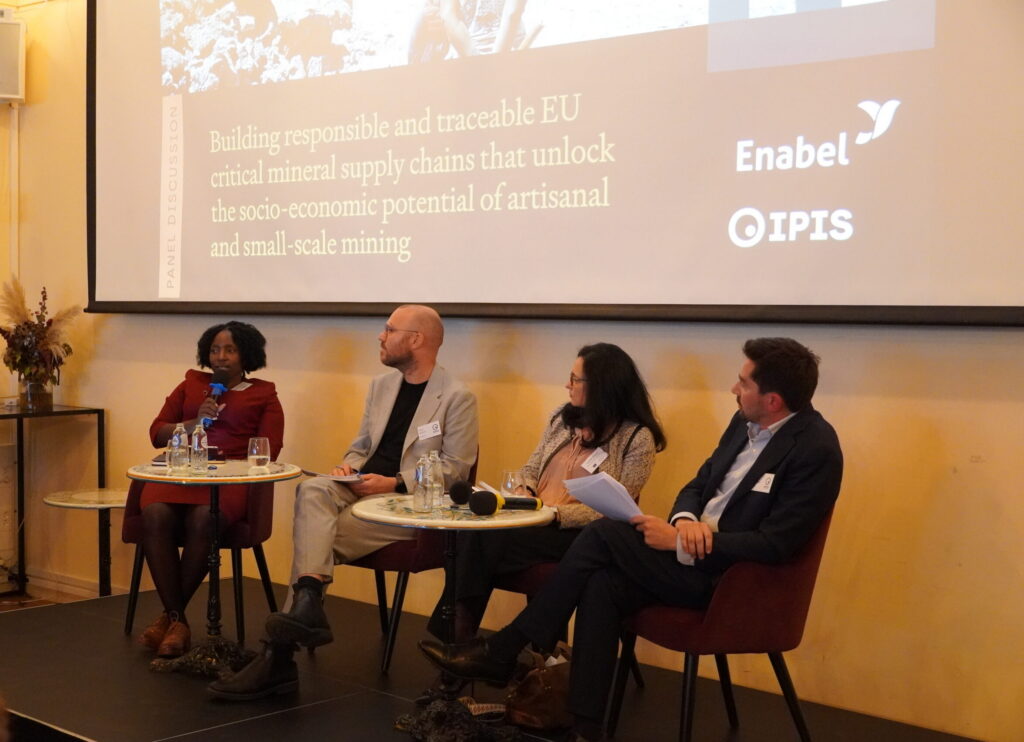
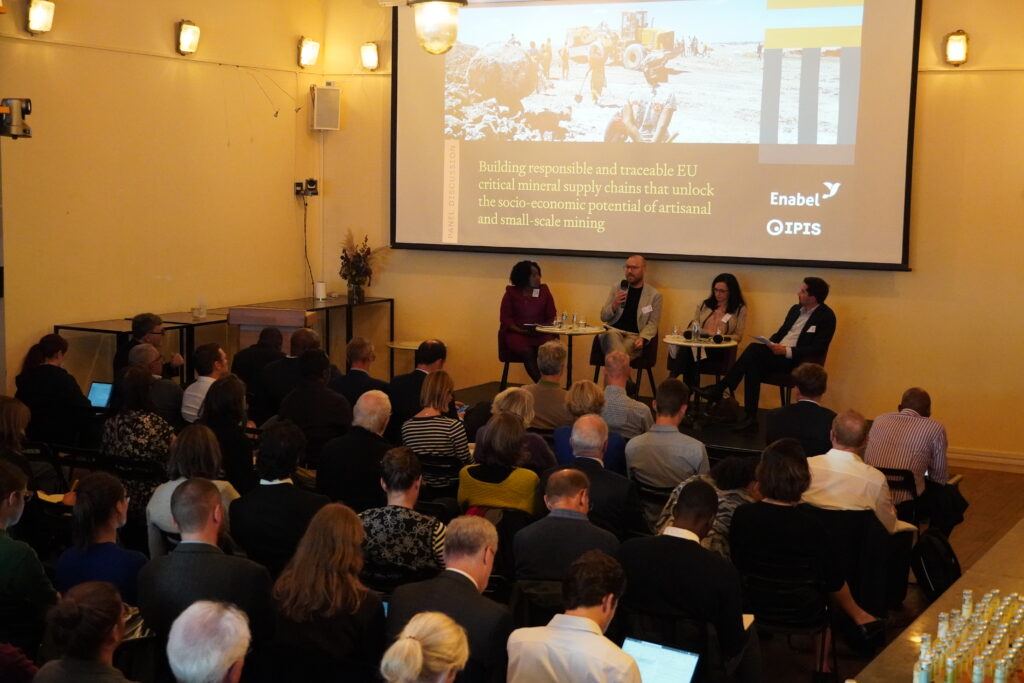
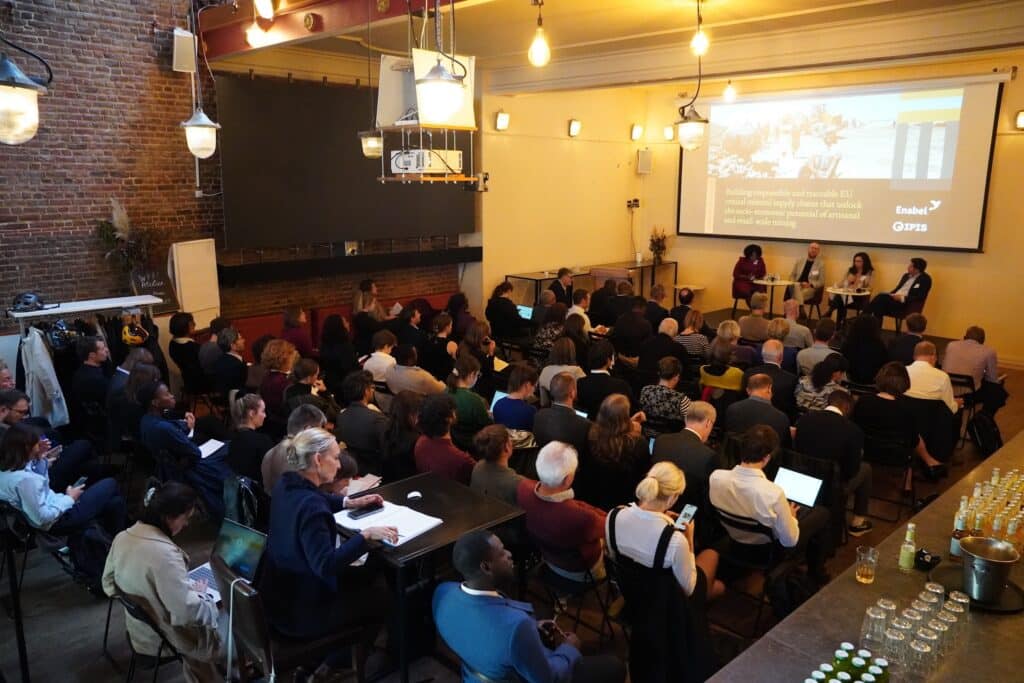
On 12 October 2026, IPIS, in collaboration with Enabel, organised a panel discussion on how to build responsible and traceable EU critical mineral supply chains while unlocking the socio-economic potential of artisanal and small-scale mining (ASM). Moderated by IPIS Director Filip Reyniers, the panel featured Isabelle Magne, Deputy Head of Unit for Trade, Investment Climate, Entrepreneurship and Value Chains at the European Commission’s Directorate-General for International Partnerships (DG INTPA), Joyce Nyamukunda, Extractives Programme Unit Lead at the Zimbabwe Environmental Law Organization (ZELO), and Hans Merket, Researcher and Policy Manager at IPIS.
Beyond the critical minerals race
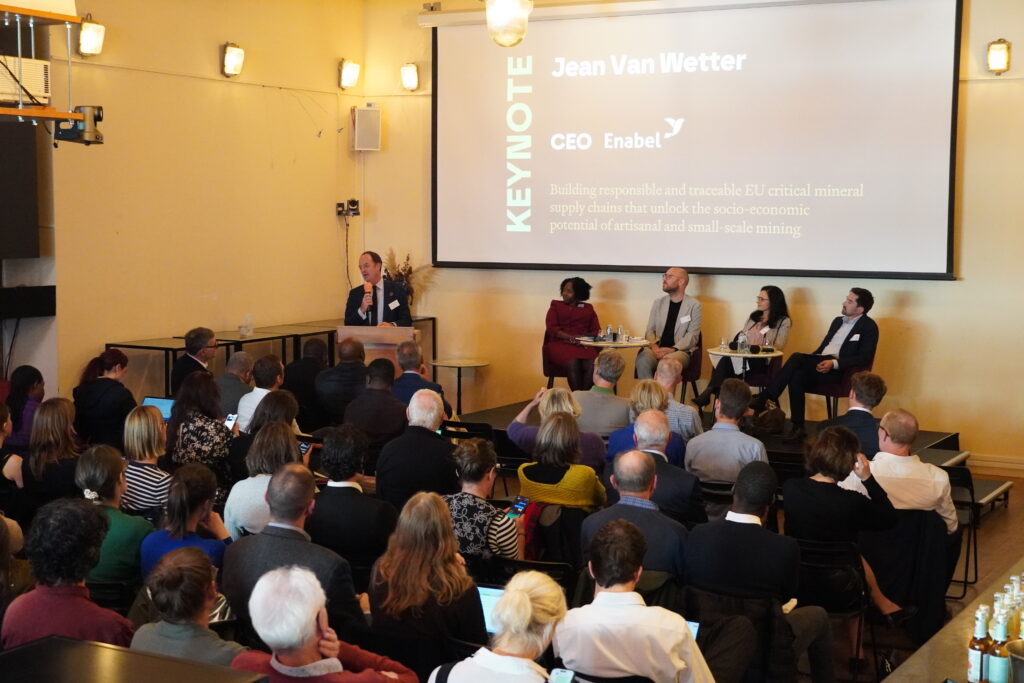
The event opened with welcoming remarks by IPIS Chair Loïc De Cannière, followed by a keynote speech by Enabel CEO Jean Van Wetter. Amid growing global competition for critical raw materials (CRM), driven by digitalization, artificial intelligence and the energy transition, both advocated for sustainable engagement with the ASM sector.
Van Wetter advocated for an approach to ASM based on multi-stakeholder cooperation and active private-sector engagement. He emphasised how Europe could distinguish itself by reconciling its strategic need for minerals with the development priorities of producer countries, including through the development of mineral supply chains that create economic opportunities and value beyond extraction.
The impact of growing global competition on local ASM
The panellists highlighted the economic importance of ASM as a source of livelihoods in countries such as Zimbabwe, Tanzania and the Democratic Republic of Congo (DRC). Evidence from Zimbabwe and the DRC also illustrates how artisanal miners adapt their activities to changing international demand, with miners in Zimbabwe diversifying from gold into lithium and their counterparts in the DRC shifting between cobalt and copper in response to market prices.
Yet growing competition for critical minerals makes addressing persistent governance challenges in the ASM sector increasingly urgent. Hans Merket (IPIS) noted that, despite more than two decades of international responsible sourcing initiatives in the DRC, many structural problems remain unresolved. Both Joyce Nyamukunda (ZELO) and Merket highlighted the persistently poor working conditions and high risk of accidents as particularly worrying. They stressed that formalisation is essential to improving these conditions, but must be grounded in the realities of artisanal mining. This means improving access to legal mining areas, developing workable regulatory requirements and providing practical support, rather than imposing top-down measures that risk further marginalising miners or entrenching existing inequalities.
The EU’s approach: High standards and genuine partnerships
Against the backdrop of growing competition with China and the United States, Isabelle Magne (DG INTPA) outlined the EU’s approach through its Global Gateway strategy. Magne argued that high ESG standards should be viewed as a competitive advantage rather than an obstacle, provided they are combined with genuine partnerships and local value addition.
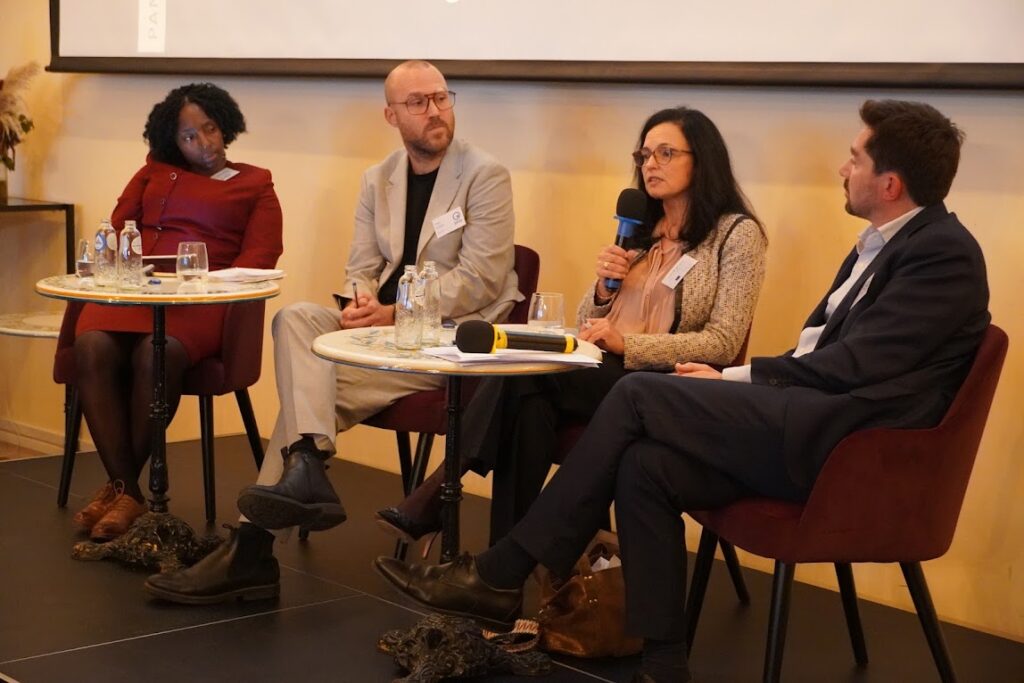
However, translating these ambitions into practice requires greater private sector engagement. Magne recognised the challenges of attracting European investment into ASM and stressed the importance of making responsible operations commercially viable through appropriate incentives, investment and technical support. While the EU is often criticised for imposing demanding ESG requirements, she emphasised that its ambition is not simply to set standards, but to help producing countries and businesses meet them, for instance by supporting ASM formalisation and improvements in working conditions.
As an example, she referred to the Cobalt for Development (C4D) initiative in the DRC. Implemented by GIZ with support from the EU and downstream companies such as BMW and BASF, C4D works with the Congolese state-owned Entreprise Générale du Cobalt (EGC), mining cooperatives, public authorities and civil society to improve working conditions, strengthen environmental and safety practices, and develop more responsible artisanal cobalt supply chains.
Traceability as a tool, not an objective
Hans Merket (IPIS) cautioned against the assumption that more traceability automatically leads to more responsible CRM supply chains. Traceability should be understood as a means to improve transparency and support risk-based due diligence, rather than an end it itself. Its value ultimately depends on how the information generated is used to identify and address risks.
This distinction is particularly important for ASM. Demanding comprehensive, mine-level digital traceability from the outset can be unrealistic in contexts where many miners lack legal access to mining areas, adequate resources or the capacity to comply with complex requirements. Rather than improving conditions, such requirements risk excluding miners from responsible sourcing initiatives and pushing mineral trade towards less transparent markets.
Merket therefore advocated for a phased and pragmatic approach, starting at points where information can be captured and verified with reasonable confidence, such as cooperatives, traders and processors, before progressively improving visibility upstream. This does not necessarily require sophisticated technologies, but can build on simple reporting tools and existing structures. Equally important is ensuring that artisanal miners have incentives to participate in these efforts, including better access to markets, finance and technical support, or more stable trading relationships.
Making sustainable investment work for artisanal miners
How can foreign investment support local development? Joyce Nyamukunda stressed that sustainable investment requires good governance and effective policy implementation. She outlined five priorities: accessible legal pathways for ASM formalization, connections to formal processing facilities, stronger technical and financial capacities, the inclusion of women and young people, and traceability systems that do not exclude smaller producers.
Hans Merket highlighted the need for investment in ASM, while warning against arrangements that allow outside investors or local elites to appropriate a disproportionate share of the economic benefits. In Tanzania, for example, foreign investors have exploited legal provisions for providing technical support to small-scale miners to effectively take operational control of mining activities, despite restrictions reserving ASM licenses for Tanzanian nationals. Such arrangements risk undermining local participation, circumventing labour, environmental and community safeguards, and creating unfair competition for responsible investors who must comply with more demanding regulatory requirements.
Similar dynamics occur in the DRC, where local elites and foreign investors exercise considerable control over ASM and mineral trade through the capture of mining cooperatives, financing and trading structures, and sometimes through the instrumentalisation of public security forces to protect their interests.
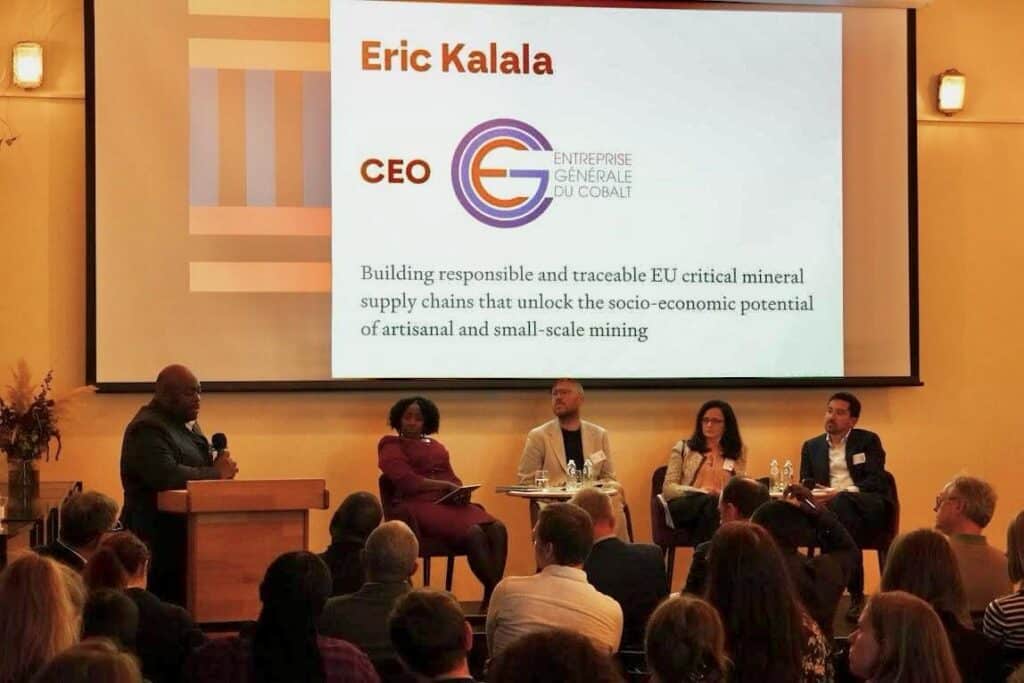
The discussion also included a contribution from Erik Kalala, CEO of EGC, who outlined efforts to formalise ASM cobalt production through cooperation with mining cooperatives and structured purchasing arrangements. He highlighted the time and investment needed to develop responsible supply chains, from organising production at mining sites to accessing international markets. At the same time, he pointed to practical measures that already benefit miners, such as removing the upper layers of soil and rock to facilitate safer access to mineral deposits.
Responsible sourcing without disengagement
During the audience discussion, participants questioned whether demanding EU standards could unintentionally push European companies towards Chinese suppliers. Others raised concerns about human rights, conflict-related mineral trade and traceability in eastern DRC and neighbouring countries.
The discussion also touched on the need to look beyond simply criticising competing foreign investors, particularly those from China. Chinese investment is far from monolithic, encompassing a wide range of actors and practices. Understanding what can be learned from these experiences, and where Europe should take a different approach, is more useful than treating them as a single model.
The discussion reinforced a central message: responsible sourcing should encourage continuous improvement rather than disengagement from challenging mining contexts. Excluding artisanal producers risks pushing mineral trade into less transparent markets, where human rights and environmental risks become harder to address. The challenge is to create conditions in which responsible sourcing becomes both feasible and beneficial for ASM, through genuine partnerships, effective governance, credible due diligence and investment that translates into tangible improvements for local communities.
IPIS appreciates all participants for their engagement in this important discussion.







This event was a collaboration between IPIS and Enabel and was supported by the European Union and the Belgian Development Cooperation.